
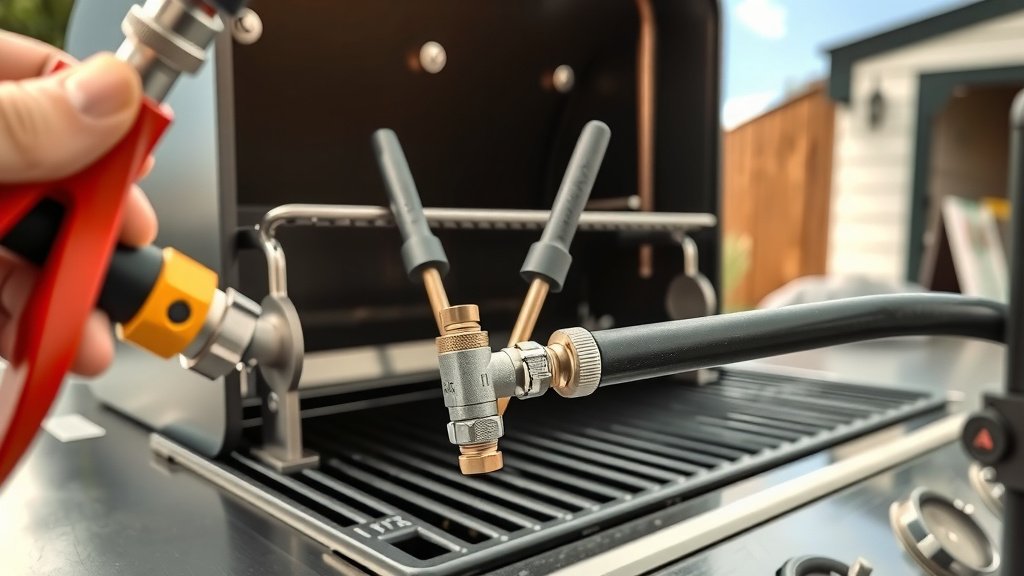
Converting an LP grill to natural gas usually involves replacing the gas orifices, regulator, and hose, ensuring you match the specific model requirements for safe operation.
This process changes your grill’s fuel type, requiring adjustments to components that handle gas flow and pressure for compatibility with your home’s natural gas line.
- Thinking about switching your grill to natural gas? You’re looking at a convenient, continuous fuel source that avoids those mid-cookout tank runs.
- The process involves swapping out a few key parts: the small brass orifices, the gas regulator, and the main hose.
- Always check if your grill model is even designed for conversion, as not all are created equal.
- Safety is paramount; gas connections need careful handling and leak testing to prevent any issues.
- If you feel unsure at any point, calling a certified professional is always the smartest move.
How To Convert LP Grill To Natural Gas?
Converting your liquid propane (LP) grill to natural gas (NG) offers uninterrupted grilling convenience right from your home’s gas line. This shift means no more refilling LP tanks, which is a real bonus for frequent grillers.
Why Consider Natural Gas for Your Grill?
Imagine never running out of fuel mid-sizzle! That’s the primary draw of natural gas. We found that many grill enthusiasts appreciate the consistent fuel supply NG provides.
Natural gas often costs less than propane over time, especially if you grill frequently. It’s also a cleaner-burning fuel, which some users prefer for environmental reasons.
Is Your LP Grill Natural Gas Ready?
Before you grab any tools, you must ask: Can my specific grill convert? Not all LP grills are convertible to natural gas. Many experts say checking your grill’s manual first is critical (Manufacturer Guidelines).
Look for conversion instructions or a natural gas conversion kit listed for your model. If your manual is quiet on the subject, or says it’s not possible, do not try to convert it.
Understanding LP and NG Grill Differences
LP and NG are different fuels with different pressures. LP grills operate at higher pressure and use smaller orifices to control the gas flow. Natural gas runs at a much lower pressure.
To convert, you must change these components. You will need larger orifices to allow enough low-pressure NG through for proper combustion. The regulator also needs swapping.
Safety Measures Before You Begin
Working with gas lines requires extreme caution. Before touching anything, ensure your main home gas supply is turned off. Also, disconnect your LP tank completely.
Proper ventilation is also key. Work in an open area, ideally outdoors. Many professionals insist on having a fire extinguisher nearby, just in case.
Essential Tools and Conversion Kit
You’ll need basic tools like wrenches, screwdrivers, and possibly pliers. Most importantly, you need a specific natural gas conversion kit for your grill model.
This kit usually contains new orifices, a natural gas regulator, and a proper NG hose. We found that using manufacturer-approved parts is always the safest bet.
Here’s a quick checklist of items you’ll likely need:
- Manufacturer-approved NG Conversion Kit
- Wrench set (adjustable and fixed)
- Screwdriver set
- Thread sealant (gas-rated)
- Soapy water solution (for leak testing)
- Work gloves
- Your grill’s owner’s manual
Your Step-by-Step Grill Conversion Process
Ready to get your hands a little dirty? This process involves careful steps. Take your time, and double-check each connection.
Disconnecting LP and Preparing Your Grill
First, turn off the gas valve on your LP tank. Then, carefully disconnect the LP hose and regulator assembly from your grill. Remove the tank from your grill’s storage area.
Next, remove the cooking grates, heat tents, and burners from inside your grill. This exposes the manifold where the orifices sit. You’re creating a clean workspace.
Swapping Out the Orifices
This is often the most critical part. The small brass orifices are usually screwed into the manifold where the burners connect. Carefully unscrew the existing LP orifices.
Replace them with the larger natural gas orifices from your conversion kit. Be gentle, as these are small and delicate. Many sources suggest tightening them just enough to be snug, not overly tight.
To give you an idea of the difference, consider this general comparison (sizes vary greatly by manufacturer):
| Component | LP Grill Typical Size | NG Grill Typical Size |
|---|---|---|
| Burner Orifice | Smaller Hole (e.g., #59) | Larger Hole (e.g., #47) |
| Side Burner Orifice | Smaller Hole (e.g., #65) | Larger Hole (e.g., #53) |
Installing the Natural Gas Regulator
The LP regulator you removed is not compatible with NG. Install the new natural gas regulator from your kit. This regulator ensures the correct low pressure for NG operation.
Attach it securely to the manifold, following the directions in your grill’s manual. Remember to use gas-rated thread sealant on all threaded connections for a tight seal.
Connecting the Natural Gas Supply Line
Now, connect the natural gas hose from your kit to the new regulator on the grill. The other end of this hose will connect to your home’s natural gas supply outlet.
Ensure all connections are hand-tight, then use wrenches to tighten them firmly. Do not overtighten, as this can damage the fittings.
The Critical Leak Test Procedure
This step is absolutely non-negotiable! Mix a solution of dish soap and water. Turn on your home’s natural gas supply, but keep the grill valves off.
Apply the soapy solution liberally to all new connections you just made. If you see bubbles forming, you have a gas leak. Tighten the connection, reapply solution, and retest until no bubbles appear.
Adjusting Air Shutters for Optimal Flame
After conversion, you might notice your flames look a bit off. They might be too yellow or too small. This is where air shutter adjustments come in.
Some burners have adjustable air shutters. Many experts advise starting your grill and slowly adjusting the shutters until you achieve a steady blue flame with a slight yellow tip. A blue flame is what you want for efficient cooking.
When to Hire a Professional for Grill Conversion
Feeling overwhelmed? That’s perfectly fine! Converting gas appliances can be complex. If you’re uncertain about any step, or if your grill manual advises it, calling a certified gas technician is the wisest decision.
They have the expertise and tools to ensure the conversion is safe and compliant with local codes. Your family’s safety is worth the investment.
First Fire-Up: Testing Your New Setup
Once you’ve completed the conversion and confirmed no leaks, it’s time for the first fire-up! Open the gas supply valve to your grill.
Light your grill according to the manufacturer’s instructions. Observe the flames. Are they stable? Are they mostly blue? Let it run for a few minutes and ensure everything seems normal.
Conclusion
Converting your LP grill to natural gas can transform your grilling experience, offering endless fuel and convenience. While it involves precise steps like replacing orifices and regulators, it’s a manageable DIY project for many.
Remember, safety is paramount. Always follow manufacturer guidelines, perform thorough leak tests, and don’t hesitate to seek professional help if you’re ever in doubt. Enjoy your newly converted, always-ready natural gas grill!
Can I convert any LP grill to natural gas?
No, not all LP grills can be converted. You must check your grill’s owner’s manual to confirm if a natural gas conversion kit is available and if the manufacturer supports the conversion for your specific model. Attempting to convert a non-convertible grill is unsafe.
What is the main difference between LP and natural gas grills?
The main difference lies in the gas pressure and composition. LP (propane) is stored under higher pressure and uses smaller orifices. Natural gas is supplied at lower pressure and requires larger orifices for proper burner function. This also necessitates different regulators for each fuel type.
How do I know what size orifices I need for natural gas?
The correct orifice sizes will be specified in the natural gas conversion kit provided by your grill’s manufacturer. It is important to use only the orifices designed for your specific grill model and natural gas conversion to ensure proper gas flow and flame size.
Is it safe to do a DIY natural gas grill conversion?
Performing a DIY conversion can be safe if you strictly follow the manufacturer’s instructions, use the correct conversion kit, and meticulously perform all safety checks, especially the leak test. If you are uncomfortable or unsure at any point, it’s best to hire a certified professional to complete the conversion.
What should I do if I smell gas after converting my grill?
If you smell gas, immediately turn off the main natural gas supply to your home and to the grill. Do not light the grill or operate any electrical switches nearby. Re-check all connections, perform another leak test with soapy water, and tighten any fittings showing bubbles. If the smell persists, evacuate the area and contact your gas utility company or a professional gas technician right away.
