
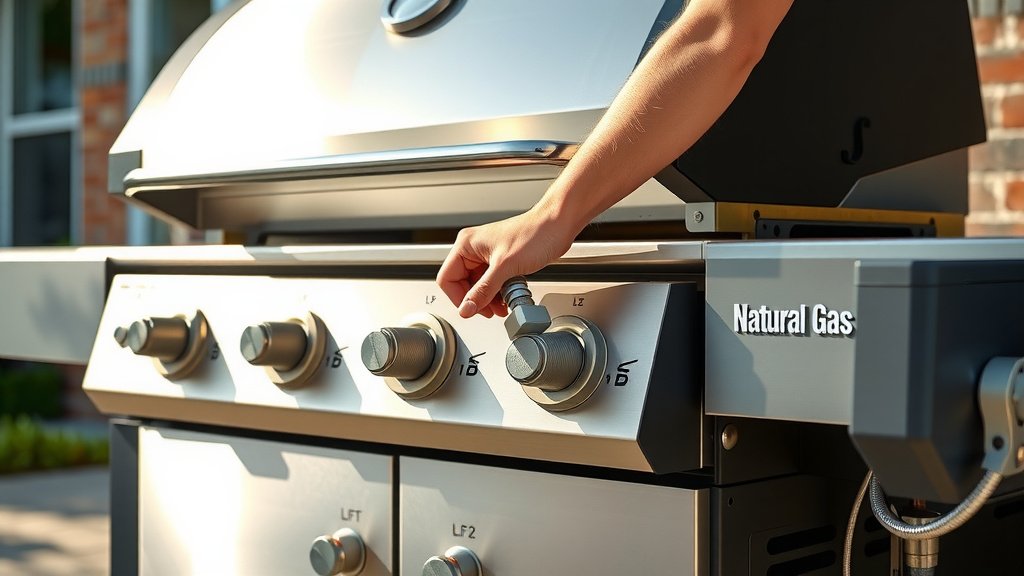
Converting your LP (liquid propane) gas grill to natural gas is often possible, but it requires a specific conversion kit and careful attention to safety instructions for successful operation. You’ll need to replace the gas orifices and potentially the regulator and hose, ensuring the correct parts for natural gas are installed.
This process typically involves shutting off the gas supply, accessing the burner manifold, swapping out the small burner orifices, and connecting to a natural gas line with the proper regulator.
Here’s a quick summary of what you need to know:
- Always confirm your grill model is conversion-ready before starting.
- You’ll need a specific natural gas conversion kit for your grill brand.
- Replacing the small brass burner orifices is the most critical step.
- A new natural gas regulator and hose are essential for safety and function.
- Always perform a leak test before using the converted grill.
How To Convert LP Gas Grill To Natural Gas?
Converting your LP grill to natural gas involves swapping out key components that control gas flow, primarily the burner orifices, to accommodate the different pressure and characteristics of natural gas. This ensures your grill operates safely and efficiently on its new fuel source.
Why Make the Switch to Natural Gas?
Thinking about why you might convert your grill? Many grill enthusiasts find natural gas offers incredible convenience. Imagine never running out of fuel mid-cookout or needing to haul heavy propane tanks for refills. A natural gas line provides a continuous, affordable fuel supply right to your backyard grill (Energy.gov).
We found that having a direct natural gas connection can significantly enhance your grilling experience, making it more spontaneous and less reliant on tank management. It’s a move towards effortless outdoor cooking.
Is Your Grill Ready for Conversion?
Before you even think about grabbing tools, you need to check if your grill is designed for conversion. Not all LP grills can safely switch to natural gas. We found that most grill manufacturers offer specific models that are either convertible or come with separate LP and NG versions. Always check your grill’s owner’s manual or manufacturer’s website first.
Many experts say looking for a “Convertible” label or checking the model number for specific kits is your first, most important step. Trying to convert a non-convertible grill can be dangerous and ineffective.
Understanding LP vs. Natural Gas
LP (liquid propane) and natural gas are different fuels, operating at different pressures. LP gas typically has a higher pressure than natural gas. This is why you cannot simply connect an LP grill to a natural gas line without modifying it. The small brass orifices must be changed to allow the correct amount of natural gas to flow for proper combustion.
Essential Tools and Parts You’ll Need
Ready to get started? Gather your tools and the right conversion kit first. Having everything on hand makes the process smoother and safer. You don’t want to be searching for a wrench mid-conversion.
The Right Conversion Kit
The single most important part is the natural gas conversion kit specific to your grill model. This kit usually includes the correct natural gas orifices for each burner, and often a new natural gas hose and regulator. Do not use generic kits; a mismatch can lead to poor performance or, worse, safety hazards.
- Manufacturer-specific natural gas orifices
- Natural gas regulator
- Natural gas hose (if not already part of your home’s gas line)
- Possibly a different manifold or control valves (less common, but check your manual)
Basic Tool List
You probably have most of these in your toolbox already. Make sure they are clean and in good working order. Safety glasses are always a good idea when working with gas and tools.
Here’s a quick checklist:
- Adjustable wrench or socket set
- Screwdriver set (Phillips and flathead)
- Pliers
- Dish soap and water for leak detection
- Pipe thread sealant (rated for natural gas)
- Safety glasses
- Work gloves
Step-by-Step Guide to Converting Your Grill
This is where the real work begins. Take your time, follow each step carefully, and remember that safety is paramount. If anything feels beyond your comfort level, please consider calling a professional (National Fire Protection Association suggests caution with gas lines).
Safety First: Disconnecting LP and Shutting Off Gas
Before touching anything, ensure maximum safety. Disconnect your existing LP tank entirely and move it away from your workspace. If you already have a natural gas line installed, ensure the main natural gas supply valve is completely off. Double-check this before proceeding.
Accessing and Replacing Burner Orifices
The burner orifices are tiny brass fittings found at the end of the burner tubes where they connect to the gas manifold. These little parts control the gas flow. Carefully remove the grill grates, heat diffusers, and burners to expose them. You’ll use your wrench or socket to unscrew the existing LP orifices and replace them with the smaller natural gas orifices from your kit. Be careful not to cross-thread them.
Installing the New Natural Gas Regulator and Hose
Now, connect your new natural gas regulator and hose. The regulator is crucial as it reduces the gas pressure from your home’s line to a safe, usable level for the grill. Apply pipe thread sealant to the threads of the connections before tightening them. Ensure all connections are snug, but do not overtighten, which can damage threads.
Adjusting Air Shutters (If Applicable)
Some grills have adjustable air shutters located near where the burner tubes connect to the manifold. Natural gas requires a different air-to-fuel mix than LP. You may need to adjust these shutters to achieve a blue flame with minimal yellow or orange tips. Start with them slightly open and adjust until you get a clean, consistent flame.
The Crucial Leak Test
This step is absolutely non-negotiable. With all connections tightened and the grill reassembled, slowly turn on your natural gas supply. Mix some dish soap with water to create a soapy solution. Apply this solution to all new gas connections. Look for bubbles forming; bubbles indicate a leak. If you see bubbles, immediately shut off the gas and re-tighten the connection until no bubbles appear. Repeat the test until all connections are leak-free.
When to Call a Professional
While converting a grill can be a DIY project for many, there are times when calling a professional is the smartest choice. If you’re not comfortable working with gas lines, or if your home doesn’t have an existing natural gas hookup, a licensed plumber or gas technician can install the line and perform the conversion safely. Your safety should always come first.
Post-Conversion Checklist
You’ve done the work, now let’s make sure everything is perfect before your first cookout. This quick checklist ensures your newly converted grill is ready for action and safe to use.
- All gas connections are leak-free (confirmed with soap test).
- Burner orifices are correctly installed and tightened.
- The correct natural gas regulator is in place.
- Burner flames are blue and stable, with no significant yellow tips.
- The grill ignites easily and consistently.
- All original grill components (grates, heat tents) are reinstalled correctly.
Conclusion
Converting your LP gas grill to natural gas can be a rewarding project, bringing the convenience of a continuous fuel supply right to your backyard. Remember, the key to a successful conversion lies in choosing the correct manufacturer-specific kit, meticulously following safety protocols, and performing a thorough leak test. If you ever feel uncertain, don’t hesitate to seek assistance from a qualified professional. Enjoy your newfound freedom from propane tank worries and get ready for countless natural gas grilling adventures!
Frequently Asked Questions
Can I convert any LP grill to natural gas?
No, not all LP grills are designed for conversion. You must check your grill’s owner’s manual or the manufacturer’s website to confirm if a specific natural gas conversion kit is available for your model. Attempting to convert a non-convertible grill can be unsafe and void its warranty.
What is the main difference between LP and natural gas grills?
The main difference lies in the type of gas used and the pressure at which it operates. LP (liquid propane) typically uses higher pressure and requires different sized orifices (small gas jets) than natural gas. Natural gas grills have larger orifices and a different regulator to handle the lower pressure of natural gas from a residential line.
Do I need a special regulator for natural gas?
Yes, absolutely. You need a specific natural gas regulator designed to reduce the incoming natural gas pressure to the correct, lower operating pressure for your grill. An LP regulator will not work safely or effectively with a natural gas supply, and vice versa. Always use the regulator provided in your conversion kit or one recommended by the manufacturer.
How do I know if I have a gas leak after conversion?
After converting, the most reliable way to check for gas leaks is by performing a soap test. Mix dish soap with water and apply the solution to all gas connections. If you see bubbles forming, it indicates a gas leak. Immediately shut off the gas supply and re-tighten the connection until the bubbling stops, then retest.
Should I call a professional to convert my grill?
While many can perform this DIY task, calling a professional is recommended if you are uncomfortable working with gas lines, lack the proper tools, or if your home does not yet have a natural gas hookup to your grilling area. A licensed plumber or gas technician can ensure the installation and conversion are done safely and according to local codes.
