
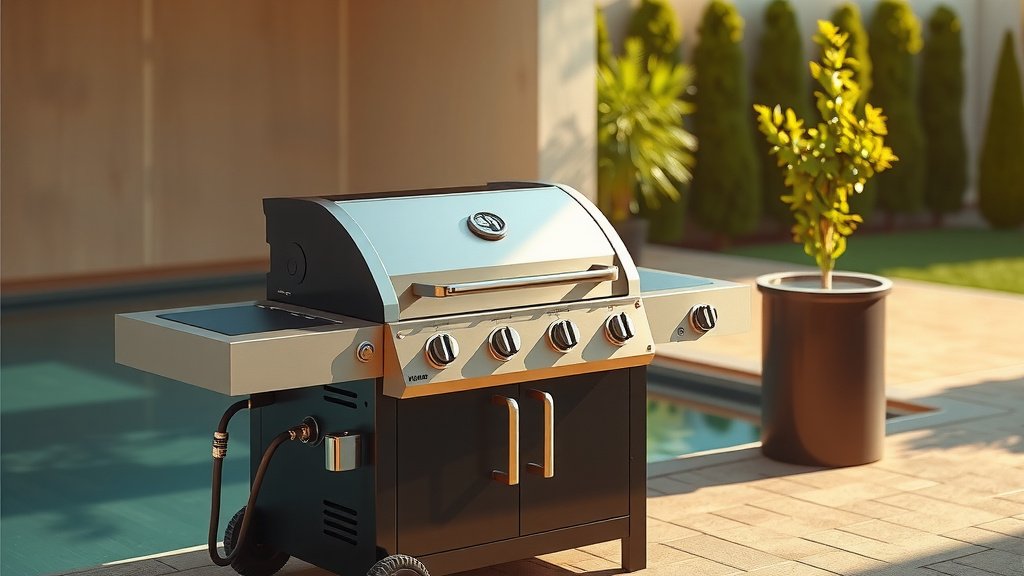
Connecting your BBQ grill to a gas line involves ensuring you have the right conversion kit and proper shut-off valves for safety.
You will typically use a flexible gas hose to link your grill to a permanent natural gas supply, ensuring all connections are tight and leak-free.
Here’s a quick summary for you:
- Get a natural gas grill or an appropriate conversion kit if you have a propane model.
- Always locate and use your home’s outdoor gas shut-off valve for safety.
- Install quick-disconnect fittings; they make connecting and disconnecting your grill simple.
- Perform a crucial leak test with soapy water on all connections after installation.
- Consider hiring a qualified professional for peace of mind, especially if you’re unsure.
How To Connect BBQ Grill To Gas Line?
Connecting your BBQ grill to a gas line lets you enjoy endless fuel for your cookouts. This process requires a few key steps and a strong focus on safety.
Are you tired of running out of propane in the middle of a grilling session? Many grill masters know that feeling. Making the switch to a natural gas line can make a big difference.
Why Connect to a Gas Line?
Imagine never having to haul heavy propane tanks again. Connecting to your home’s gas line offers unmatched convenience. It means consistent fuel and no more emergency tank runs.
We found that many people enjoy the uninterrupted cooking time. It saves money over time, too, as natural gas is often more economical than propane.
What You Will Need: The Essentials
Before you begin, gather all your supplies. Having the right tools makes the job smoother and safer. You’ll need a few specific items to ensure a proper connection.
Here’s a quick checklist to help you get started:
- Natural gas grill or conversion kit
- Flexible natural gas hose (correct length)
- Quick-disconnect fitting (optional, but recommended)
- Gas-rated thread sealant or Teflon tape
- Adjustable wrenches (two are helpful)
- Soapy water solution (for leak testing)
- A main shut-off valve on your home’s gas line
Is Your Grill Ready for Natural Gas?
This is a big question! Not all grills can use natural gas right away. Propane grills operate at a higher pressure and have different orifices.
A propane grill needs a natural gas conversion kit. This kit typically includes new orifices and possibly a new regulator. Always check your grill’s manual first.
Safety First: Always!
Connecting gas lines is serious business. Your safety is the absolute top priority. Working with gas requires caution and attention to detail.
Always ensure your home’s main gas shut-off valve is easily accessible. Many experts agree that understanding gas safety is non-negotiable (National Fire Protection Association).
Steps to Connect Your Grill
Ready to get hands-on? Let’s walk through the connection process step by step. Take your time, and don’t rush any part of it.
Finding Your Gas Source
Your home likely has an existing outdoor gas stub-out. This is usually a capped pipe sticking out of your house wall. It’s often near a patio or deck.
If you don’t have one, you might need a professional to install a new line. Research often points to checking local codes for gas line installations (U.S. Consumer Product Safety Commission).
Preparing the Grill
If converting a propane grill, follow the kit instructions carefully. This usually involves replacing orifices on the burners. It’s a precise task.
You will also remove the existing propane regulator and hose. The grill will now be ready for the natural gas pressure.
Making the Connection
First, ensure the gas supply to your home is off at the main valve. This prevents any gas leaks during installation. Safety is key here.
Apply gas-rated thread sealant or Teflon tape to the male threads of your gas line connection. This helps create a secure, leak-free seal.
Connect one end of your flexible natural gas hose to the gas stub-out. If using a quick-disconnect, attach that first. Then, connect the other end to your grill’s gas inlet.
Use two wrenches to tighten connections. One to hold the pipe, and one to tighten the fitting. This prevents twisting or damaging your existing gas line.
Testing for Leaks: A Critical Step
Never skip this! This step confirms your connections are sound. It’s like checking your tire pressure before a long drive.
Turn your home’s main gas supply back on slowly. Mix a solution of dish soap and water. It should be about 50/50.
Apply the soapy solution liberally to all new connections. Watch for bubbles forming. If you see bubbles, you have a leak. Tighten the connection, then re-test.
No bubbles means your connection is secure. You are ready to grill! Many safety guidelines point to this as a simple, effective leak detection method (Mayo Clinic).
Common Mistakes to Avoid
Making a gas connection can feel intimidating. Avoiding common pitfalls will save you trouble. Here are some things to watch out for.
Don’t use unrated tape or sealant. Only use products specifically for gas lines. Also, never skip the leak test. It’s your most important safety check.
Using the wrong hose length can also be an issue. A hose that’s too short will strain the connection. One too long can become a tripping hazard.
Here’s a useful table for comparison:
| Feature | Propane Grill | Natural Gas Grill |
|---|---|---|
| Fuel Source | Portable tanks | Home gas line |
| Pressure | High pressure | Low pressure |
| Fuel Supply | Limited by tank size | Continuous |
| Conversion Needs | Can convert to NG (kit needed) | Requires specific NG setup |
When to Call a Pro
Sometimes, DIY isn’t the best route. If you’re unsure about any step, call a licensed plumber or gas technician. It’s always better to be safe.
If you need a new gas line installed outdoors, a professional is a must. They understand local codes and permits. This ensures your installation is safe and compliant.
Choosing the Right Connection Parts
Selecting the correct flexible hose is important. Ensure it’s approved for outdoor natural gas use. Look for hoses with yellow markings, indicating gas use.
A quick-disconnect fitting is a great addition. It allows you to easily detach your grill for storage or moving. Think of it as a simple plug-and-play for your grill.
Maintenance for Your Gas Line Connection
Just like your grill, your gas line connection needs occasional checks. Periodically inspect the hose for cracks or wear. Ensure all connections remain tight.
A yearly leak test with soapy water is a good practice. This helps catch any issues before they become problems. A little maintenance goes a long way.
Benefits of a Permanent Gas Line BBQ
Beyond convenience, there are other perks. You often save money on fuel costs over time. Natural gas is generally less expensive than propane per BTU.
It’s also a greener option, as natural gas burns cleaner. This setup provides a seamless, ready-to-use grilling experience whenever you want.
Conclusion
Connecting your BBQ grill to a natural gas line offers a fantastic upgrade to your outdoor cooking. It brings ease, savings, and uninterrupted grilling fun. Remember to prioritize safety above all else, always double-checking your work.
By following these steps, you can confidently make the switch. If in doubt, contacting a professional ensures peace of mind. Get ready to fire up your grill and enjoy the endless fuel!
Can I convert a propane grill to natural gas myself?
Yes, many propane grills can be converted to natural gas using a manufacturer-approved conversion kit. This typically involves changing the burner orifices and the regulator. Always follow your grill’s specific instructions and consider professional help if you are uncomfortable with the process.
How do I know if my flexible gas hose is safe for outdoor use?
Look for hoses specifically rated for outdoor natural gas use. They often have yellow markings or are explicitly labeled for natural gas. Ensure the hose is the correct length, made from durable materials, and free from kinks or damage.
What is the most important safety step when connecting a gas line?
The most important safety step is always performing a leak test with soapy water after making any connections and before lighting your grill. This confirms there are no gas leaks, which is essential for preventing dangerous situations.
Do I need a quick-disconnect fitting for my natural gas grill?
While not strictly mandatory, a quick-disconnect fitting is highly recommended. It allows you to easily and safely connect or disconnect your grill from the gas line, which is convenient for storage, cleaning, or moving the grill.
Should I turn off the main gas supply to my house during installation?
It is crucial to turn off the gas supply at the outdoor shut-off valve to the grill line before making any connections. For some installations, turning off the main gas supply to the house might be a necessary precaution, but usually, just the outdoor valve for the grill is sufficient. Always verify the specific requirements and consult a professional if unsure.
