
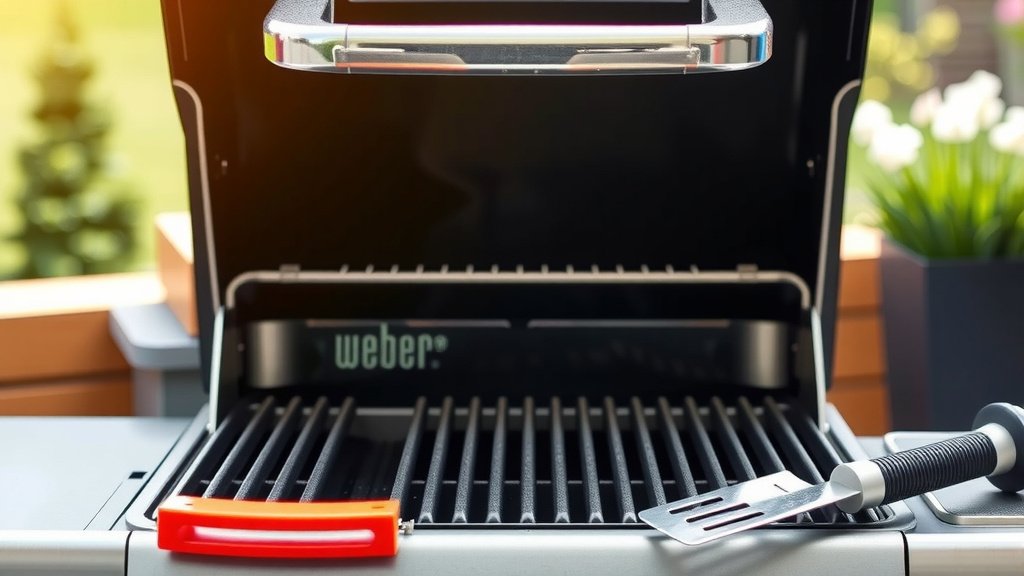
To clean Weber gas grill grates effectively, preheat your grill to high for 10-15 minutes, then use a sturdy grill brush to scrape off food residue.
For a deeper clean, especially when tackling tough, stuck-on grime, consider using a warm soapy water soak after the grill has cooled down and always rinse thoroughly.
Want the quick rundown on getting those Weber gas grill grates spotless? We’ve got you covered with these straightforward steps:
- Preheat your grill to burn off loose food particles and make scrubbing easier.
- Brush vigorously with a good grill brush while the grates are hot to remove most debris.
- For stubborn messes, allow cooled grates to soak in warm, soapy water for 15-30 minutes.
- Rinse every grate thoroughly with clean water and dry completely to prevent rust formation.
- Regular cleaning extends grate life, prevents flare-ups, and ensures your food tastes its best.
How To Clean Weber Gas Grill Grates?
You can effectively clean your Weber gas grill grates by combining a hot wire brushing method after each use with occasional deep soaking in warm, soapy water for a truly pristine surface.
Why Clean Your Grill Grates Anyway?
Ever wonder if cleaning those grill grates is really worth the effort? Absolutely! Think of it like cooking in a dirty pan; nobody wants that.
Clean grates aren’t just about appearances. They prevent old food bits from sticking to your fresh meal, which means better flavor and less mess later on.
More Than Just Appearance
When you grill, old food particles burn and turn into carbonized crust. This crust can transfer unwanted flavors to your delicious burgers or steaks.
Dirty grates also block heat, leading to uneven cooking. Plus, leftover grease can cause flare-ups, which are both dangerous and can char your food (Grilling Safety Council).
The Hot Clean Method: Quick and Effective
This is your go-to cleaning strategy after every grilling session. It’s fast, efficient, and tackles most of the fresh mess.
Many experts say that performing a quick clean while the grill is still hot is the single most important step for maintaining clean grates.
Preheat and Brush While Hot
After you’ve finished cooking, turn your grill to high for about 10 to 15 minutes. This intense heat will char any leftover food particles, making them easier to remove.
Once hot, use a sturdy grill brush and scrape the grates vigorously. You’ll see those charred bits crumble and fall away, revealing cleaner grates beneath.
Choosing Your Hot Clean Brush
Not all grill brushes are created equal. We found that a good quality stainless steel brush with strong bristles works best for hot cleaning.
Look for brushes with a long handle to keep your hands safe from the heat. Some even have scrapers built-in for extra stubborn spots.
Deep Cleaning Stubborn Grates: A Soapy Approach
Sometimes, a hot brush just isn’t enough. For grates with baked-on grease or thick grime, a deep clean is necessary. This is where warm, soapy water becomes your best friend.
You’ll know it’s time for a deep clean when your grates feel sticky even after brushing, or you notice a build-up that just won’t budge.
Safety First: Let Them Cool Down
Before attempting any deep cleaning, always make sure your grill is completely off and cool to the touch. Safety is paramount when handling hot surfaces and cleaning solutions.
Trying to remove grates from a hot grill can lead to burns. Patience now means a safer and more effective cleaning process.
The Warm, Soapy Water Soak
Once cool, carefully remove your grill grates. Place them in a large sink, utility tub, or a bucket. Fill it with warm water and a generous amount of mild dish soap.
Let the grates soak for at least 15 to 30 minutes. For truly baked-on grime, an hour or even overnight can make a significant difference. The soap helps to break down grease and soften burnt food.
Handling Different Grate Materials
While the soaking method works for most Weber grates, a slight nuance in approach can help prolong their life and effectiveness. Each material has its own best practice.
| Grate Material | Cleaning Approach | Extra Tip |
|---|---|---|
| Cast Iron | Warm soapy soak, use a stiff nylon brush, then thoroughly dry. | Re-season lightly with a high smoke point cooking oil after drying. |
| Porcelain-Enameled | Gentle soap and sponge; avoid harsh abrasive brushes or steel wool. | Inspect for chips; exposed cast iron underneath can rust quickly. |
| Stainless Steel | Hot brush or soapy soak; can handle more vigorous scrubbing. | Buff with a tiny amount of cooking oil to keep them looking shiny. |
Your Go-To Cleaning Tools Checklist
Having the right tools ready makes the cleaning process much smoother and faster. Think of it like having the right ingredients for a recipe.
We’ve found that these items are typically all you’ll need for sparkling clean Weber gas grill grates:
- A sturdy long-handled grill brush (preferably stainless steel or nylon)
- Heavy-duty rubber gloves to protect your hands from grease and cleaning solutions
- Mild dish soap, like what you use for everyday dishes
- A large bucket, utility tub, or sink for effective soaking of the grates
- A non-abrasive sponge or cloth for scrubbing after soaking
- Plenty of clean water for rinsing away all soap residue
Rinsing and Drying Properly
After scrubbing, rinse your grates thoroughly under running water. Ensure all soap suds and loosened food particles are completely gone. Any leftover soap can impact food flavor.
Once rinsed, it’s absolutely crucial to dry your grates immediately and completely. Water left on grates, especially cast iron, can lead to rust.
Essential Tips for Ongoing Maintenance
Consistent, small cleaning efforts can save you from big cleaning jobs. A little care after each cook goes a long way in keeping your grates in top condition.
Think of it as preventive maintenance; it preserves your investment and enhances your grilling enjoyment (Weber Grill Care Guide).
What to Avoid: Common Cleaning Pitfalls
While you want clean grates, using the wrong products or methods can actually cause damage. Some solutions might seem helpful but could ruin your grates or be unsafe.
For example, industrial degreasers can be too harsh for some grate materials, stripping away protective coatings.
The Dangers of Wire Brushes
Many experts now recommend caution with traditional wire bristle brushes. There’s a small but real risk of bristles breaking off and potentially getting into your food.
Consider safer alternatives like nylon brushes for cooled grates, a grill stone, or a scraper. Always inspect your grates for loose bristles before cooking.
Conclusion
Cleaning your Weber gas grill grates doesn’t have to be a chore. By understanding the simple hot clean method and knowing when to apply a deeper, soapy soak, you’re well on your way to perfectly maintained grates.
Remember, a little consistent effort not only extends the life of your grill parts but also ensures every meal you cook is delicious, safe, and free from old food residue. Happy grilling!
Frequently Asked Questions
How often should I clean my Weber gas grill grates?
You should perform a quick hot clean after every grilling session. A deeper, more thorough cleaning with soap and water is recommended every 3-5 uses, or whenever you notice significant buildup.
Can I use oven cleaner on my Weber grill grates?
Many experts advise against using oven cleaner on grill grates, especially porcelain-enameled ones. It can damage the finish, making grates more prone to rust and sticking. Mild dish soap and warm water are generally safer and effective.
What’s the best way to prevent food from sticking to the grates?
To prevent sticking, always start with clean grates. Preheat your grill properly, then lightly oil the grates just before placing food on them. Use a high smoke point oil like canola, grapeseed, or avocado oil applied with a paper towel and tongs.
Is it okay to leave grill grates outside in the rain?
Leaving grill grates, particularly cast iron ones, exposed to rain can cause rust. Always store your grates in a dry place or ensure your grill is covered with a proper grill cover to protect them from the elements.
How do I clean the other parts of my Weber gas grill?
While this article focuses on grates, other parts like flavorizer bars, burner tubes, and the cook box also need attention. Flavorizer bars can be scraped; burner tubes often need clearing of debris, and the cook box can be scraped clean of grease buildup when cool.
