
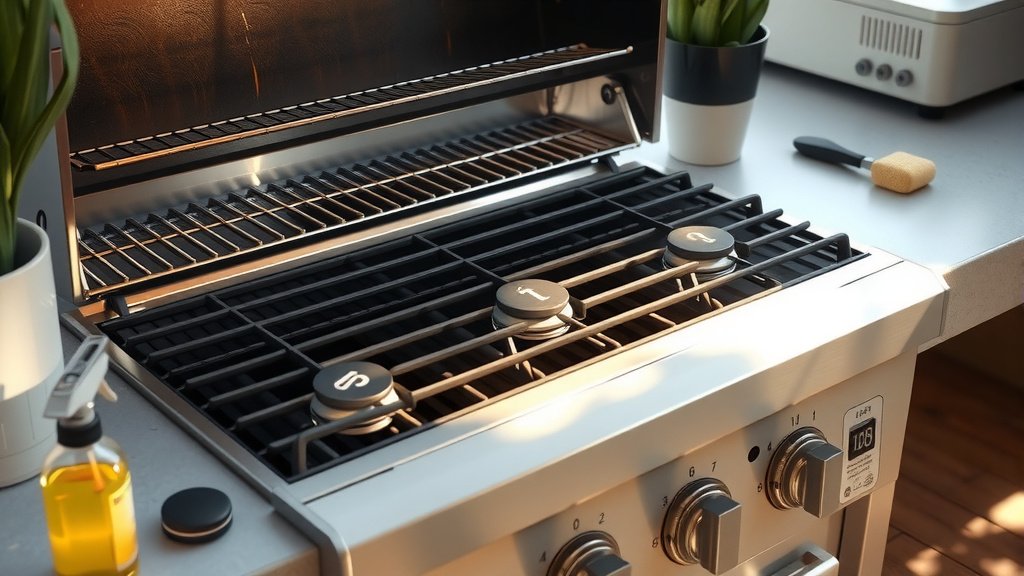
Using oven cleaner to clean your gas grill is generally not a good idea, as its harsh chemicals can damage grill components and leave behind harmful residues.
Many experts advise against it, recommending safer, purpose-built cleaning products for your gas grill instead.
- Avoid oven cleaner for gas grills; it’s too strong and risky.
- You could damage your grill’s materials, like stainless steel and aluminum.
- Harmful chemical residues might transfer to your food.
- Stick to mild dish soap, warm water, or specialized grill cleaners.
- Regular, gentle cleaning keeps your grill safe and ready for use.
Can I Use Oven Cleaner To Clean My Gas Grill?
No, you generally should not use oven cleaner on your gas grill. Its powerful chemicals are often too aggressive for the specific materials found in most grills.
This can cause serious problems, from material damage to food safety concerns, making it a practice many grill experts advise against.
Why Oven Cleaner and Gas Grills Don’t Mix
Think of it like this: your grill and your oven are designed differently. Oven cleaners are made to tackle baked-on grease inside an enclosed, non-porous oven cavity.
Your gas grill, however, has different materials and open flame elements. The harsh chemicals are simply not a good fit for it.
The Chemical Composition Problem
Most oven cleaners contain strong lye (sodium hydroxide) or other caustic agents. These are amazing at dissolving tough oven grime.
But on your grill, these chemicals can be too corrosive for materials like aluminum, some types of stainless steel, and enamel finishes (Consumer Reports).
Risks of Using Oven Cleaner on Your Grill
Why take a chance with something you cook food on? There are several important risks you really should consider before reaching for that can.
Damage to Grill Components
Oven cleaner can discolor or etch stainless steel. It can also pit or corrode aluminum parts, leading to structural weaknesses over time.
Imagine your burners or internal components failing earlier than expected simply because of a cleaning product. Not ideal, right?
Leaving Harmful Residues
This is a big one. Oven cleaners are designed to be thoroughly rinsed in an oven, which is a bit easier than a complex grill.
If not fully removed, these chemical residues can linger on grates and internal surfaces. When you heat up your grill, they can create unpleasant fumes and potentially transfer to your food.
Impact on Food Flavor
Nobody wants a hint of industrial cleaner with their perfectly seared steak. Residual chemicals can definitely alter the taste of your food.
Even if not harmful, a chemical taste is enough to ruin your grilling experience and disappoint your guests.
Voiding Your Warranty
Many grill manufacturers specify approved cleaning methods and products. Using harsh, off-label cleaners like oven cleaner can easily void your warranty.
Always check your grill’s manual for recommended care to keep your coverage valid.
Safe and Effective Grill Cleaning Alternatives
So, if oven cleaner is out, what should you use? Plenty of safer options will get your grill sparkling clean without the risks.
- Mild Dish Soap and Warm Water: Your everyday dish soap is surprisingly powerful against grease and grime when paired with warm water.
- Specialized Grill Cleaners: Many brands offer products designed specifically for grills. These are formulated to be safe for grill materials.
- Baking Soda Paste: For stubborn, caked-on spots, a paste of baking soda and water can work wonders. Let it sit, then scrub.
- Vinegar Solution: A mix of equal parts white vinegar and water can help cut grease and shine surfaces.
- Steam Cleaning: Some people use a steam cleaner for a powerful, chemical-free deep clean on their grates.
Oven Cleaner vs. Grill Cleaner: A Quick Look
To really drive the point home, here’s a simple comparison of why these two cleaning products are distinct.
| Feature | Oven Cleaner | Grill Cleaner (Specialized) |
|---|---|---|
| Primary Chemicals | Strong caustics (lye) | Milder surfactants, degreasers |
| Target Surface | Enamel-lined oven interiors | Stainless steel, cast iron, grill grates |
| Risk of Damage | High for grill materials | Low when used as directed |
| Residue Concern | High, potentially toxic | Low, designed for food contact surfaces |
| Safety for Food | Not designed for direct food contact surfaces | Formulated with food preparation in mind |
Step-by-Step for a Sparkling Gas Grill
Ready to give your grill a proper clean? Here’s a simple process to follow for great results.
Preparation is Key
First, always ensure your grill is completely off and cool. Disconnect the gas supply for safety first.
Gather your supplies: a grill brush, warm water, dish soap, sponges, and perhaps a plastic scraper. We found that having everything ready saves a lot of time.
Tackling the Grates
Remove your grill grates. You can soak them in a tub of warm, soapy water for about 15-30 minutes if they are extra dirty.
Scrub them with a stiff grill brush or a heavy-duty sponge. For cast iron, use caution and avoid abrasive soaps (Weber Grill Care Guide).
Cleaning Inside the Firebox
Carefully remove flavorizer bars, heat tents, or briquette trays. Brush away any loose debris, ash, or burnt food particles.
Use a plastic scraper or spatula for caked-on bits. Then, wipe down the inside surfaces with a damp cloth and mild soap solution.
Burner Maintenance
Inspect your burners for clogged holes. Use a wire brush or a clean paperclip to gently clear any blockages.
Never spray liquid directly into the burner tubes. Keep them dry and clear for optimal performance.
Exterior Shine
Wipe down the exterior surfaces of your grill with warm, soapy water and a soft cloth. For stainless steel, wipe with the grain to avoid streaks.
Specialized stainless steel cleaners can give it an extra polish, making it look brand new.
Quick Checklist for a Clean Grill
Here’s a simple reminder of what to do to keep your grill in top shape:
- Turn off and disconnect gas.
- Allow grill to cool completely.
- Remove grates and internal components.
- Scrub with a grill brush.
- Wash with mild soap and water.
- Rinse thoroughly.
- Dry all parts completely.
- Reassemble and reconnect gas.
Conclusion
While the idea of using a powerful oven cleaner on your gas grill might seem appealing for tough grease, it’s a decision that carries significant risks. From damaging your grill’s components to leaving harmful residues that can affect your food and health, the downsides outweigh any perceived benefits.
Instead, choose the path of safety and effectiveness. Opt for mild dish soap, specialized grill cleaners, or natural alternatives like baking soda. Your gas grill will not only look cleaner but also remain safe, reliable, and ready to deliver delicious meals for many seasons to come. Happy grilling!
FAQs About Cleaning Your Gas Grill
Is it okay to use a power washer on my gas grill?
Using a power washer on your gas grill is generally not recommended. The high pressure can damage delicate components, dislodge internal wiring, or even remove protective coatings, potentially leading to rust or functional problems. Stick to gentler cleaning methods.
How often should I deep clean my gas grill?
Many grill enthusiasts suggest a light cleaning of grates after every use. For a deeper clean of the entire grill, including flavorizer bars and internal components, aim for two to three times per grilling season, depending on how frequently you use it.
Can I use steel wool to clean my grill grates?
You should be cautious with steel wool, especially on stainless steel or porcelain-coated grates. It can scratch the surfaces, potentially leading to rust on stainless steel or chipping the coating on porcelain. A stiff nylon brush or a dedicated grill brush is often a safer choice.
What if I accidentally used oven cleaner on my grill? What should I do?
If you’ve already used oven cleaner, the most important step is to rinse the grill thoroughly, multiple times. Use plenty of water and a brush to ensure all chemical residues are removed. Then, heat the grill on high for at least 15-20 minutes to burn off any remaining residue before cooking. Inspect for damage.
Are there any natural alternatives for grill cleaning?
Absolutely! A paste made from baking soda and water is excellent for stubborn grease. White vinegar diluted with water works well as a degreaser and to shine surfaces. Lemon juice and salt can also be used as an abrasive scrub for grates, followed by a thorough rinse.
