
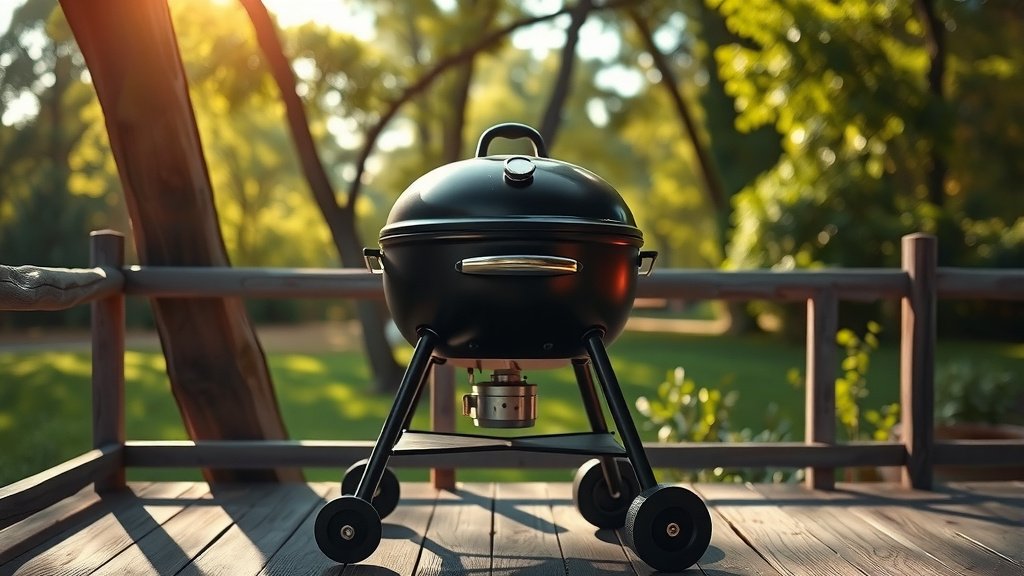
The concept of cooking meat over an open flame is ancient, but the modern BBQ grill evolved over centuries from simple open fires to more sophisticated designs. No single inventor can claim the entire BBQ grill, as its journey involved countless innovations.
While early humans began cooking with fire, making them the first barbecuers, the specific appliance we call the BBQ grill emerged through a gradual process, integrating contributions from various cultures and individual innovators over thousands of years.
- The BBQ grill has no single inventor; its origins are ancient.
- Early humans started cooking meat over open flames millennia ago.
- The term “barbecue” comes from the Taino “barbacoa,” a wooden structure for slow cooking.
- Modern charcoal briquettes were popularized by Henry Ford and Kingsford.
- Today’s grills, both gas and charcoal, are the result of continuous innovation.
Who Invented The BBQ Grill?
The BBQ grill, as we know it, wasn’t invented by one person. Its story spans thousands of years, evolving from basic fire pits to the backyard machines you enjoy today.
The Ancient Roots of Cooking Over Fire
Imagine our ancestors discovering fire. This wasn’t just warmth; it was a way to cook food. They placed meat directly on embers or used sticks, marking the very first step toward grilling.
This primal method of cooking over an open flame transformed human diets and culture. It predates any formal “grill” by vast stretches of time (National Geographic).
From “Barbacoa” to Barbecue
The word “barbecue” itself has a fascinating origin. It comes from the Taino people of the Caribbean, who used a wooden structure called a “barbacoa.” This was a framework for slow-cooking meats over a fire.
Spanish explorers encountered this technique and brought the word back to Europe. You can see how this slow cooking method was a precursor to modern smoking.
Early European Adaptations
As the concept spread, Europeans adapted it. They built brick pits or used iron grates over fires, blending existing cooking practices with the new “barbacoa” idea. This was still far from a portable BBQ grill.
These early setups were often permanent structures, serving to feed larger groups. They really helped popularize outdoor cooking traditions in new ways.
The Rise of Cast Iron Grills
The 19th century brought significant changes. The Industrial Revolution made cast iron more available and affordable. This allowed for the creation of more durable and somewhat portable cooking grates.
These early metal grills could be placed over existing fireplaces or campfires. They made grilling a bit easier and more accessible for many families, marking a step towards specialized grilling equipment.
Charcoal’s Game-Changing Moment
Charcoal has been around for ages, but standardized charcoal briquettes changed grilling forever. In the early 20th century, Henry Ford, with help from Thomas Edison and E.G. Kingsford, popularized them.
Ford used wood scraps from car production to create uniform briquettes. This led to the formation of Kingsford Charcoal, making grilling fuel reliable and widely available. It truly standardized the charcoal experience.
Enter the Gas Grill Era
The 1950s saw the birth of the gas grill. Restaurants had been using natural gas for cooking for a while. It was only a matter of time before this convenience moved to backyards.
Many experts credit Don McLemore, working for the Arkla company, with creating one of the first widely available backyard gas grills in the late 1950s. This innovation brought convenience to outdoor cooking.
George Stephen and the Weber Kettle
In 1952, George Stephen of Weber-Stephen Products created the iconic kettle grill. Frustrated by open grills, he cut a marine buoy in half, creating a lid that trapped heat and smoke. This was revolutionary.
The Weber Kettle allowed for controlled, indirect cooking, greatly improving flavor and consistency. It became an instant classic, helping millions to master backyard barbecue (Weber History).
Early Gas Grill Pioneers
While McLemore’s Arkla Grill was important, other companies also experimented with gas. Early models faced challenges with propane distribution and safety. But the appeal of instant heat was undeniable.
These early pioneers laid the groundwork for the efficient gas grills you see today. They made it clear that a convenient, clean grilling option was highly sought after.
The Kamado’s Enduring Legacy
Long before modern grills, the “kamado” style cooker existed. These ceramic or clay ovens have roots in ancient China and Japan, used for centuries to bake and roast. They cook with remarkable heat retention.
Modern kamado grills, like Big Green Egg, draw directly from this ancient design. They offer incredible versatility, acting as a grill, smoker, and oven all in one. They are known for delivering consistent, moist results.
Specialized Smoking Technologies
Smoking meat also has deep historical roots, often connected to preservation. Today’s dedicated smokers have taken this art to new levels. They offer precise temperature control and smoke generation.
From offset smokers to vertical models, these devices focus on infusing food with deep, smoky flavors over many hours. They truly are for the dedicated pitmaster seeking flavor perfection.
Pellet Grills: A Modern Twist
Pellet grills are a newer innovation, combining the flavor of wood smoke with the convenience of gas. They feed wood pellets into a fire pot, maintaining precise temperatures digitally. This offers an automated smoking experience.
These grills have gained immense popularity for their ease of use and consistent results. They bridge the gap between traditional smoking and modern technology, making slow cooking simple and smart.
The Constant Evolution of Grilling
The journey of the BBQ grill is one of continuous improvement. From basic sticks over fire to smart grills controlled by your phone, innovation never stops. Each step added to our collective grilling heritage.
Consider the different types of grills available today. Each offers a unique experience, showing how much the original concept has diversified:
- Charcoal Grills: Classic smoky flavor, high heat potential.
- Gas Grills: Convenience and speed, easy temperature control.
- Pellet Grills: Wood-fired taste with digital precision.
- Kamado Grills: Versatile ceramic ovens for grilling, smoking, baking.
When you’re choosing your next BBQ grill, what truly matters?
Here’s a quick checklist to guide your decision:
- Fuel Type: Do you prefer charcoal, gas, or pellets?
- Cooking Space: How much food do you typically cook?
- Portability: Will your grill stay put or travel with you?
- Budget: What are you comfortable spending on a quality grill?
- Features: Are sear burners, rotisseries, or smart tech important?
Here’s a look at how different eras shaped our grilling options:
| Era/Influence | Key Grilling Innovation | Impact on Grilling |
|---|---|---|
| Ancient Cultures | Open fire cooking | Foundation of all cooked food |
| Taino People | “Barbacoa” wood frame | Introduced slow, smoky cooking |
| 19th Century | Cast iron grates | More durable, reusable surfaces |
| Early 20th Century | Standardized charcoal briquettes | Consistent, accessible fuel source |
| Mid-20th Century | Kettle grill (Weber) | Controlled heat, indirect cooking |
| Late 20th Century | Backyard gas grills | Ease of use, instant heat |
Conclusion
The BBQ grill is a testament to human ingenuity, a slow burn of innovation rather than a sudden spark from one inventor. From prehistoric campfires to advanced backyard setups, it reflects our enduring love for cooking with fire.
So, the next time you fire up your grill, remember you are participating in a tradition thousands of years in the making. It’s a collective heritage, allowing you to enjoy delicious, smoky meals right in your backyard.
What is the oldest form of barbecue?
The oldest form of barbecue is cooking meat directly over an open fire, a practice dating back to early human civilizations. This simple method laid the groundwork for all future grilling techniques.
Did someone invent charcoal?
Charcoal itself, as a product of burning wood in low oxygen, is an ancient discovery, not an invention by a single person. However, Henry Ford and Kingsford popularized the modern, standardized charcoal briquette in the early 20th century.
When did gas grills become popular?
Gas grills began gaining significant popularity in the 1960s, following their introduction in the late 1950s. Their convenience and ease of use quickly made them a favorite for backyard cooking.
Is a kamado grill a recent invention?
No, the kamado grill is not a recent invention. Its design originates from ancient ceramic cooking vessels found in China and later popularized in Japan. Modern kamado brands like Big Green Egg are based on these centuries-old principles.
Why is it called “barbecue”?
The word “barbecue” comes from “barbacoa,” a term used by the Taino people of the Caribbean. It referred to a wooden framework they used to slow-cook foods over a fire, which Spanish explorers later adopted.
