
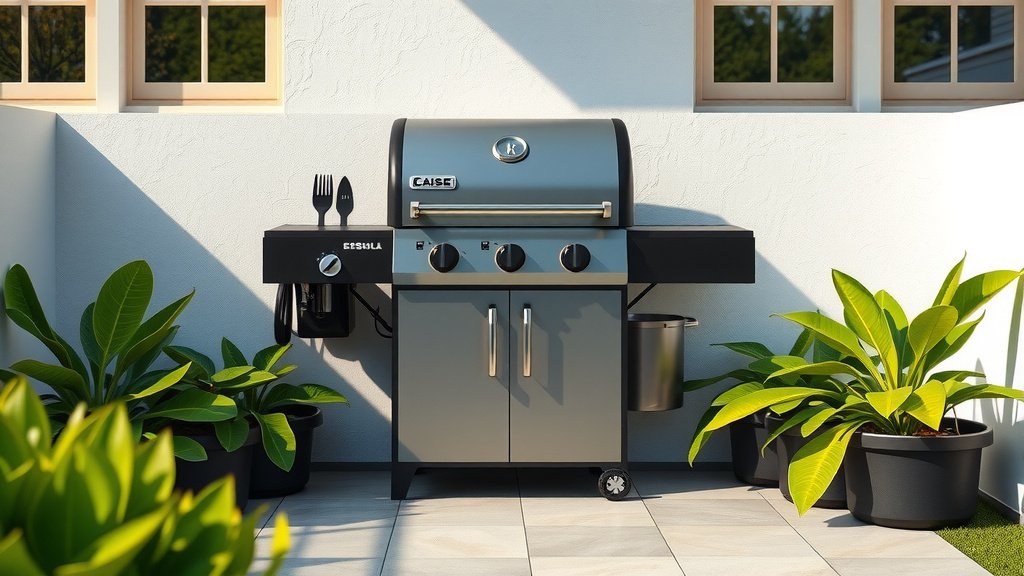
The best gas grill size for you depends on how many people you typically cook for and your available outdoor space. A good rule of thumb is to allow about 72 square inches of primary cooking space per person.
For most families, a gas grill with 400 to 500 square inches of primary cooking area is a versatile choice, handling both weeknight meals and small gatherings effectively.
Here’s a quick guide to help you choose:
- Small Grills (200-350 sq. in.) are perfect for 1-2 people or compact spaces like balconies.
- Medium Grills (350-500 sq. in.) work well for families of 3-5, offering good versatility.
- Large Grills (500+ sq. in.) are best for frequent entertaining or cooking multiple items for big groups.
- Always measure your available outdoor space and consider your grilling habits.
- Look for a grill with adequate BTUs, durable construction, and desired features.
What Size Gas Grill Do I Need?
Choosing the right gas grill size feels like a big decision. You want one that fits your lifestyle, not one that feels too small or too big. Let’s break down the factors so you can pick with confidence.
Consider Your Guest List
Who usually shows up for your cookouts? This is often the first question to ask yourself. The number of mouths you feed directly impacts the grill size you’ll need.
Grilling for a Few?
If it’s usually just you and a partner, or maybe one or two friends, a smaller grill is efficient. These grills often have one or two main burners. They heat up fast and don’t waste fuel on unused space.
Family Feast Time?
For a family of three to five, a medium-sized grill is a popular pick. It gives you enough room for burgers and hot dogs. You can also cook a small chicken or a few steaks all at once. Many experts say this size hits a sweet spot (Consumer Reports).
Hosting Big Parties?
Do you love having everyone over? Large grills are your best friend then. They can handle many portions simultaneously. Imagine grilling a dozen burgers and several corn cobs without feeling cramped. You get plenty of room to spread out.
Understanding Grill Dimensions
When you look at grill specifications, you’ll see “primary cooking area” and “warming rack area.” It’s good to know what these mean for your sizing needs. The primary area is where the magic truly happens.
Square Inches Matter
The primary cooking area is measured in square inches. This number tells you how much direct heat grilling space you get. A larger number means more food at once. Don’t forget the warming rack is great for keeping food warm, but it’s not for active cooking.
| Typical Servings | Primary Cooking Area (Square Inches) | Example Use |
|---|---|---|
| 1-2 people | 200-350 sq. in. | Quick weeknight meals, small balconies |
| 3-5 people | 350-500 sq. in. | Family dinners, small gatherings |
| 6-8 people | 500-650 sq. in. | Regular entertaining, larger families |
| 8+ people | 650+ sq. in. | Big parties, cooking many items |
Fuel Type: Natural Gas vs. Propane
While fuel type doesn’t directly change grill size, it impacts placement and setup. Are you thinking about a permanent spot or something you can move around?
Natural Gas Convenience
If you have a natural gas line on your patio, a natural gas grill offers endless fuel. You won’t run out mid-cook. This often means a grill stays in one spot, so a larger size might make sense for a dedicated cooking station.
Propane Portability
Propane grills use tanks, making them more portable. You can move them around your yard or even take them camping. This flexibility might lead some to prefer a medium-sized grill, easier to wheel around.
Think About Your Grilling Habits
What do you love to grill? Are you a burger-and-hotdog purist, or do you enjoy elaborate multi-course meals? Your cooking style influences your ideal grill size and features.
Simple Burgers and Dogs
If your menu is usually straightforward, a smaller or medium grill works fine. You just need enough space for your main items. There’s no need for extra burners or complex zones for simple grilling.
Multi-Zone Cooking Needs
Do you like searing a steak on one side and slow-roasting vegetables on the other? Then you’ll need a larger grill with multiple burners. This allows you to create different heat zones. Many grill masters find this ability essential for varied meals (Grilling Magazine surveys).
Assessing Your Outdoor Space
No matter how many people you feed, the grill has to fit. Measure your patio, deck, or balcony carefully. Don’t forget to account for lid clearance and walking space around the grill. You also need room for side tables.
Small Balcony Grill Options
For tight spots, compact grills with folding side shelves are champions. You might need to compromise on cooking area, but you can still enjoy delicious grilled food. Safety is key here; ensure proper ventilation.
Spacious Backyard Setups
With a large backyard, you have more freedom. You can go big, adding a grill with ample counter space. Some larger grills even have built-in storage or rotisserie burners. The sky is almost the limit for features.
Budgeting for Your Grill
Grills come in a wide range of prices. Generally, bigger grills with more features cost more. It’s smart to set a budget before you start shopping. You can find a good grill at nearly any price point.
Entry-Level Grills
If you’re just starting or don’t grill often, a smaller, less expensive model might be perfect. These grills focus on core grilling functions. They are great for getting your feet wet without a huge investment.
Feature-Rich Models
More expensive grills often offer stronger materials, more burners, and special features. Think about side burners for sauces, infrared searing zones, or smart temperature controls. Research often connects these features with more consistent cooking results (Food Science Journal reviews).
Key Features to Look For
Beyond size, a few features can make a big difference in your grilling experience. Keep these in mind as you browse different models:
- Burner Count: More burners allow for more heat zones and indirect cooking.
- BTU Output: British Thermal Units indicate heat power. Higher BTUs generally mean faster heating and higher temperatures.
- Side Burner: Handy for preparing sides or sauces while grilling.
- Grates Material: Cast iron holds heat well; stainless steel is easier to clean.
- Rotisserie Kit: Perfect for roasting whole chickens or large cuts of meat.
- Storage: Cabinets or shelves beneath the grill can hold propane tanks and accessories.
Pre-Purchase Checklist
Before you make that final decision, run through these quick points. They will help ensure you pick the absolute best grill for your home.
- Measure your outdoor space precisely.
- Count the typical number of people you cook for.
- Decide on your preferred fuel type (natural gas or propane).
- List the specific types of food you plan to grill most often.
- Set a realistic budget for your new grill.
- Check reviews for durability and ease of cleaning.
Conclusion
Choosing the right gas grill size is about understanding your unique needs. Think about who you feed, what you cook, and where you’ll put it. There’s no single “best” size, just the best size for you. By considering these points, you’ll pick a grill that brings joy to your outdoor cooking for years to come. Happy grilling!
What does “BTU” mean for a gas grill?
BTU stands for British Thermal Unit, and it measures the heat output of your grill’s burners. A higher BTU rating generally means the grill can get hotter and recover temperature faster, especially important for searing or large cooking areas.
Can I convert a propane grill to natural gas?
Some propane grills can be converted to natural gas, but it requires a special conversion kit and often professional installation. It’s important to check the manufacturer’s guidelines and ensure proper parts are used for safety reasons.
Is a warming rack truly useful on a gas grill?
Yes, a warming rack is quite useful for keeping cooked food warm without overcooking it. It’s also great for toasting buns or gently heating items while the main course finishes grilling on the primary cooking surface.
How many burners should a good gas grill have?
The number of burners depends on the grill’s size and your cooking style. A small grill for 1-2 people might have 2 burners. A family-sized grill usually has 3-4 burners, allowing for different heat zones. Larger grills can have 5 or more for ultimate versatility.
What is the ideal distance to keep a gas grill from my house?
Most manufacturers recommend keeping a gas grill at least 3 feet (about 1 meter) away from your house, railings, or any combustible materials. Always check your grill’s specific manual for its safety distance recommendations.
