
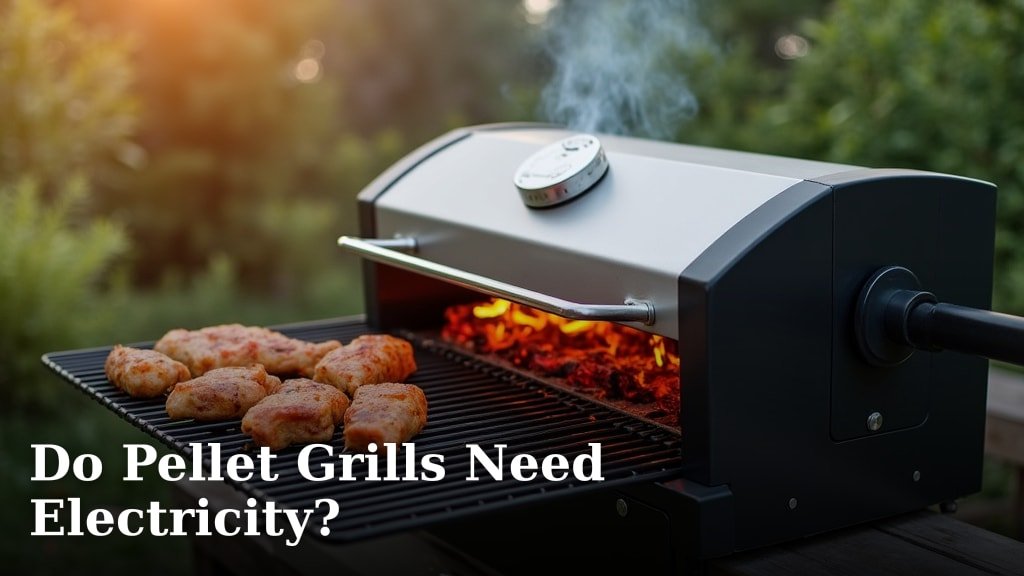
Yes, pellet grills absolutely need electricity to operate. Without it, the grill’s internal fan and igniter won’t function, which means you won’t be able to start a fire or control the cooking temperature. Think of electricity as the heart of your pellet grill.
While they use wood pellets for fuel, which is where the smoky flavor comes from, electricity powers the essential components that make the grilling process happen. This includes the auger that feeds the pellets and the digital control panel that lets you set your desired temperature. Many people find this balance of wood smoke and electric precision makes for fantastic grilling.
- Pellet grills need electricity to run.
- Electricity powers the fan, igniter, and auger.
- It also controls the temperature via the digital panel.
- Pellets provide the fuel and smoke flavor.
Let’s walk through exactly how pellet grills use electricity and what happens when the power goes out.
Understanding the Power Needs of Pellet Grills
So, you’re curious about whether pellet grills need electricity. The straightforward answer is yes, they absolutely do. It might seem a little counterintuitive since they burn wood pellets for that signature smoky flavor. But think of it this way: electricity is the brains and the muscle behind the operation.
Without a steady power source, your pellet grill just becomes a fancy, stationary box. It can’t ignite, it can’t feed itself pellets, and it certainly can’t maintain a consistent temperature. We’ll break down exactly why and how electricity plays such a vital role in making your pellet grill work.
How Electricity Powers Your Pellet Grill’s Core Functions
Pellet grills are sophisticated pieces of equipment. They use electricity to manage several key processes that are essential for cooking. Let’s look at the main components that rely on that power cord.
The Auger: Your Pellet Delivery System
The auger is essentially a screw that pulls wood pellets from the hopper into the burn pot. It’s controlled by a motor that needs electricity to spin. You set the desired temperature on your grill’s control panel, and the grill’s computer tells the auger motor how fast and how often to turn. This precise control is how your grill meters the fuel. Research shows that consistent fuel delivery is key to stable cooking temperatures.
The Fan: Keeping the Fire Alive and the Smoke Moving
Every pellet grill has at least one fan, and sometimes two. One fan is responsible for supplying oxygen to the burn pot. This is crucial for igniting the pellets and keeping them burning efficiently. The other fan, often called the circulating fan, distributes heat and smoke throughout the grill’s cooking chamber. This ensures even cooking and consistent smoky flavor on your food. Many grilling enthusiasts find this even heat distribution to be a major advantage.
The Igniter: Sparking Your Grilling Adventure
Starting the fire in a pellet grill is different from lighting charcoal or gas. Instead of matches or a lighter, pellet grills use an automatic igniter. This is typically a hot rod that glows red-hot, much like a heating element. It’s powered by electricity and is used to ignite the wood pellets in the burn pot. Once the pellets catch fire, the igniter cools down.
The Control Panel: Your Grill’s Command Center
The digital control panel is the interface where you set your desired cooking temperature, monitor the grill’s status, and sometimes even select pre-programmed cooking modes. This panel is essentially a small computer that takes your input and translates it into commands for the auger, fan, and igniter. It constantly monitors the internal temperature and adjusts the fuel and airflow to maintain your set temperature. Experts often highlight this temperature control as a significant benefit of pellet grills.
What Happens When the Power Goes Out?
This is where things can get a bit tricky. If your pellet grill loses power mid-cook, the consequences depend on a few factors, including the grill’s design and how far along you are in the cooking process.
During Startup
If the power cuts out during the initial startup phase, your grill simply won’t be able to ignite. The igniter might not get hot enough, or the fan won’t be able to introduce enough oxygen for combustion. You’ll likely have to wait for the power to return and then try to start the grill again from the beginning.
During a Cook
If the power goes out while you’re already cooking, the fan will stop, and the fire will eventually go out. The auger will cease feeding pellets. This means your grill will cool down, and your food will stop cooking. It’s essentially like turning off your oven.
Some higher-end pellet grills might have a “keep warm” feature or a battery backup for their control panel. However, these are usually only designed to maintain the computer’s memory or a very low temperature for a short period. They are not typically designed to power the fan and auger for extended periods. Research indicates that most residential power outages are relatively short, but extended outages can still be an issue for outdoor cooking.
Can You Use a Pellet Grill Off-Grid?
Yes, you can, but it requires some planning and additional equipment. Since pellet grills need electricity, you’ll need a way to generate or store power when you’re away from a standard outlet.
Portable Power Stations and Generators
The most common solutions for off-grid pellet grilling involve portable power stations or generators. A portable power station is essentially a large battery that you can charge at home and then use to power your grill. A generator, on the other hand, creates electricity by burning fuel (like gasoline).
When choosing a power source, you need to consider the wattage requirements of your grill. The control panel, igniter, and fans all draw power. Check your grill’s manual for its specific electrical needs. We found that most standard pellet grills require around 150-300 watts during startup and can run on 50-100 watts once they’re up and going. Always ensure your power source can handle the peak startup wattage.
Inverter Grills: A Rare Exception
There are a few niche “inverter grills” on the market that can run on lower DC power. These might be designed to run off a 12-volt car battery or a specialized battery pack. However, these are not the typical pellet grills you see most often. For the vast majority of pellet grills, you’ll need a standard AC power source.
Making the Most of Your Pellet Grill’s Power Needs
Understanding your pellet grill’s reliance on electricity helps you plan your cooking sessions better. Here’s a quick rundown of what to remember:
- Always have an accessible power outlet nearby when you plan to use your grill.
- Consider a long extension cord specifically rated for outdoor use if your grill’s cord won’t reach.
- For tailgating or camping, invest in a portable power station or generator that can meet your grill’s wattage demands.
- Check your grill’s manual for its specific power consumption details.
- Be aware that if power is lost during cooking, your grill will shut down.
- If you’re concerned about power outages, look for grills with battery backup options for the control panel.
It’s important to remember that while the pellets provide the fuel and the flavor, electricity is the enabler. It makes all the magic happen!
Pellet Grill Power Consumption: A Closer Look
To help you visualize how much power your pellet grill uses, let’s break it down. It’s not a huge amount compared to other appliances, but it’s consistent.
Startup Phase
The highest power draw usually occurs during the startup phase. This is when the igniter is heating up and the fan is working to establish the initial flame. Many experts estimate this peak usage to be around 200-300 watts for a typical grill. This phase usually lasts for about 5-10 minutes.
Running Phase
Once the fire is established and the grill is maintaining temperature, the power consumption drops significantly. The igniter turns off, and the fan and auger motor use much less electricity. We found that during normal operation, many pellet grills only use between 50 and 100 watts. This is comparable to running a few LED light bulbs or a laptop.
Temperature Fluctuations and Power Draw
Even when maintaining a temperature, there can be slight fluctuations in power draw. If the grill needs to add more pellets or increase fan speed to combat a drop in temperature, the power draw might momentarily increase. Conversely, if it’s a very calm day and the temperature is stable, the draw will be minimal.
To give you a better idea, consider this comparison:
| Appliance | Typical Wattage | Pellet Grill (Running) |
|---|---|---|
| Standard Refrigerator | 100-200 watts (running) | 50-100 watts |
| LED Light Bulb | 5-15 watts | (Lower than this) |
| Desktop Computer | 100-300 watts | (Could be higher than this) |
| Microwave Oven | 800-1500 watts | (Much, much lower than this) |
As you can see, when running, your pellet grill is quite energy-efficient. The main power demand is concentrated during that initial startup period.
Protecting Your Pellet Grill’s Electrical Components
Just like any outdoor appliance with electrical parts, it’s wise to take some precautions to protect your pellet grill. Weather can be a factor.
Weather Exposure
While most pellet grills are designed for outdoor use, extreme weather can still affect their electronic components. It’s a good idea to cover your grill when it’s not in use, especially if you live in an area with frequent rain, snow, or high humidity. The control panel and power cord are the most vulnerable parts.
Power Surges
Power surges can damage sensitive electronics. While less common than outright power outages, they can happen during thunderstorms. Plugging your pellet grill into a surge protector designed for outdoor use can offer an extra layer of protection. Many experts recommend surge protectors for any appliance with electronic controls used outdoors.
Conclusion
So, you’ve learned that your pellet grill absolutely relies on electricity. It’s the quiet powerhouse behind your smoker, controlling everything from feeding pellets to maintaining your perfect cooking temperature. While the wood pellets bring the flavor, electricity brings the precision and makes the magic happen. Always ensure you have a reliable power source available for your next cook. If you plan to grill away from an outlet, remember to pack a portable power station or generator to keep the good times — and the smoke — rolling.
Frequently Asked Questions
Can I use a pellet grill during a power outage?
Unfortunately, no, you cannot use a pellet grill during a standard power outage. The electricity is needed to power the igniter, fan, and auger, all of which are essential for starting and maintaining the fire. Without power, the grill will shut down.
How much electricity does a pellet grill actually use?
Pellet grills are quite energy-efficient. They use more power during the startup phase, typically around 200-300 watts for about 5-10 minutes. Once running, they often use only 50-100 watts, which is comparable to powering a few light bulbs.
What happens if my pellet grill loses power while cooking?
If your pellet grill loses power mid-cook, the fan will stop, the auger will stop feeding pellets, and the fire will eventually go out. This means your grill will cool down, and your food will stop cooking. It’s essentially like turning off your oven.
Can I use an extension cord with my pellet grill?
Yes, you can use an extension cord with your pellet grill, but it needs to be rated for outdoor use and heavy enough to handle the grill’s power draw, especially during startup. Check your grill’s manual for recommended cord specifications to avoid overheating or power loss.
Are there pellet grills that don’t need electricity?
For the vast majority of pellet grills, electricity is a necessity. There are some niche “inverter grills” designed to run on lower DC power like a car battery, but these are uncommon. Standard pellet grills require AC power to operate their core components.
