What Type of Smoker Is Best for You?
The best smoker type depends on how much control and effort you want: electric smokers are simple, pellet smokers automate wood cooking, and traditional wood or charcoal smokers offer the most manual control.
On this page (12 sections)
- What type of smoker is best for most beginners?
- How do the main smoker types compare?
- Is an electric smoker best for low-effort cooking?
- What is the best smoker type for temperature tracking?
- Are pellet smokers best for wood-fired flavor?
- What type of smoker is best for large batches?
- How much smoker space do you need?
- Does a smoker need temperature control?
- How do you choose between electric and pellet smokers?
- Is a smoker worth buying for your cooking routine?
- How do you use a smoker grill?
- Which smoker type should you choose?
Your cooking space, batch size and preferred fuel matter just as much as flavor. A smoker that fits your routine is easier to use regularly than one that demands more fire management than you enjoy.
If you're new to the category, start with What Is A Smoker Grill? to understand how smoking differs from ordinary grilling.
What type of smoker is best for most beginners?
An electric smoker is usually the easiest type for a beginner, because it uses corded power and digital controls instead of requiring you to build and maintain a charcoal or wood fire.
Electric smokers separate heat control from fire management. You add wood chips for smoke, set the cooking temperature and time, and monitor the food while the smoker handles the heating cycle.
This does not make smoking automatic. You still need to place food correctly, manage moisture, follow safe food handling, and allow enough time for the cut you are cooking.
An electric model also needs a suitable outdoor location near power. Check the available footprint, door swing and cord route before you decide where it will sit.
How do the main smoker types compare?
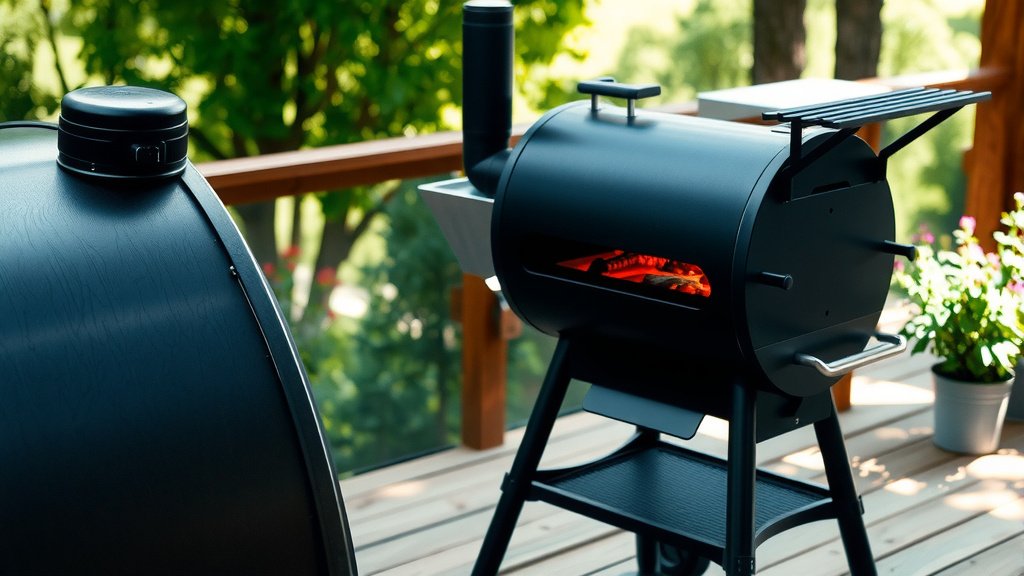
The main smoker types are electric, pellet, charcoal, offset wood and kamado smokers. Each one trades control, convenience, fuel cost, space and learning time differently.
| Smoker type | Best fit | Main strength | Main trade-off |
|---|---|---|---|
| Electric | Beginners and simple outdoor smoking | Digital heat control with less fire management | Needs outdoor power |
| Pellet | Wood-fired cooking with automation | Pellets feed the fire automatically | Needs electricity and pellet storage |
| Charcoal | Cooks who want direct fire control | Strong control over fuel and smoke | Requires regular fire attention |
| Offset wood | Traditional smoking and larger fires | Direct wood smoke and active fire management | Takes more skill and space |
| Kamado | Buyers wanting smoking and grilling in one cooker | Insulated charcoal cooking chamber | Heavier body and a steeper learning curve |
Traditional wood and charcoal smokers can produce excellent food, but they ask you to watch airflow, fuel and temperature more closely. For a charcoal cooker with a vertical drum design, compare drum smoker kits.
That extra work is part of the appeal for cooks who enjoy the process.
Pellet smokers sit between traditional and electric cooking. They use hardwood pellets and an automated feed system, so you can get wood-fired cooking without tending a log fire throughout the cook.
Is an electric smoker best for low-effort cooking?
An electric smoker is best when you want steady heat with fewer fire decisions. It fits cooks who prefer digital controls, vertical storage and a simple outdoor setup.
A vertical electric cabinet uses height for cooking space. That can help when your patio or deck has limited floor width, although you still need room to open the door and work around the smoker.
The Masterbuilt® 30-inch Digital Electric Vertical BBQ Smoker uses corded electric power, a digital panel and thermostat temperature control. Its fully insulated body is designed to retain heat, while its side wood chip loader lets you add chips without opening the main door.
The Masterbuilt has a 30-inch vertical form, a black alloy-steel outer body and an aluminum inner material. Its listed dimensions are 19.8 in deep, 20.9 in wide and 33.3 in high, so measure the storage and operating area before setup.
Its 4 chrome-coated racks and 710 cooking square inches give you room for larger batches than a small tabletop smoker. The included wood chip loader, water bowl, wood chip tray and grease tray support the basic smoking process.
Choose this type if convenience matters more than direct fire control. Electric smoking can be less satisfying for someone who wants to adjust a live charcoal bed or work with split wood.
For a closer look at the cooking process, read How A Smoker Grill Works?.
What is the best smoker type for temperature tracking?
An electric smoker with built-in temperature tracking can suit cooks who want less door opening during long sessions. Monitoring the internal temperature of the food helps you make decisions without repeatedly disturbing the cooking chamber.
The EAST OAK 30" Electric Smoker for Outdoors has digital controls, a built-in meat probe and a clear viewing window. Its side chip loader is designed for adding wood chips without opening the main door.
The EAST OAK has 725 square inches of cooking area and 4 removable racks. That gives it slightly more listed cooking space than the Masterbuilt example, which may help when you prepare several cuts or larger batches.
Its dimensions are 15.35 in deep, 17.32 in wide and 32.2 in high. The tall rectangular shape can work in a narrow outdoor area, but you still need enough room to access the door, controls and chip loader.
The smoker uses electric power and has an aluminized-steel inner material with a powder-coated-steel outer material. Its included components are a back handle, grease tray, smoker assembly, smoker box and water bowl.
Choose the EAST OAK if food temperature tracking is a priority. Choose the Masterbuilt if its 4 racks, 710 cooking square inches and side wood chip loader match your cooking layout better.
Are pellet smokers best for wood-fired flavor?
Pellet smokers are best for cooks who want hardwood flavor with more automation than a traditional wood smoker. They use compressed wood pellets as fuel, and many models feed those pellets into the fire automatically.
Pellet cooking can reduce the need to watch a charcoal bed or add split logs. You still need to monitor the cooker, protect pellets from moisture and follow the smoker's operating instructions.
Pellet flavor also depends on the wood blend. Hickory can bring a stronger barbecue character, while maple and cherry can round out the flavor for different foods.
The Traeger Signature Blend Wood Pellets for Pellet Grills & Smokers are an 18 lb blend of hickory, maple and cherry hardwoods. The pellets are made in American mills and are described as all-natural, with no binders and low ash.
The blend is intended for smoking, grilling, baking, roasting and braising. It pairs with beef, poultry, pork, lamb, seafood, baked goods and vegetables, so it can support more than one type of cook.
This product is fuel rather than a complete smoker. It makes sense only if you already have a pellet grill or smoker that accepts this type of hardwood pellet.
Choose a pellet smoker when automated wood cooking fits your routine. Choose an electric smoker when you want a simpler setup that does not depend on storing pellets or maintaining a pellet supply.
What type of smoker is best for large batches?
A vertical smoker is often the better shape for large batches when you want several racks without a wide horizontal footprint. Capacity still depends on rack spacing and the shape of the food you plan to cook.
Whole poultry, ribs and pork cuts need more than raw square-inch numbers. Tall racks can help with smaller items, while wide cuts may need a rack position with enough clearance.
The Masterbuilt example provides 710 cooking square inches across 4 chrome-coated racks. The EAST OAK example provides 725 square inches across 4 removable racks.
Those numbers are close, so the better choice depends on the features you value. The Masterbuilt focuses on digital cooking controls, insulation and a side wood chip loader, while the EAST OAK adds a built-in meat probe, viewing window and an automatic keep-warm function after the target time is reached.
Before choosing, measure the largest food item you plan to smoke. A smoker with more total area may still be a poor fit if its rack dimensions do not suit your ribs, birds or pans.
How much smoker space do you need?
Choose smoker size by the largest batch you cook, not by the cabinet height alone. Leave room for food spacing, airflow and access to the racks.
A compact smoker can suit one or two people who cook small portions. A larger vertical cabinet makes more sense when you prepare food for gatherings or want to cook several cuts in one session.
Small yards also need a safety plan. Keep the smoker on a stable surface, leave the required clearance around it and avoid placing it where smoke will collect near doors or windows.
The listed Masterbuilt dimensions are 19.8 in deep, 20.9 in wide and 33.3 in high. The EAST OAK is 15.35 in deep, 17.32 in wide and 32.2 in high.
Those measurements show the outside cabinet size, not the full working area. Account for door opening, chip loading, rack handling and the space you need to stand safely while cooking.
Does a smoker need temperature control?
Reliable temperature control matters because smoking depends on steady heat over a long cooking period. The best control method depends on whether you want automation or direct involvement.
Electric smokers use a heating element and thermostat or digital controls. Pellet smokers use an automated fuel system, while charcoal and wood smokers rely more heavily on airflow, fuel size and the cooker's design.
A smoker with temperature controls can reduce large swings, but it cannot replace correct setup. Wind, cold weather, wet fuel, a poorly sealed door or frequent opening can still affect cooking.
If temperature control is your main concern, compare our guide to the best smoker with temperature control. Consider how much monitoring you want to do before choosing a technology.
A built-in meat probe can help you track the food's internal temperature. It does not remove the need to place the probe correctly or confirm that the food has reached a safe internal temperature.
How do you choose between electric and pellet smokers?
Choose electric for simpler heat management, and choose pellet for a stronger wood-fired focus with automated fuel feeding. Both types can suit outdoor cooks, but their daily routines are different.
Electric smokers are a good match if you have a nearby outdoor outlet and want to set a temperature and time. They also suit cooks who prefer wood chips over maintaining charcoal or split wood.
Pellet smokers are a good match if you want hardwood fuel and a wider range of wood flavor. You need a steady supply of dry pellets and a cooker designed to use them.
The Traeger Signature Blend pellets combine hickory, maple and cherry. That blend can work across meat, seafood, vegetables and baked goods, but it does not replace the pellet smoker itself.
The two electric examples show another important choice. The Masterbuilt has 710 cooking square inches, 4 chrome racks and a side wood chip loader, while the EAST OAK has 725 square inches, 4 removable racks, a built-in meat probe and a viewing window.
Is a smoker worth buying for your cooking routine?
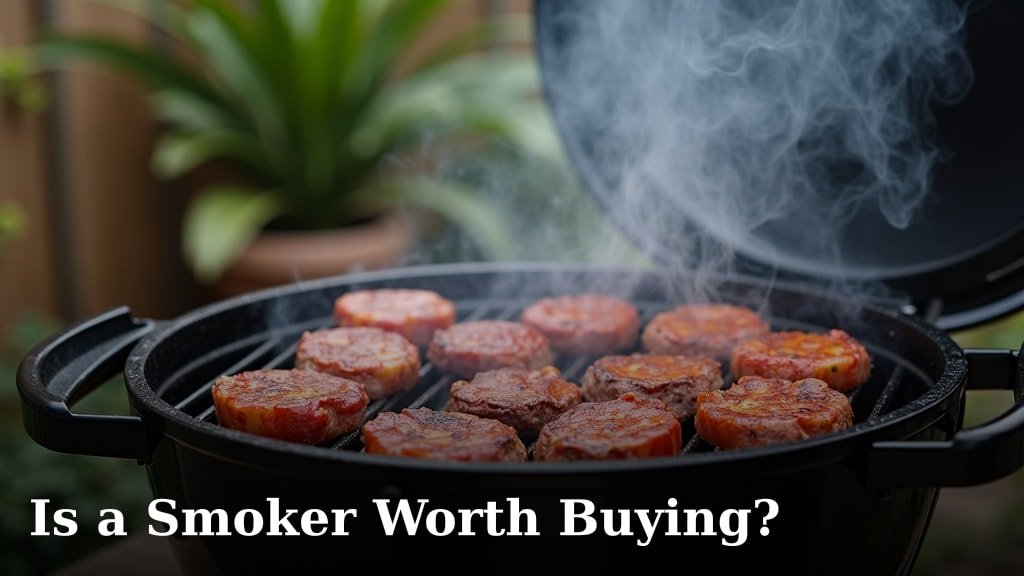
A smoker is worth buying when you expect to cook low and slow often enough to justify its space, fuel and setup. It may not be worth it if you only want occasional smoky flavor and already have a grill that can handle indirect cooking.
Think about your expected use before comparing features. A smoker takes up outdoor space, needs cleaning and requires planning for longer cooking times.
A dedicated smoker makes more sense when you enjoy brisket, ribs, poultry, fish, vegetables or other foods that benefit from extended cooking and smoke. It also helps when you want to cook a batch without tying up your main grill.
Read Is a Smoker Worth Buying? if you are still deciding between a dedicated smoker and other outdoor cooking tools.
You should also consider the ongoing fuel routine. Electric smokers need power and wood chips, pellet smokers need dry pellets, and charcoal or wood smokers need fuel storage plus more active fire control.
How do you use a smoker grill?
Using a smoker grill starts with setup, preheating, food placement and steady monitoring. The exact controls vary by fuel type, but the same basic preparation helps you avoid rushed decisions during a long cook.
Start by placing the smoker on a stable outdoor surface with safe clearance. Prepare the food before the smoker reaches cooking temperature so you are not opening the door repeatedly after the cook begins.
Use the fuel intended for the smoker. Electric smokers commonly use wood chips in a chip tray or loader, while pellet smokers require pellets made for pellet grills and smokers.
Keep the door closed as much as possible. Each opening can release heat and smoke, extend the cooking time and make temperature control harder.
Track both the smoker temperature and the food temperature when possible. A built-in probe can help, but probe placement and safe food handling still matter.
For a full process overview, see How Do You Use A Smoker Grill?.
Which smoker type should you choose?
Choose an electric smoker if you want the simplest digital setup, a pellet smoker if you want automated hardwood cooking, and a charcoal or wood smoker if fire control is part of the experience.
The Masterbuilt fits a buyer who wants a vertical electric cabinet, digital temperature and time controls, 4 chrome racks and 710 cooking square inches. The EAST OAK fits someone who values a built-in meat probe, viewing window and 725 square inches in a vertical electric design.
The Traeger Signature Blend pellets fit an existing pellet grill or smoker and give you a hickory, maple and cherry fuel blend for different foods.
The best smoker type is the one you will use regularly. Pick the fuel that matches your patience, the space that matches your yard and the capacity that matches your largest normal batch.
Frequently asked questions
What type of smoker is best for beginners?
An electric smoker is often the simplest starting point because it uses corded power and digital controls instead of charcoal or propane. You still need to manage wood chips, food placement and cooking time, but temperature control requires less fire management than a traditional charcoal or wood smoker.
Are pellet smokers better than electric smokers?
Pellet smokers suit cooks who want automated wood-fired cooking, while electric smokers suit buyers who want a simpler plug-in setup. Pellet models need a supply of compatible hardwood pellets, while electric models usually focus on digital temperature control and wood-chip smoke.
What smoker type gives the most flavor?
Traditional wood and charcoal smokers give you the most direct control over the fuel and smoke profile, but they also require more attention. Pellet smokers offer wood-fired flavor with more automation, while electric smokers can produce smoke with less fire management.
What smoker is best for a small yard?
A vertical electric smoker can suit a small yard because its tall shape uses less floor width than many horizontal cookers. Measure the smoker's footprint, height, door clearance and safe operating area before choosing a location.