
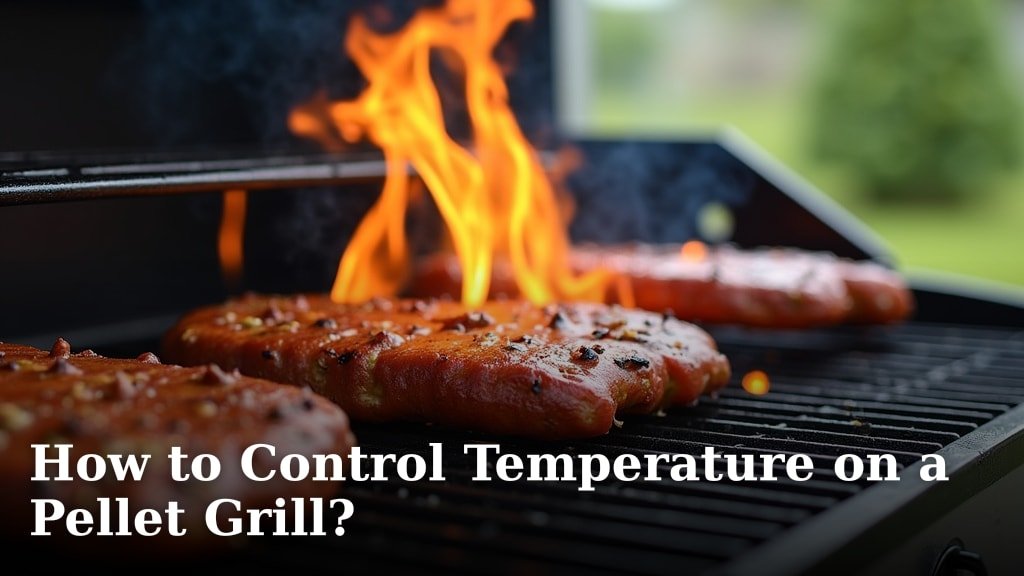
To control the temperature on a pellet grill, you primarily adjust the set temperature on the digital controller, which then regulates the auger speed to feed more or fewer pellets into the burn pot, and the fan speed to maintain consistent heat. This simple process makes managing your cook temperature straightforward.
You want precise control for perfect results, right? Pellet grills use an onboard computer to help you achieve that. This technology means less guesswork and more consistent cooking, whether you’re smoking low and slow or searing hot and fast. Understanding how your grill responds to these adjustments is key to becoming a master of outdoor cooking.
TL;DR:
- Set temperature on the digital controller.
- The controller manages pellet flow and fan.
- Consistent heat is maintained automatically.
- Grill technology simplifies temperature control.
- Precise temperature leads to better cooking.
Let’s walk through exactly how this works, step by step, so you can always hit your target temperature.
Mastering Your Pellet Grill’s Temperature
You bought a pellet grill for its ease of use and consistent temperatures. But how does it actually work? And how do you make sure you’re always hitting that target temperature? Let’s dive in. Understanding the core mechanics helps you become a better backyard chef.
The beauty of a pellet grill is its set-it-and-forget-it nature, but knowing the “why” behind the “how” gives you an edge. Think of it like knowing how to drive a car versus understanding what’s under the hood. Both get you to your destination, but one gives you more control and confidence.
The Core Components of Temperature Control
Your pellet grill isn’t magic, though it often feels that way. It’s a clever system of interconnected parts. Each piece plays a vital role in maintaining your desired heat. When you set a temperature, these components spring into action.
Imagine a tiny, efficient factory in your grill. Pellets are the raw material, and heat is the finished product. The controller is the manager, overseeing everything. We’ll break down these components so you know exactly what’s happening.
The Digital Controller: Your Grill’s Brain
This is where you tell your grill what to do. The digital controller is the central nervous system. You input your desired temperature, and it does the rest. It’s constantly monitoring and making adjustments.
Think of it as a thermostat for your outdoor cooking. It receives feedback from temperature probes and sends commands to other parts. This smart technology is what makes pellet grills so user-friendly and precise.
The Auger: Feeding the Fire
The auger is a spiraled rod that looks a bit like a corkscrew. It lives in the hopper, where you load your wood pellets. Its job is to move pellets from the hopper to the burn pot.
When the controller senses the temperature dropping, it tells the auger to spin faster. More pellets mean more fuel. When the temperature is too high, the auger slows down. This precise feeding mechanism is key to steady heat.
The Hot Rod Igniter: Starting the Flame
This component gets things going. When you first turn on your grill, the hot rod igniter heats up to a very high temperature. It’s designed to ignite the wood pellets in the burn pot.
Once the pellets are burning, the igniter usually turns off. It’s a quick burst of heat to start the combustion process. You typically won’t need it again until your next cook.
The Induction Fan: Airflow is Everything
The induction fan is another critical player. It blows air into the burn pot, much like a bellows. This air fuels the fire and distributes heat throughout the cooking chamber.
The controller adjusts the fan speed too. More air can make the fire burn hotter and help circulate the smoke and heat. This consistent airflow is why pellet grills are known for their even cooking.
The Temperature Probe: The Grill’s Eyes and Ears
There’s a probe, usually inside the cooking chamber, that measures the actual temperature. This probe sends constant feedback to the digital controller. It’s how your grill “knows” if it’s too hot or too cold.
Many grills also come with additional probes for your food. These are invaluable for monitoring the internal temperature of your meat, ensuring it’s cooked perfectly and safely (USDA).
How Your Grill Maintains a Consistent Temperature
Now that you know the parts, let’s see them in action. It’s a continuous feedback loop. You set a temperature, and the grill works tirelessly to achieve and hold it. This is where the “set it and forget it” comes into play.
Imagine a smart thermostat for your home, but for grilling. It’s always sensing, adjusting, and correcting. This automated process takes the guesswork out of temperature management.
Here’s a simplified look at the process:
- You set the temperature on the digital controller (e.g., 225°F for smoking).
- The controller tells the hot rod to ignite pellets in the burn pot.
- Once ignited, the controller adjusts the auger speed to feed pellets at a rate to reach 225°F.
- The induction fan blows air to stoke the flame and circulate heat.
- The temperature probe inside the grill continuously monitors the actual temperature.
- If the temperature drops below 225°F, the controller tells the auger to feed more pellets and/or the fan to blow more air.
- If the temperature goes above 225°F, the controller tells the auger to feed fewer pellets and/or the fan to blow less air.
- This cycle repeats, maintaining your target temperature within a narrow range.
Factors Influencing Temperature Stability
Even with advanced technology, certain factors can affect your grill’s ability to hold a perfect temperature. Being aware of these helps you troubleshoot and get even better results. It’s like understanding how traffic affects your travel time.
No grill operates in a vacuum. The environment around it plays a significant role. Let’s look at what can cause temperature swings.
Ambient Air Temperature and Wind
Outdoor conditions matter. On a cold, windy day, your grill has to work harder to maintain heat. It will burn more pellets. Think of heating your home in winter versus summer; it requires more energy.
Conversely, on a hot day, your grill might not need to work as hard. Strong winds can also draw heat away or even interfere with the fan’s airflow. Position your grill wisely, perhaps out of direct wind.
Grill Lid Opening Frequency
Every time you open the lid, you lose heat. It’s unavoidable. The grill then has to work to recover. Try to “look but don’t touch” too often.
Resist the urge to constantly check your food. Use your meat probe instead. Opening the lid too frequently can cause significant temperature fluctuations and prolong cooking times.
Pellet Quality and Type
Not all pellets are created equal. High-quality, dense pellets burn more consistently and efficiently. Cheap pellets might contain more fillers, leading to ash buildup and inconsistent burning.
The type of wood also impacts heat. Some woods burn hotter than others. Sticking to a reputable brand and ensuring your pellets are dry is always a good idea.
Maintenance and Cleanliness
A dirty grill is an inefficient grill. Ash in the burn pot can smother the flame. Grease buildup can affect airflow and even cause flare-ups.
Regular cleaning is not just for hygiene; it’s for performance. A clean grill works smarter, not harder. This includes emptying the ash pot and cleaning the temperature probe (Cleveland Clinic).
| Factor | Impact on Temperature | Mitigation/Tip |
|---|---|---|
| Ambient Temperature | Colder weather causes drops, hotter weather requires less work. | Use thermal blankets in winter; preheat longer in cold. |
| Wind | Can strip heat or disrupt airflow. | Position grill in a sheltered spot; use a wind break. |
| Lid Opening | Each opening causes significant heat loss. | “If you’re lookin’, it ain’t cookin’!” Limit peeking. |
| Pellet Quality | Low quality can lead to inconsistent burn and ash. | Use high-quality, dry pellets from reputable brands. |
| Grill Cleanliness | Ash and grease buildup hinder efficiency. | Regularly clean ash pot, burn pot, and temperature probe. |
Tips for Achieving and Maintaining Desired Temperatures
You’ve got the basics down. Now, let’s refine your technique to ensure you always hit your cooking sweet spot. These practical tips will make a noticeable difference in your results.
Think of these as your pro moves. They’re simple adjustments that yield big improvements in temperature control and, ultimately, in the flavor of your food.
Preheat Thoroughly
Don’t rush it. Just like an oven, your pellet grill needs time to reach and stabilize its temperature. We found that 15-20 minutes is usually sufficient for most grills to stabilize.
Preheating allows the entire cooking chamber, including the grates and baffles, to come up to temperature. This creates a much more stable environment for your food.
Monitor Your Grill’s Thermometer
While your controller shows the set temp, it’s good practice to watch the actual temperature readout. Most pellet grills will fluctuate slightly. This is normal and nothing to worry about.
If you see unusually large swings, it might be a sign to check your pellets or clean your grill. Consistency is the goal, not absolute rigidity.
Use Good Quality Pellets
This can’t be stressed enough. Good pellets mean good flavor and good temperature control. They burn cleaner and more predictably. Think of it as putting premium fuel in a sports car.
Avoid storing pellets in damp areas. Moisture can ruin them, turning them into sawdust and causing feeding issues. A dry, airtight container is your friend.
Keep Your Grill Clean
Regular maintenance is a game-changer. An ash-clogged burn pot or a grease-laden drip tray can seriously affect performance. A clean burn pot ensures efficient pellet combustion.
Many experts say to clean out the ash pot every few cooks, depending on usage. It only takes a few minutes but makes a huge difference (Pellet Grill Pro Forum discussions).
Avoid Excessive Lid Opening
We’ve said it before, but it’s worth repeating. Every peek is a temperature dip. Use your integrated meat probes or a good quality external thermometer to track your food’s progress.
Resist the temptation to lift the lid just to “smell” the smoke. The less you open it, the more consistent your temperature will be. Your food will thank you.
Understand Temperature Swings (P.I.D. Control)
Most modern pellet grills use P.I.D. (Proportional-Integral-Derivative) controllers. This advanced technology constantly makes small adjustments to keep the temperature stable. It’s normal for the temperature to go a little above or below your set point by about 5-15 degrees.
These minor fluctuations are part of how the grill maintains an average temperature. Don’t panic if you see a slight deviation. Your grill is working as intended.
Here’s a quick checklist for optimal temperature control:
- Thoroughly preheat your grill every time.
- Use only high-quality, dry wood pellets.
- Clean your burn pot and ash pot regularly.
- Limit opening the grill lid to preserve heat.
- Position your grill away from strong winds.
- Monitor both grill and food internal temperatures.
Conclusion
You now have a solid understanding of how your pellet grill achieves and maintains consistent temperatures. By knowing the role of the controller, auger, fan, and probes, you can better troubleshoot and ensure optimal performance. Remember that external factors and good maintenance play a big part in successful cooks.
Embrace the “set it and forget it” promise by trusting your grill’s technology and giving it the right support. Pay attention to pellet quality, preheat thoroughly, and resist constant lid-lifting. With these insights, you’re ready to create consistently delicious, perfectly cooked meals every time you fire up your pellet grill. Go on, cook something amazing!
Frequently Asked Questions
Why does my pellet grill temperature fluctuate so much?
Minor temperature fluctuations of 5-15 degrees are normal and part of how the grill’s P.I.D. controller works to maintain an average temperature. However, large swings can indicate issues like low-quality pellets, a dirty burn pot, or external factors like strong wind or cold ambient temperatures.
How often should I clean my pellet grill for better temperature control?
For optimal temperature control, you should clean out the ash from your burn pot and ash pot every 2-3 cooks or after about 20 hours of cooking. Regular cleaning prevents ash buildup that can smother the flame and interfere with consistent heat.
Can using different types of wood pellets affect temperature stability?
Yes, different wood pellet types can affect temperature stability. High-quality, dense hardwood pellets burn more consistently and efficiently than cheaper brands that may contain fillers or softer woods. Always use dry, reputable brand pellets for the best results.
Is it worth buying a thermal blanket for my pellet grill in cold weather?
Absolutely, a thermal blanket can be a wise investment if you frequently grill in cold weather. It acts as insulation, helping your grill maintain temperature more easily, burn fewer pellets, and recover faster after opening the lid.
My grill shows a different temperature than my separate thermometer. Which one should I trust?
It’s common for grill’s built-in thermometers and external thermometers to show slight variations. Trust a high-quality, calibrated external probe placed near your food for the most accurate reading of the temperature at grate level, where your food is cooking.
