
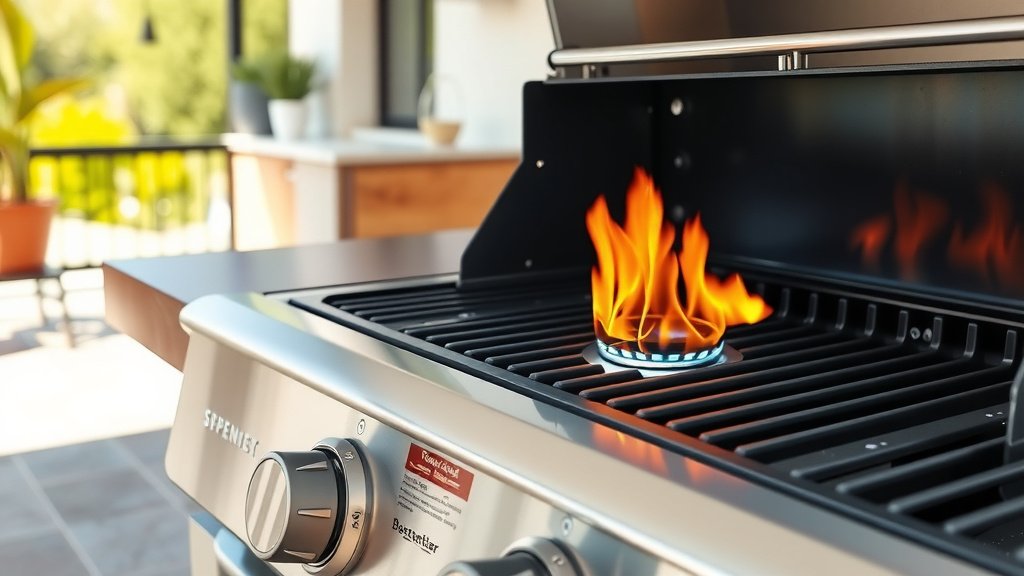
Resetting your gas grill’s pressure regulator often fixes a low flame, restoring proper gas flow for grilling.
You can also troubleshoot issues like low propane tank levels, clogged burner ports, and gas line leaks to fix gas grill low flame.
- A quick regulator reset often brings your grill’s flame back to life.
- Always check your propane tank first; it might just be running low or have a stuck valve.
- Clogged burner holes or venturi tubes are common culprits and need a good cleaning.
- Inspect your gas lines and connections for any leaks that reduce gas pressure.
- Sometimes, a simple adjustment or replacement of a faulty part can resolve the issue.
How To Fix Gas Grill Low Flame?
Fixing a low flame on your gas grill usually starts with a simple regulator reset, which can resolve pressure issues.
We often find that checking for blockages or leaks in the gas system will quickly get your grill back to full power.
Understanding Your Grill’s Gas Flow
Imagine your grill’s gas system like a network of roads for gas.
Gas flows from your tank, through a regulator, then lines, and finally to your burners.
Any traffic jam or detour along this path can cause a weak flame.
The Role of the Regulator
The regulator is a critical component. It reduces the high pressure from your propane tank to a safe, usable level for your burners.
Many experts say that regulators can sometimes “trip” or sense a leak when there isn’t one, restricting gas flow (LPGA standards).
The Quick Fix: Resetting Your Regulator
This is the most common and easiest solution for a low flame.
It’s like rebooting your computer when it acts up.
Performing a regulator reset can often restore proper gas pressure to your grill.
Step-by-Step Regulator Reset
First, turn off all the burner knobs on your grill.
Next, close the valve on your propane tank completely. Disconnect the regulator hose from the tank valve.
Wait about 2-5 minutes. This allows the regulator to reset internally.
Reconnect the regulator to the propane tank. Make sure it’s tight and secure.
Slowly open the propane tank valve all the way. Do it gradually, taking about 10-15 seconds.
Finally, open your grill’s lid and turn one burner to high. Ignite it. If it lights normally, you’ve likely solved the problem!
Checking Your Propane Tank
Sometimes, the solution is much simpler than you think.
Is your tank running on empty? Give it a gentle shake to feel for liquid propane inside.
The “Stuck” Tank Valve Issue
A safety device inside some tank valves can get “stuck,” reducing gas flow.
This often happens if you open the tank valve too quickly.
Try closing the tank valve, waiting a minute, then opening it very slowly to prevent this trip.
Inspecting for Clogged Burner Ports
Dirty burners are a frequent cause of weak flames.
Grease, food debris, and even spiders can block the small holes where gas exits.
This will definitely give you a patchy, weak, or low flame.
Cleaning Your Burner Tubes
Remove your grill grates and heat plates (flavorizers) to access the burners.
Use a wire brush or a burner cleaning tool to scrub the burner holes thoroughly. Clear out any blockages.
Many experts suggest using a stiff wire or paperclip to poke through each port (National Fire Protection Association).
Addressing Venturi Tube Blockages
Venturi tubes connect the gas valves to the burners.
These tubes can become blocked, often by spider webs or insect nests.
A blocked venturi tube prevents proper gas-to-air mixing, causing a low flame.
Cleaning Venturi Tubes
Remove your burners. You’ll see the venturi tubes leading into the burner openings.
Use a long, flexible brush (often called a venturi brush) to clean the inside of these tubes.
We found that a shop vac can also help suction out any debris.
Checking Gas Lines and Connections
Gas leaks are serious and can certainly cause a low flame by reducing pressure.
Always perform a leak test if you suspect an issue.
This will also tell you if you have damaged gas lines.
Performing a Leak Test
Mix soapy water (half water, half dish soap) in a spray bottle.
With the tank valve open, spray the mixture over all gas connections and along the hose.
Look for bubbles forming. Bubbles indicate a leak. Tighten connections or replace the faulty part immediately if you find one.
When Your Manifold is the Problem
The manifold is a pipe that distributes gas to each burner valve.
While less common, issues here can affect all burners with a low flame.
A corroded manifold might need professional attention.
Common Low Flame Scenarios
It’s helpful to see what common issues link to a low flame.
We often categorize problems for easier diagnosis, like a detective on a case.
| Symptom | Likely Cause | Immediate Fix |
|---|---|---|
| All burners have low flame | Regulator tripped / Low tank / Main line issue | Regulator reset / Check tank / Leak test |
| One burner has low flame | Clogged burner port / Blocked venturi tube | Clean burner / Clean venturi tube |
| Flame sputters then dies | Low on propane / Tank valve issue | Refill tank / Reset tank valve |
| Yellow, lazy flames | Poor air-gas mix / Clogged venturi | Clean venturi / Adjust air shutter |
Your Low Flame Troubleshooting Checklist
Here’s a quick guide to run through before you grill.
This ensures you don’t miss any simple steps.
- Is the propane tank valve fully open?
- Did you perform a regulator reset?
- Is there enough propane in the tank?
- Are burner ports clean and clear?
- Are venturi tubes free of blockages?
- Are gas lines free of leaks?
Conclusion
Don’t let a low flame ruin your next cookout. Most low flame issues are simple fixes, often solvable with a quick regulator reset or a good cleaning.
Remember to always prioritize safety, especially when dealing with gas. If you’re unsure or uncomfortable, calling a certified professional is always the best choice for your peace of mind.
How do I know if my grill regulator is bad?
You can often tell your grill regulator is bad if you experience consistently low flame even after a reset, or if there’s a strong smell of gas without a visible leak at the connections. Uneven heating or the grill not reaching high temperatures despite full propane are also signs. We found that visible cracks or damage to the regulator itself also indicate it needs replacement.
Can cold weather affect gas grill performance?
Yes, cold weather can affect gas grill performance. Propane tanks lose pressure in colder temperatures, especially if the tank is not full. This can lead to lower flame output and longer preheating times. Many experts recommend ensuring your propane tank is full and protected from extreme cold when possible for optimal performance (Consumer Reports).
Why is my gas grill not getting hot enough even with a full tank?
If your gas grill isn’t getting hot enough despite a full tank, it’s usually due to a tripped regulator or clogged burner ports. A dirty grill interior with excessive grease buildup can also absorb heat, preventing proper temperature rise. Make sure all burners are igniting properly and that there isn’t a partial blockage in the gas lines.
Is it safe to use a gas grill with a low flame?
While a low flame might still cook food, it’s generally not ideal and could indicate underlying issues. If the low flame is due to a gas leak, it’s a significant safety hazard. However, if it’s just a mild pressure issue that doesn’t produce an odor or cause concern, it might be safe but will affect cooking quality. Always perform a leak test if you suspect an issue.
When should I call a professional for grill repair?
You should call a professional for grill repair if you’ve tried all common troubleshooting steps and the problem persists. If you suspect a major gas leak, notice strange noises, or have issues with the manifold or internal gas lines, it’s best to consult an expert. Safety with gas appliances is always paramount (Grill Manufacturer Guidelines).
