
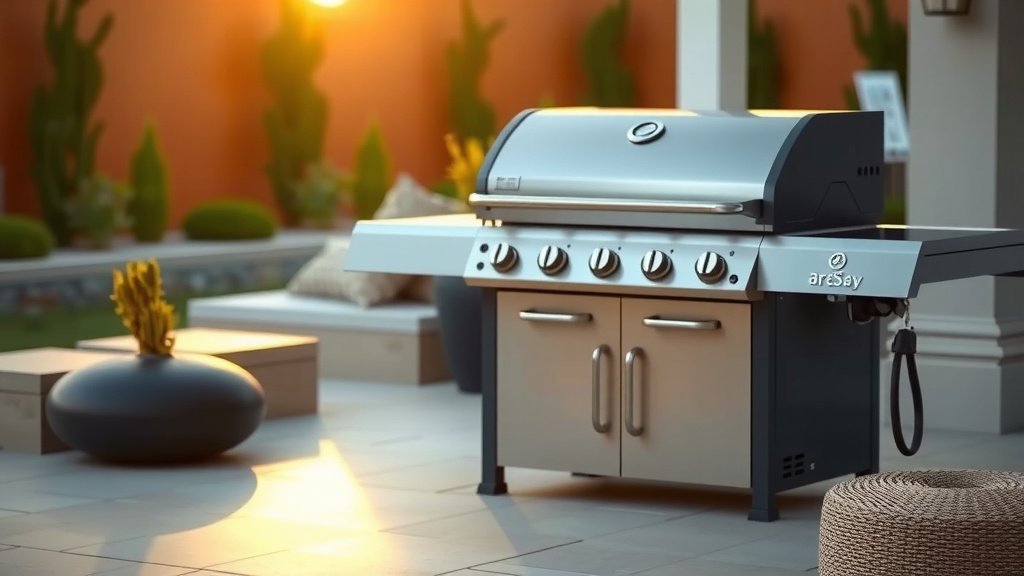
To fix a low flame on your gas grill, start by checking your propane tank. Often, the issue is a tripped “OPD” (Overfill Protection Device) valve, which can restrict gas flow if you opened the tank valve too quickly.
Resetting the OPD valve and ensuring all connections are tight and leak-free typically restores your grill’s flame to full power.
Here’s a quick summary for getting your grill back to full heat:
- Confirm your propane tank isn’t empty.
- Reset the safety valve by fully closing and slowly reopening it.
- Check all gas line connections for any leaks using soapy water.
- Clean burner tubes and orifices for blockages.
- Inspect the regulator for damage or blockages.
How To Fix Low Flame On Gas Grill?
Experiencing a low flame on your gas grill can be frustrating, especially when you’re ready to cook. The most common cause is a tripped OPD safety device in your propane tank. A simple reset usually solves this.
Understanding the Low Flame Problem
A weak or yellow flame can mean your grill isn’t getting enough fuel. It’s like trying to run a race on an empty stomach. You need a consistent gas flow for optimal performance.
Many grill owners face this, and it’s rarely a complex repair. Most fixes are quick and easy, getting you back to grilling in no time.
The Overfill Protection Device (OPD) Tripped
Your propane tank has a smart safety feature called the OPD. It stops overfilling and limits gas flow if it senses a sudden surge. This is often the culprit for a sudden low flame.
When you open the tank valve too fast, the OPD can trip, thinking there’s a leak. This reduces gas pressure, leading to that weak flame you’re seeing.
How to Reset the OPD Valve
Resetting the OPD is simple. First, turn off all the burner controls on your grill. Next, close the propane tank valve completely. Then, disconnect the hose from the tank. Wait a minute or two.
Reconnect the hose to the tank, making sure it’s snug. Slowly open the tank valve, giving it about 10-15 seconds for a full open. Now, light your grill as usual. We often find this solves the problem instantly.
Checking Propane Tank Levels
It might sound obvious, but is your propane tank actually empty? A low flame is a tell-tale sign of a nearly depleted tank. Give it a gentle shake; a full tank feels heavy.
Many experts suggest having a backup tank. This saves your barbecue from an unexpected halt. Swapping tanks is a quick test if you suspect low fuel.
Gas Leaks: A Hidden Threat
A gas leak isn’t just inefficient; it’s a safety concern. Leaks reduce the pressure reaching your burners, causing a low flame. Always prioritize checking for leaks.
We found that small leaks are often overlooked but can significantly impact grill performance. They can happen at any connection point in the gas line (NIH).
Performing a Leak Test
Mix some dish soap with water to create a bubbly solution. Ensure your tank is connected and the valve is open. Brush the soapy water over all gas line connections, hoses, and the regulator.
If you see bubbles forming, you have a leak. Tighten connections or replace the faulty part. Remember, a smell of gas also signals a leak, requiring immediate attention.
Regulator Issues: The Pressure Controller
The regulator is a small but mighty device. It controls the gas pressure from the tank to your burners. If it’s faulty, you’ll get a low flame. Many grill users overlook this part.
A damaged or old regulator might not allow enough gas through. This can happen due to wear and tear or manufacturing defects (Cleveland Clinic).
Signs of a Faulty Regulator
Besides a low flame, a faulty regulator might make a humming sound. You might also notice that your grill won’t reach high temperatures. Sometimes, a simple bump can damage a delicate regulator.
If you’ve tried resetting the OPD and checking for leaks without success, consider replacing the regulator. They are usually easy to swap out.
Clogged Burner Tubes and Orifices
Over time, spider webs, insects, or food debris can block burner tubes and orifices. Think of it like a clogged drain; water can’t flow freely. Gas can’t flow freely either.
These blockages restrict gas flow directly to the flames. This results in weak, uneven, or yellowish flames instead of strong blue ones.
Cleaning Your Grill’s Burners
First, ensure your grill is completely cool and the gas is off. Remove the grates and flame tamers. Take out the burner tubes. Use a stiff wire brush or a narrow tool to clean inside the tubes.
Pay close attention to the small holes where the flame comes out. Clear out any obstructions. For the small orifices where gas enters the burner, use a paper clip to gently clear them. Be careful not to enlarge the holes.
- Quick Checklist for Low Flame Issues:
- Is the propane tank full?
- Did you reset the OPD valve correctly?
- Are there any gas leaks at connections?
- Is the regulator functioning properly?
- Are burner tubes and orifices clean?
- Is the main gas valve fully open?
Comparing Common Low Flame Causes
Knowing the typical culprits helps in troubleshooting. Here’s a quick overview of why your grill might be underperforming.
| Potential Issue | Symptoms | Likely Fix |
|---|---|---|
| Tripped OPD Valve | Sudden, very low flame; grill works fine then doesn’t | Reset OPD (close, disconnect, reconnect, open slowly) |
| Empty Propane Tank | Flame gets weaker, eventually goes out | Replace or refill tank |
| Gas Leak | Bubbles with soapy water; gas smell; reduced flame | Tighten connections; replace hose/regulator |
| Faulty Regulator | Consistently low flame; grill won’t heat up; humming sound | Replace regulator |
| Clogged Burners/Orifices | Uneven or yellow flames; some burners work, others weak | Clean burner tubes and orifices |
Keeping Your Gas Grill in Top Shape
Regular maintenance is key to preventing low flame issues. Think of it as preventative medicine for your grill. A few minutes of care saves hours of frustration later.
Many guidelines point to annual deep cleaning as a good first step (Weber Grill Guide). This includes checking all gas components.
Conclusion
A low flame on your gas grill is usually a straightforward problem to fix. Most often, it’s a tripped OPD valve or a simple gas leak. By systematically checking your propane tank, connections, regulator, and burner cleanliness, you can quickly diagnose and resolve the issue.
Don’t let a weak flame ruin your cooking plans. A little troubleshooting and maintenance will keep your grill roaring and ready for your next barbecue masterpiece. Happy grilling!
How do I know if my grill regulator is bad?
A bad grill regulator often causes a consistently low flame, regardless of burner settings. You might also notice that your grill struggles to reach high temperatures or hear a subtle humming sound from the regulator itself. If a reset doesn’t help, replacing the regulator is a good next step.
Can cold weather cause a low flame on a gas grill?
Yes, cold weather can reduce gas pressure, especially if your propane tank is nearly empty. Propane needs to vaporize to flow properly, and extreme cold can slow this process. Keep your tank in a warmer spot if possible, or try using a full tank in very cold conditions.
How often should I clean my gas grill burners?
Many experts recommend cleaning your gas grill burners at least once a year, or more frequently if you grill often. This prevents blockages from food debris, grease, and insects, ensuring optimal gas flow and flame quality.
What does a healthy gas grill flame look like?
A healthy gas grill flame should be primarily blue with only a small, yellow tip. It should be consistent and strong across all burner ports. A mostly yellow or orange flame indicates incomplete combustion, often due to insufficient gas flow or clogged burners.
Is it safe to use a gas grill with a low flame?
While a low flame itself might not be immediately dangerous, the underlying cause could be. A gas leak, for example, is a safety hazard. Always investigate the cause of a low flame and address it before continuing to use your grill to ensure safe operation.
