
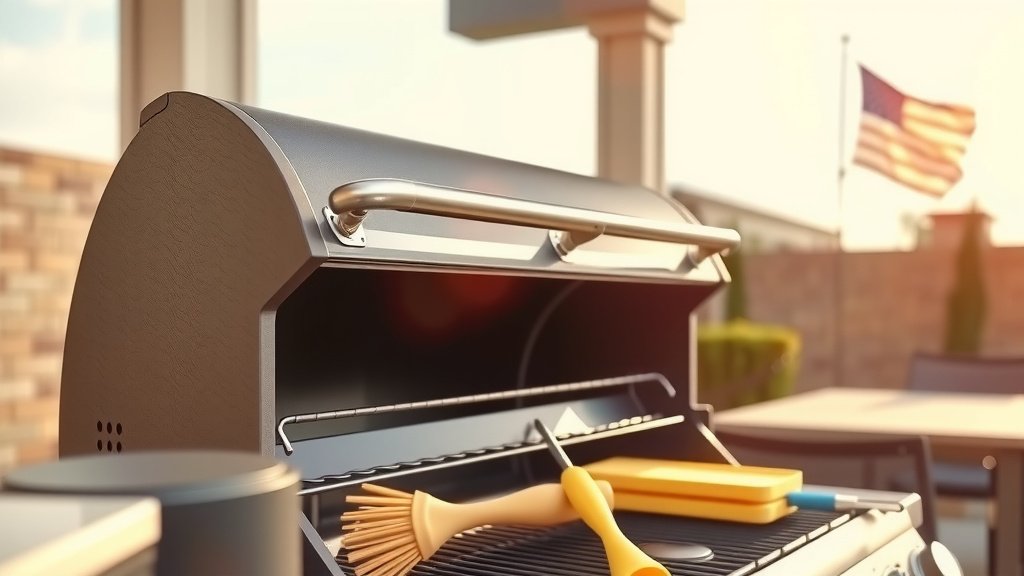
To clean a gas grill after use, immediately turn the burners to high for 10-15 minutes to burn off food residue, then use a sturdy grill brush to scrape the grates clean once they cool slightly.
For a deeper clean, let the grill cool completely, then remove grates, flavorizer bars, and the drip tray for a thorough wash with warm soapy water and a degreaser.
Here’s a quick overview of how to keep your grill in top shape:
- Brush grates hot after every cook to remove food bits.
- Always allow your grill to cool before a deep clean.
- Wash removable parts like grates and drip pans with soapy water.
- Check burner tubes for blockages regularly.
- Consistent cleaning prevents grime buildup and keeps your grill cooking great.
How To Clean A Gas Grill After Use?
Cleaning your gas grill after use starts with heat and a good brush, followed by a more comprehensive clean once it’s cool. This helps ensure your next meal tastes amazing and your grill lasts longer.
Why Cleaning Your Gas Grill Matters
Ever wonder why that steak tastes a bit off? A dirty grill could be the culprit! Cleaning your gas grill isn’t just about appearances; it’s about flavor, safety, and longevity.
We found that food particles left on grates can cause flare-ups and uneven cooking (National Fire Protection Association). Nobody wants burnt hot dogs or a surprise fireball!
Plus, a clean grill simply performs better. It heats more evenly, and your food won’t stick as much. Think of it as giving your grill a fresh start for every new meal.
The “Heat and Scrape” Method: Your First Line of Defense
This is your go-to move right after you finish cooking. It’s quick, easy, and incredibly effective. Why wait until everything is caked on?
Right after you pull off your last burger, crank up the heat. Let your grill run on high for about 10 to 15 minutes. This incinerates most of the leftover food and grease into easily removable ash. It’s like magic!
Once it’s done burning off, turn off the burners. Let the grates cool down just a bit—you want them warm, not scorching. Then, take your trusty grill brush and give those grates a good, vigorous scrub. You’ll see the grime flake right off.
Gather Your Grill Cleaning Arsenal
Before you dive into a deeper clean, make sure you have the right tools. You wouldn’t tackle a dragon without a sword, would you?
You’ll need a good wire brush (or a bristle-free alternative), warm water, dish soap, a degreaser, a scraper, and some old rags or paper towels. Gloves are also a smart idea to keep your hands clean and protected.
Step-by-Step: Deep Cleaning Your Gas Grill
Ready to give your grill a spa day? A deep clean isn’t something you need to do after every use, but it’s vital periodically. Many experts say a thorough cleaning every 3-4 months is ideal for regular grillers.
Cooling Down: Safety First!
Before you touch anything inside, ensure your grill is completely cool. This isn’t just a suggestion; it’s a non-negotiable safety rule. Playing with a hot grill is like playing with fire, literally!
Disconnect the gas supply from your propane tank or natural gas line. Safety truly comes first. This step prevents any accidental gas leaks during the cleaning process.
Remove and Clean the Grill Grates
Your grates are the front line of cooking, so they get the dirtiest. Carefully lift them out of your grill.
Scrub them with warm, soapy water and a stiff brush or sponge. For stubborn grime, a degreaser can work wonders. Some people even soak their grates in a tub of hot, soapy water for an hour (Grilling Guide Magazine). Rinse thoroughly and let them dry completely.
Tackling Flavorizer Bars and Heat Tents
Underneath your grates, you’ll find flavorizer bars or heat tents. These protect your burners and vaporize drippings, adding flavor. They can accumulate a lot of grease.
Carefully remove them. Scrape off any baked-on food or grease with a plastic scraper. You can also wash them with soapy water, similar to the grates. Make sure they are totally dry before putting them back.
Emptying and Scrubbing the Drip Pan
The drip pan catches all the grease and food bits that fall through. If left unchecked, it can become a messy fire hazard.
Remove the drip pan and empty its contents into the trash. Scrub it clean with warm, soapy water and a degreaser. Rinse well and dry it. Replace the aluminum foil liner if your grill uses one.
Inspecting Your Burner Tubes
Your burner tubes are vital for even heat. Over time, spider webs or debris can block the small gas ports. This can lead to uneven flames or weak performance.
Gently brush the burner tubes with a soft brush to remove any loose particles. You can use a paperclip to carefully clear any clogged gas ports. Just be gentle and avoid damaging the ports.
Wiping Down the Grill Exterior
Don’t forget the outside! A clean exterior reflects a well-maintained grill. Wipe down the lid, side tables, and front panel with warm, soapy water and a soft cloth.
For stainless steel, use a specialized stainless steel cleaner to avoid streaks and keep it shiny. This final touch makes your grill look brand new.
Common Grill Cleaning Mistakes to Avoid
Cleaning is simple, but some common pitfalls can make it harder or even damage your grill. Let’s make sure you steer clear of them!
Many experts warn against using harsh chemicals not designed for grills. These can damage surfaces or leave behind harmful residues. Also, never clean a hot grill with water; the sudden temperature change can warp parts.
Using a metal brush with loose bristles is another no-go. Those bristles can break off and end up in your food. Yikes! We found that bristle-free brushes or grill scrapers are much safer options.
How Often Should You Clean Your Gas Grill?
This is a question many grill masters ponder. How frequently should you clean your grill? It truly depends on how much you use it and what you cook.
A quick “heat and scrape” after every use is a must. For a deeper clean, if you grill once a week, aim for every month or two. If you’re a casual griller, every few months might suffice. Trust your nose and eyes!
Quick Checklist for Post-Grill Cleanup
Want a fast way to ensure you hit all the key points? Here’s a quick checklist to guide you after each cooking session:
- Burn off food residue on high heat.
- Brush grates clean while warm.
- Turn off gas supply completely.
- Empty and clean the drip pan.
- Wipe down exterior surfaces.
Cleaning Tool Comparison
Choosing the right tools can make a big difference in your cleaning routine. Here’s a look at some popular options:
| Tool | Best Use | Pros | Cons |
|---|---|---|---|
| Wire Grill Brush | Hot grate cleaning | Effective on tough grime | Bristle shedding risk |
| Bristle-Free Scraper | Hot/warm grate cleaning | Safer, no bristles | Less aggressive scrubbing |
| Nylon Brush/Sponge | Cool grate, exterior, parts | Gentle, won’t scratch | Not for baked-on grime |
| Degreaser Spray | Grease buildup on parts | Breaks down oil effectively | Can be harsh on finishes |
Conclusion
Keeping your gas grill clean after use isn’t just a chore; it’s an investment in delicious meals and a longer-lasting grill. From the quick post-cook scrape to the occasional deep clean, each step plays a role in your grilling success.
You’ll notice better flavors, fewer flare-ups, and a grill that starts easily every time. So, grab your brush, a little soap, and give your grill the care it deserves. Happy grilling, clean grilling!
Frequently Asked Questions
Can I use oven cleaner on my gas grill grates?
It’s generally not recommended to use oven cleaner on gas grill grates. Oven cleaners contain strong chemicals that can damage the grate’s finish and may leave behind harmful residues that are unsafe for cooking. Stick to grill-specific cleaners or warm, soapy water and a degreaser.
How do I clean sticky grease off the grill lid?
For sticky grease on the grill lid, especially on the inside, start by scraping off any loose flakes with a plastic scraper. Then, use a solution of warm water mixed with dish soap and a degreaser. Wipe thoroughly with a microfiber cloth or sponge, rinsing and repeating until clean. For stubborn spots, a non-abrasive scouring pad can help.
What if I don’t have a grill brush? What else can I use?
If you don’t have a grill brush, you can use a crumpled ball of aluminum foil held with tongs to scrub the grates while they are warm. Alternatively, a stiff nylon brush (once the grates are cool) or a plastic scraper can work for lighter residue. A natural fiber brush is also a great bristle-free option.
How do I prevent rust on my gas grill?
To prevent rust, always ensure your grill is completely dry after cleaning before covering it or putting it away. Consider seasoning your cast iron grates with cooking oil. A good quality grill cover will also protect your grill from the elements, especially moisture, which is a big culprit for rust.
Is it okay to leave my grill cover on all the time?
Yes, it’s generally good to keep your grill covered when not in use. A grill cover protects it from rain, snow, dust, and UV rays, extending its life. Just make sure the grill is cool and dry before covering it to prevent moisture from getting trapped underneath, which could lead to rust or mildew.
