
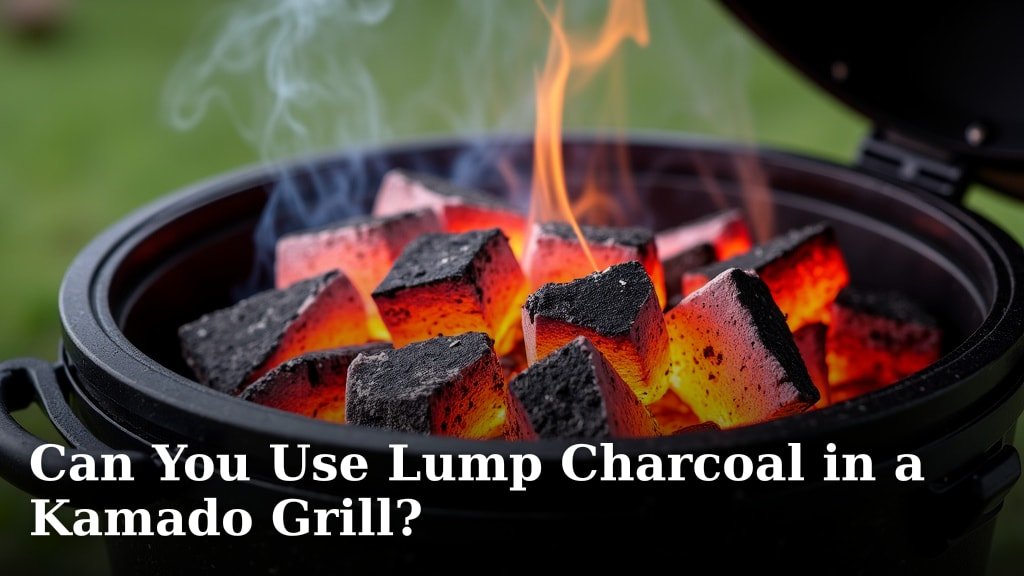
Yes, you can absolutely use lump charcoal in a kamado grill. In fact, it’s the recommended fuel type for these versatile ceramic cookers. Using lump charcoal helps you get the best performance from your grill.
You’ll find that lump charcoal offers many benefits for kamado cooking. It burns hotter and cleaner than briquettes, which is perfect for searing. This type of charcoal also helps you achieve precise temperature control for low-and-slow cooks, giving you amazing cooking flexibility.
- Lump charcoal is ideal for kamado grills.
- It burns hot and clean, perfect for searing.
- You get great temperature control for smoking.
- Avoid briquettes due to fillers and ash.
- Good ventilation and airflow are important.
Let’s walk through exactly why lump charcoal is your kamado grill’s best friend and how to use it for delicious results every time.
Why Lump Charcoal Reigns Supreme in Kamado Grills
Lump charcoal isn’t just an option for your kamado; it’s the ideal fuel choice. Its unique properties align perfectly with the kamado grill’s design, helping you achieve incredible cooking results. You’ll understand why once you start using it.
Think of your kamado as a high-performance oven. Just like a race car needs premium fuel, your kamado performs best with premium charcoal. Lump charcoal is that premium fuel.
The All-Natural Advantage
What exactly is lump charcoal? It’s simply pure wood burned down into charcoal form. No fillers, no binders, no chemicals. It’s essentially what’s left after wood is heated in a low-oxygen environment.
This natural composition is a huge benefit. You avoid any unwanted flavors or smells in your food. Many experts agree that the purest fuel leads to the best-tasting barbecue (Journal of Food Science).
Comparing Lump to Briquettes
You might be used to briquettes from other grills. But for a kamado, they’re not the best fit. Briquettes often contain additives like cornstarch or sawdust, which can create more ash and unwanted odors.
Imagine trying to bake a cake with extra, unnecessary ingredients. It just won’t be as good, right? The same goes for your grilling fuel. Keep it simple and pure for the best flavor.
Superior Heat and Efficiency
Lump charcoal burns hotter and more efficiently than briquettes. This is crucial for kamado cooking. You can reach high searing temperatures quickly. Plus, it helps maintain consistent heat for hours of smoking.
You’ll notice it lights faster, too. This means less waiting and more cooking. Who doesn’t love getting to the good part sooner?
Achieving High-Heat Searing
Do you love a good steak with a crispy crust? Lump charcoal makes it easy. Your kamado can hit 700°F or more, perfect for searing. This intense heat creates that delicious crust known as the Maillard reaction.
Think of it as creating a flavorful shield on your meat. This high heat locks in juices. You get juicy, tender meat every time.
Unmatched Temperature Control
Beyond searing, lump charcoal gives you amazing control for low-and-slow cooking. You can hold temperatures as low as 225°F for 12+ hours. This is perfect for smoking briskets or pork shoulders.
The ceramic body of your kamado, combined with lump charcoal, acts like a thermos for heat. It’s incredibly efficient. You use less fuel over longer cook times.
Cleaner Burn, Less Ash
One of the biggest advantages of lump charcoal is how clean it burns. You get significantly less ash compared to briquettes. Why does this matter?
Less ash means better airflow within your kamado. Good airflow is key to consistent temperatures. It also means less cleaning for you later.
Imagine your lungs. If they’re full of dust, it’s hard to breathe, right? Your kamado needs to “breathe” too. Less ash keeps its airways clear for optimal performance.
Environmental Benefits
Using lump charcoal can also be a more environmentally friendly choice. Since it’s made from pure wood, it’s a renewable resource. Many lump charcoal brands use wood from sustainable forestry practices.
You’re choosing a natural product. This aligns with many people’s desire to reduce their environmental impact. It’s a small choice that can make a difference.
Setting Up Your Kamado with Lump Charcoal
Ready to get cooking? Loading your kamado with lump charcoal is simple. But there are a few tips to ensure you get the best possible results. You want to set yourself up for success from the start.
Choosing the Right Amount
The amount of lump charcoal you need depends on your cook. Are you searing a quick steak or smoking a brisket all day? For searing, you’ll want a fuller basket. For low-and-slow, a smaller, more compact pile is usually sufficient.
Generally, fill your firebox to about half or two-thirds full for most cooks. You can always add more if needed, though it’s harder to remove it mid-cook.
Arranging Your Charcoal
How you arrange your lump charcoal matters for airflow. Avoid packing it too tightly. You want some space between the pieces for air to circulate freely. This helps ensure an even burn.
For low-and-slow, you might create a “snake” method or simply pile it in the center. For high heat, a uniform layer across the bottom is best. Experiment to see what works best for your grill.
The Chimney Starter Method
A chimney starter is your best friend for lighting lump charcoal. It’s safe, efficient, and avoids the need for lighter fluid. Simply load some charcoal in, add a fire starter cube or newspaper, and light it up.
Within 15-20 minutes, you’ll have glowing coals ready to transfer. This method gets your grill hot fast. It’s a real time-saver.
| Feature | Lump Charcoal | Charcoal Briquettes |
|---|---|---|
| Composition | Pure carbonized wood (no additives) | Wood scraps, binders (cornstarch, borax), fillers |
| Burn Temperature | Higher, reaches extreme temps for searing | Lower, more consistent but less intense heat |
| Ash Production | Very low ash, clean burn | High ash, can impede airflow |
| Lighting Time | Lights quickly, 15-20 minutes | Slower to light, 20-30 minutes |
| Flavor Profile | Clean, natural wood smoke flavor | Can impart chemical or off-flavors |
| Temperature Control | Excellent for precise adjustments | Good, but less responsive to airflow changes |
| Cost | Generally higher per bag | Generally lower per bag |
Maintaining Airflow and Vents
Your kamado’s top and bottom vents control temperature. Lump charcoal thrives with good airflow. Make sure your vents are clear and can be adjusted easily.
For higher heat, open them more. For lower temps, close them down. It’s a delicate balance you’ll learn with practice. Just remember, air is fuel for your fire.
Troubleshooting and Best Practices
Even with the right fuel, you might encounter small challenges. Don’t worry, we’ve got you covered. Here are a few tips to make your kamado cooking experience smooth and enjoyable.
Dealing with Flare-Ups
Sometimes, fat dripping onto hot coals can cause flare-ups. Lump charcoal can sometimes produce a bit more of this if you’re not careful. The key is to manage your heat and drippings.
Use a drip pan if you’re cooking fatty meats. If a flare-up occurs, close your lid and vents briefly to starve the fire of oxygen. This usually snuffs it out quickly. Safety first!
Storing Your Lump Charcoal
Lump charcoal needs to stay dry. If it gets wet, it becomes difficult to light and burn efficiently. Store your bags in a dry, airtight container if possible.
A plastic storage bin works great. Keeping it dry ensures it’s always ready for your next cook. You wouldn’t leave sugar out in the rain, would you? Treat your charcoal with similar care.
A Quick Checklist for Kamado Success with Lump Charcoal:
- Use only all-natural lump charcoal.
- Ensure good airflow by not packing charcoal too tightly.
- Use a chimney starter for easy, clean lighting.
- Monitor your top and bottom vents for precise temperature control.
- Keep your charcoal dry in storage.
- Clean out ash regularly to maintain airflow.
You’ll find that mastering lump charcoal in your kamado grill opens up a world of culinary possibilities. From quick weeknight meals to elaborate weekend feasts, you’ll be cooking like a pro in no time!
Conclusion
You now know that lump charcoal isn’t just compatible with your kamado grill; it’s the ideal pairing for superior results. By choosing natural lump charcoal, you unlock incredible temperature control, intense searing capabilities, and a cleaner, purer flavor profile for your food. You’ll enjoy less ash and easier cleanup, too.
Embrace these best practices for loading, lighting, and managing your airflow. With a little practice, you’ll consistently achieve restaurant-quality barbecue right in your backyard. So, go ahead, fuel your kamado with lump charcoal and start creating some truly delicious meals!
Frequently Asked Questions
Can I mix lump charcoal with briquettes in my kamado?
While technically possible, it’s generally not recommended. Briquettes introduce fillers and produce more ash, which can impede airflow and affect the pure flavor profile you get with all-lump charcoal. Stick to one type for the best results.
How do I dispose of used lump charcoal safely?
Always allow the charcoal to cool completely, often overnight, before disposal. Once cool, you can scoop the ash and small pieces into a metal can or foil and place it in your regular trash. Never dispose of hot charcoal.
Does the type of wood in lump charcoal matter for flavor?
Yes, different woods impart subtle flavor differences. Oak and hickory are strong and smoky, ideal for beef or pork. Fruitwoods like apple or cherry offer a milder, sweeter smoke, great for poultry or fish. Experiment to find your favorite!
My kamado isn’t getting hot enough with lump charcoal. What could be wrong?
Check your airflow first. Ensure your vents are open wide enough for high heat and that the charcoal isn’t packed too tightly. Also, make sure your lump charcoal is dry; wet charcoal struggles to reach high temperatures.
How often should I add more lump charcoal during a long cook?
With a kamado’s efficiency, you might not need to add much. For very long cooks (8+ hours), you might add small amounts of unlit charcoal around the edges of the burning coals. Do this sparingly to avoid temperature fluctuations and use fresh, dry charcoal.
