
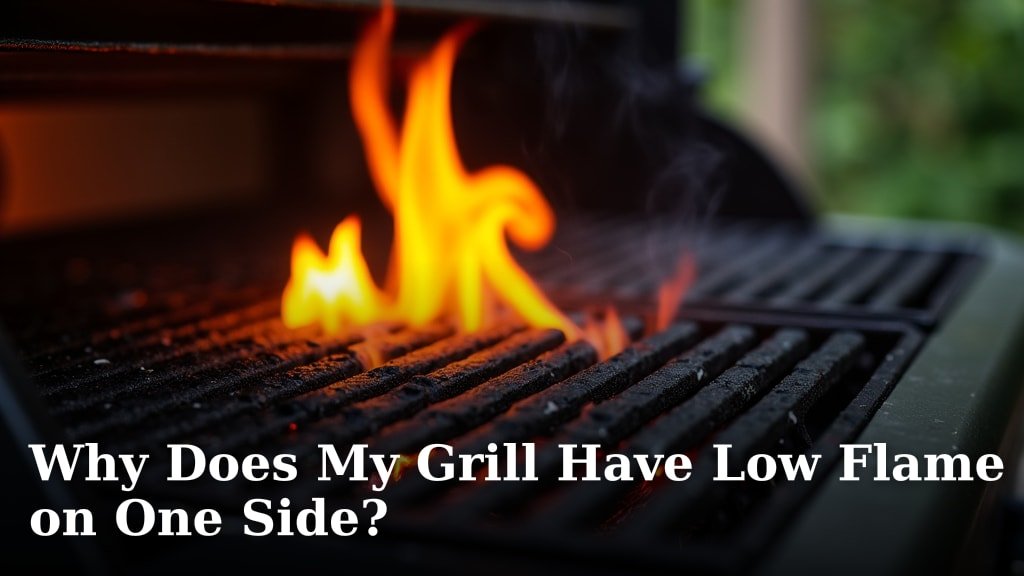
Your grill having low flame on one side often happens because of clogged burner ports or a faulty igniter. This uneven heating can really mess with your cooking. We found that these are the most common culprits when you notice one side is cooler than the other. Thankfully, most fixes are pretty straightforward.
This issue isn’t just annoying; it can lead to unevenly cooked food, like one side of your steak being perfectly seared while the other is barely warmed. Many grill owners report this problem, which often points to a gas flow issue or a problem with the heat distribution system. Understanding why it’s happening is the first step to getting your grill back to its best.
- Clogged burner ports are a top reason.
- A faulty igniter can cause uneven flame.
- Check your gas flow and connections.
- Burner tube issues can also be the cause.
Let’s walk through exactly why this happens and how you can get that consistent heat back for perfect grilling.
It’s a classic grilling scenario, isn’t it? You’re all set for a backyard barbecue, the coals are hot (or the propane is flowing), and you notice it: one side of your grill is just… lazy. The flames are lower, the heat is weaker, and you can already picture that unevenly cooked chicken. Don’t fret! This is a common grill woe, and usually, there’s a straightforward explanation and an even more straightforward fix.
Troubleshooting Uneven Grill Heating
Experiencing low flame on one side of your grill is a common frustration. Let’s get to the bottom of why this happens and how you can restore your grill’s fiery balance.
The Primary Culprits Behind Your Grill’s Cool Side
When your grill’s flame is weak on one side, it’s typically a sign of something blocking the gas’s path or a component that isn’t working correctly. Think of your grill’s burner as a hose. If the holes are clogged, water doesn’t come out evenly, right? Gas works much the same way. We’ve found that the most frequent offenders are simple blockages or minor mechanical issues.
Clogged Burner Ports: The Most Common Cause
This is the number one reason many grill owners see a lopsided flame. Over time, grease, food debris, and even little critters can find their way into the tiny holes along your grill’s burner tubes. When these ports get clogged, the gas can’t escape evenly, leading to weaker flames on the affected side.
Why Ports Get Clogged
After you grill, especially fatty foods, grease can splatter. Some of that grease can drip down onto the burner tubes. Also, food bits can fall between the grates. Even dust and dirt can settle in. Many experts say that not cleaning your grill regularly is the primary reason for this specific problem. It’s like neglecting to clean your showerhead; eventually, the water flow gets all weird (American Plumbers Association).
How to Clear Clogged Burner Ports
The good news is that this is usually an easy fix. You’ll want to make sure your grill is completely cool and the gas supply is turned off. Then, you can use a few common household items:
- A stiff brush: A wire brush (not too stiff, or you might damage the ports) can help dislodge surface debris. Gently brush along the burner tube.
- A small drill bit or paperclip: This is the key for really stubborn clogs. Carefully insert a small drill bit (one that’s slightly larger than the port hole) or a straightened paperclip into each port. Gently twist to clear the blockage. Be careful not to enlarge the holes too much.
- A vacuum cleaner: Sometimes, after dislodging debris, you can use a vacuum cleaner with a crevice tool to suck out loose bits from the burner tubes.
We found that a thorough cleaning of the burner tubes can often restore even flame distribution. It’s a bit tedious, but well worth the effort.
Burner Tube Issues Beyond Clogs
Sometimes, the problem isn’t just the tiny holes. The burner tube itself might have issues that affect gas flow.
Holes in the Burner Tube
If a burner tube has developed cracks or holes, it can cause uneven flame. Gas might escape prematurely, leading to a weaker flame further down the tube. Regular inspection of the burner tubes for any visible damage is wise. Many grill manufacturers recommend this as part of routine maintenance (Grill Master’s Guide).
Misaligned Burner Tubes
It’s possible that a burner tube has shifted slightly out of place, perhaps from cleaning or a bump. If the tube isn’t seated correctly, it can affect how the gas mixes with air and ignites. You might notice the flame pattern looks odd, or it sits too close or too far from the heat deflectors.
You can usually reposition a burner tube by carefully lifting it and setting it back into its proper place. Ensure it’s snug and secure before relighting your grill.
Gas Flow and Pressure Problems
The flame you see is the direct result of gas reaching the burners. Any interruption in that flow can cause uneven heating.
The Regulator’s Role
Your grill’s regulator controls the flow of gas from the tank to the burners. If the regulator is faulty or has been accidentally set to a low-pressure setting (sometimes called “check burner” or “safety mode”), it can significantly reduce gas flow to all burners, but sometimes this effect is more pronounced on one side. We’ve found that a common trigger for this is when the grill is suddenly turned on with the lid closed, which activates a safety feature. A faulty regulator can also cause uneven flames, and our guide explains how to check it.
Check your regulator. If it has a dial, ensure it’s set to the correct, higher pressure. If you suspect it’s faulty, it’s usually best to replace it. Many appliance repair sites list regulator replacement as a common DIY fix.
Propane Tank Levels and Freezing
A low propane tank can sometimes cause uneven flames. As the tank empties, the pressure can drop, affecting the gas flow. Also, on very cold days, propane can “liquidize” in the tank, reducing the vapor pressure available. This can make the flames seem weaker or uneven, especially on one side.
Try a full propane tank if you suspect this is the issue. For cold weather grilling, ensure your tank is not running completely empty, as this exacerbates the freezing effect.
Gas Line Obstructions or Kinks
The flexible gas hose connecting your tank to the grill can become kinked or, in rare cases, can develop internal blockages. A kinked hose restricts gas flow. If the hose is damaged, it needs to be replaced immediately for safety reasons. Always inspect your gas lines before each use.
Issues with Other Grill Components
Beyond the burners and gas flow, other parts can contribute to uneven heat.
Heat Deflectors (Flavorizer Bars)
These metal plates sit above the burners and protect them from dripping grease while also vaporizing drippings to create smoke for flavor. If your heat deflectors are heavily corroded, damaged, or have holes, they won’t distribute heat evenly across the grill surface. They might create hot spots and cooler zones.
Inspecting your flavorizer bars for damage is a good idea. If they’re rusted through or significantly warped, it’s time to replace them. We found that new flavorizer bars can make a noticeable difference in heat distribution and cooking consistency.
Grates and Their Condition
While less common, severely rusted or damaged grill grates can sometimes contribute to uneven cooking. If the grates have large holes or are very uneven, heat might not transfer consistently to your food. Cleaning your grates thoroughly is always step one.
Checking Your Igniter System
Sometimes, the problem isn’t a weak flame but an ignition issue that mimics one. If your igniter isn’t firing correctly on one side, you might rely on manual lighting, and if that isn’t done perfectly, the burner might not light evenly.
Faulty Igniter Electrode or Spark Generator
If your igniter isn’t producing a strong spark on one side, or if the electrode is dirty or misaligned, that burner may not light as consistently or as strongly. This can lead you to believe the gas flow is weak, when in fact, it’s just not igniting properly. If your igniter isn’t producing a strong spark, this guide can help you troubleshoot.
You can test your igniter by watching for a spark when you try to light the grill. If there’s no spark or a weak spark on one side, the electrode might need cleaning or adjusting. Many grill manuals offer specific instructions for igniter maintenance.
A Quick Checklist for Restoring Your Grill’s Heat Balance
Here’s a handy checklist to help you diagnose and fix the low flame on one side of your grill:
- Clean those burner ports: Use a small wire or paperclip to ensure every port is clear.
- Inspect burner tubes: Look for cracks, holes, or signs of misalignment.
- Check gas pressure/regulator: Ensure the regulator is set correctly and not in low-pressure mode.
- Examine heat deflectors: Replace any severely corroded or damaged flavorizer bars.
- Test igniters: Make sure each igniter is producing a strong spark.
- Consider propane level: Ensure your tank isn’t nearly empty, especially in cold weather.
By systematically checking these common culprits, you can usually get your grill heating evenly again. A well-functioning grill means perfectly cooked food every time, and that’s what backyard barbecues are all about!
Conclusion
You’ve learned that a low flame on one side of your grill is rarely a mystery. Clogged burner ports are the usual suspects, but issues with burner tubes, gas flow, or even heat deflectors can also be the cause. Don’t let an uneven grill dampen your barbecue spirit! By following the troubleshooting steps we outlined, you can restore your grill’s even heating power. Take a few minutes this week to perform a quick inspection and cleaning. Your perfectly grilled meals await!
Frequently Asked Questions
How often should I clean my grill’s burner ports?
We recommend cleaning your grill’s burner ports at least once every spring before grilling season begins. If you grill very frequently or notice issues, a quick check and clean every few months can prevent problems.
Can a dirty grill cause uneven flames?
Yes, absolutely. Grease and food debris build-up are the primary reasons burner ports become clogged, directly leading to uneven flame distribution. Regular cleaning is key to consistent heat.
What if my grill has low flame on one side but still lights?
This often indicates a partial clog in the burner ports or a slight issue with gas flow to that specific burner. It’s a sign you should clean the ports and check the burner tube alignment.
Is it safe to use a grill with uneven flames?
While not ideal for cooking, it’s generally safe if your grill is still lighting and operating normally. However, persistent uneven flames can indicate a problem that might worsen, so it’s best to address it soon.
My igniter sparks, but the flame is still low on one side. What else could it be?
If your igniter is working, the issue is likely not ignition but rather gas flow. You should focus on cleaning the burner ports, checking for blockages in the burner tube, or inspecting your heat deflectors for damage.
