
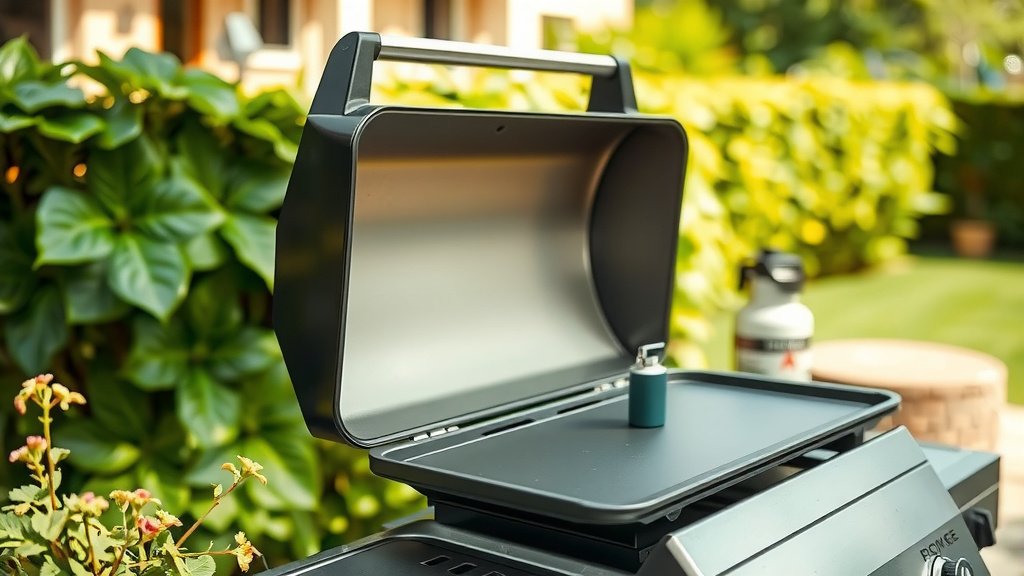
Your propane grill likely won’t light due to a simple issue like an empty tank, a tripped regulator, or a dirty igniter. These common problems often have straightforward solutions.
To fix why your propane grill won’t light, first confirm the propane tank has gas and is fully open, then check your igniter for sparks, and clean any clogged burner ports.
- Check Your Propane Tank First: Make sure it’s not empty and the valve is fully open.
- Reset the Regulator: A common safety feature can sometimes stop gas flow.
- Inspect the Igniter: Look for sparks and check the battery.
- Clean Burner Tubes: Spiders or debris can block gas flow, a surprisingly common issue.
- Check Gas Hoses: Look for kinks or leaks that prevent propane from reaching the burners.
Why Won’t My Propane Grill Light?
There are many reasons your propane grill might not fire up, but most are easy to fix. We often find the issue boils down to gas supply, ignition, or blockages in the system.
Don’t worry, you are not alone in this grilling dilemma. Many experts say a systematic approach helps you find the problem fast (Consumer Reports).
The Propane Tank: Your First Suspect
Is your tank truly full? This sounds obvious, but many people overlook it. Sometimes, the gauge lies, or you just forgot to refill it after the last cookout.
We found that a **low or empty tank** is the number one reason for a grill not lighting. Give the tank a gentle shake; if it feels light, it’s time for a swap or refill.
Is the Tank Valve Fully Open?
Sometimes, in your excitement, you might not open the tank valve all the way. A partially open valve restricts gas flow. Always make sure it’s **turned counter-clockwise until it stops**.
A closed or barely open valve can trick the safety device in your regulator, making it think there’s a leak. This prevents gas flow entirely.
The Overfill Prevention Device (OPD)
Modern propane tanks have an OPD safety feature. It stops the tank from being overfilled. It can also trip, mistakenly thinking there’s an issue.
If your grill isn’t lighting, try **resetting your propane regulator**. This often fixes the OPD issue, letting the gas flow freely again.
The Regulator Reset Dance
This is a common “grill won’t light” mystery solver. Your grill’s regulator is a sensitive part. It can get “tripped” and restrict gas if you open the tank valve too quickly.
Many grill manufacturers recommend this reset if your burners are only producing a **low flame or no flame**. It’s simple and worth trying early on.
- Disconnect the gas line from the side burner or main burner hose.
- Make sure all burner control knobs on your grill are in the OFF position.
- Turn the propane tank valve completely OFF.
- Wait 5-10 minutes for pressure to equalize.
- Reconnect the gas line to your grill.
- Slowly open the propane tank valve all the way.
- Wait another minute before attempting to light the grill.
Ignition System Issues: No Spark, No Fire
Even with perfect gas flow, your grill needs a spark to ignite. The igniter system has a few parts that can fail. This is a very common point of frustration for grillers.
We found that **igniter problems** rank high on the list of why grills fail to light. Let’s look at what might be going wrong with your spark system.
Dead Battery?
Does your grill have an electronic igniter? If so, it likely runs on a battery. A dead battery means no spark. Check the battery compartment; often it’s a simple AA or AAA.
Replacing the battery is a quick and cheap fix. Many experts suggest **checking the battery first** if you hear no clicking or see no spark.
Dirty or Corroded Igniter
Over time, grease, food residue, and weather can corrode the igniter electrodes. A dirty igniter can’t create a strong spark to light the gas.
Use a wire brush or fine sandpaper to **gently clean the metal tips** of the igniter. Make sure they are free of buildup for a proper spark.
Loose or Disconnected Wires
The igniter relies on wires to carry the electrical current. Check under the control panel for any wires that might have come loose or are visibly damaged.
Reconnect any loose wires firmly. We found that **checking for secure connections** can sometimes solve the no-spark problem instantly.
Gas Flow Blockages: The Unseen Culprits
Even if you have gas in the tank and a working igniter, something might be blocking the propane from reaching the burners. Think of it like a clogged drain; the water is there, but it can’t get through.
This category often involves a bit more elbow grease, but it’s usually very fixable. **Blockages are a frequent reason** your grill might not light, especially after storage.
Clogged Burner Tubes and Ports
Spider webs and insects love to build nests inside the venturi tubes leading to your burners. This creates a complete blockage, preventing gas from flowing out of the burner ports.
Carefully remove your grill grates and heat tents, then lift out the burners. Use a **venturi brush or a stiff wire** to clean the inside of the tubes (Consumer Product Safety Commission).
Hose and Line Integrity
Inspect the rubber hose connecting your tank to the grill. Look for kinks, cracks, or punctures. A damaged hose can restrict gas or lead to dangerous leaks.
A simple soap and water test can find small leaks. Apply soapy water to the hose and connections; if you see **bubbles, you have a leak**. Tighten connections or replace the hose.
Other Less Common Issues
While the above are the most frequent culprits, sometimes the problem lies elsewhere. It’s like finding that one missing puzzle piece.
Sometimes, the **control knobs themselves** can be faulty, or the gas manifold system might have a deeper issue. These require a bit more investigation.
Faulty Control Knobs or Valves
If a burner knob isn’t engaging the valve properly, gas won’t flow. You might need to check if the knob is stripped or if the valve itself is stuck closed.
We found that **worn-out control valves** can prevent gas flow, even when the knob appears to be “on.” This might require replacement parts.
| Problem Symptom | Likely Cause | Quick Solution |
|---|---|---|
| No gas smell, no flame | Empty tank or tripped regulator | Refill tank or perform regulator reset |
| Gas smell, no flame, no spark | Dead igniter battery or dirty igniter | Replace battery or clean igniter tips |
| Gas smell, no spark, clicking sound | Loose igniter wires | Reconnect wires |
| Low or uneven flame | Clogged burner ports or venturi tubes | Clean burners and tubes |
| No gas smell, gas in tank | Kinked hose or faulty regulator | Inspect hose, try regulator reset |
Your Pre-Grill Season Checklist
A little preventative care goes a long way. Before your first cookout of the season, take a few minutes for a quick check. This saves headaches later.
Many guidelines point to **pre-season checks** as a good way to avoid unexpected grill failures (NFPA).
- Is the propane tank full and valve working?
- Are all igniter connections secure?
- Is the igniter sparking cleanly?
- Are burner tubes free of debris?
- Is the hose free of kinks or cracks?
Conclusion
Finding out why your propane grill won’t light doesn’t have to ruin your cookout. Most issues are very common and have straightforward fixes. By systematically checking your propane tank, regulator, igniter, and gas lines, you can usually diagnose and solve the problem yourself.
Remember to always prioritize safety when working with gas. If you’re unsure about a repair or suspect a major gas leak, it’s always best to contact a qualified technician. Happy grilling, and may your flames be strong!
How often should I clean my grill’s igniter?
You should aim to clean your grill’s igniter at least once a season, or more frequently if you use your grill often. Grease and food particles can quickly build up, hindering its ability to spark.
Can a cold propane tank affect grill lighting?
Yes, very cold temperatures can reduce the pressure inside a propane tank, making it harder for the grill to light or maintain a strong flame. Store your tank in a moderate temperature area if possible, and ensure it’s not directly exposed to extreme cold when grilling.
Is it normal for a new propane tank to not light my grill?
Sometimes, yes. New tanks or newly refilled tanks can trigger the regulator’s safety device, especially if the tank valve is opened too quickly. Performing a regulator reset is often the solution for this specific problem.
What does a “whooshing” sound mean when I try to light my grill?
A “whooshing” sound typically indicates that propane gas is flowing but isn’t igniting. This usually points to an issue with your igniter not producing a spark, or the spark not reaching the gas effectively. Check your igniter’s battery and electrode tips.
When should I replace my grill’s regulator?
You should consider replacing your grill’s regulator if it’s visibly damaged, leaking gas (even after tightening connections), or if repeated regulator resets don’t solve gas flow issues. Regulators can wear out over time, especially after several years of use.
