
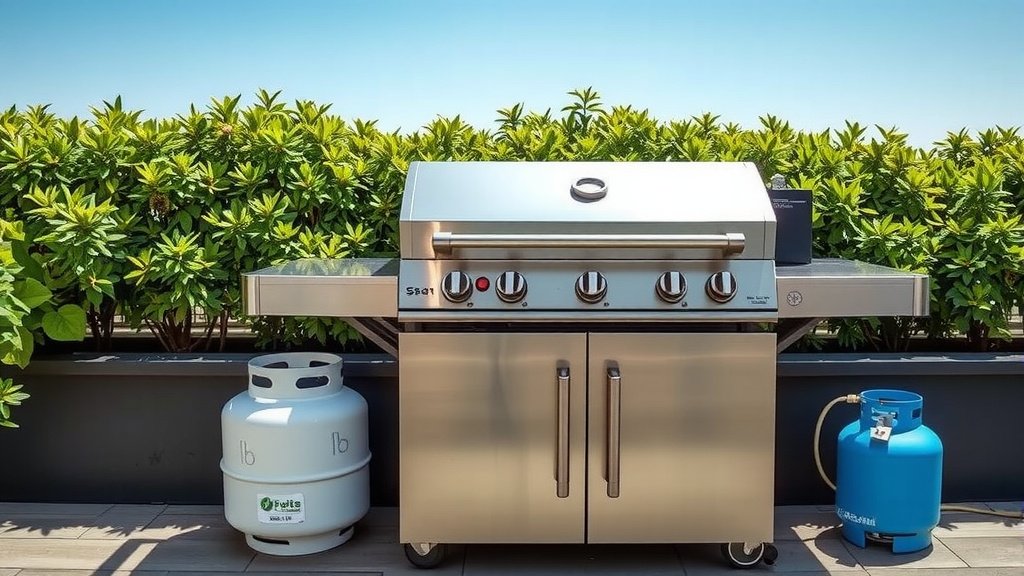
No, a natural gas grill cannot directly use propane without a proper conversion. You risk serious safety hazards and poor grilling performance if you try.
Converting a natural gas grill to use propane involves changing critical components like the burner orifices and the gas regulator, which must be done precisely for safety and function.
- You cannot simply connect a propane tank to a natural gas grill.
- The two fuels operate at very different pressures, needing specific parts.
- Attempting a direct swap is extremely dangerous and can damage your grill.
- Conversion kits exist, but professional installation is highly recommended for safety.
Can A Natural Gas Grill Use Propane?
Straight away, the answer is no, not without significant modifications. Trying to use propane with a natural gas grill as-is will lead to dangerous situations and a frustrating grilling experience. It’s like trying to run a diesel car on gasoline; the engines are designed for different fuels.
Understanding the Fuel Differences
Natural gas (NG) and propane (LP) are both great for grilling, but they are not interchangeable. We found that natural gas typically flows at a much lower pressure than propane (National Fire Protection Association, NFPA). Think of it like a gentle stream versus a powerful fire hose.
Propane, stored under high pressure in a tank, needs a regulator to bring that pressure down to a usable level for your grill. Natural gas, coming from your home’s gas line, already arrives at a lower, consistent pressure. This fundamental difference in pressure is the root of the problem.
Why You Can’t Just Hook It Up
Your grill’s burners have tiny openings called orifices. These orifices are precisely sized to deliver the correct amount of fuel at a specific pressure to create an ideal flame. A natural gas grill has larger orifices because NG flows at lower pressure, requiring more volume to get enough heat.
If you connect a high-pressure propane tank to a natural gas grill, too much fuel will rush through those larger orifices. This creates an enormous, uncontrollable flame, which is incredibly dangerous. Conversely, putting low-pressure natural gas through small propane orifices would give you barely a flicker.
The Danger Zone: What Could Go Wrong
Connecting the wrong fuel type is a serious safety concern. We found that potential risks include gas leaks, uncontrolled flare-ups, fire, and even explosions. Your grill components, like hoses and regulators, are also designed for one fuel type only and could fail under incorrect pressure (Underwriters Laboratories, UL).
Beyond safety, your food will suffer. Too much propane going through NG orifices means excessive heat, quickly burning food on the outside while leaving it raw inside. Plus, you’ll waste a lot of expensive propane very quickly.
Is Conversion Possible? The Good News!
Yes, you can convert a natural gas grill to use propane, and vice-versa, but it is not a simple DIY job. Many grill manufacturers offer conversion kits for their specific models. This is generally the safest and most reliable path if you want to switch fuel types.
These kits contain all the necessary parts, like new orifices and regulators, to adapt your grill safely. It’s important to use a kit made for your exact grill model. A generic kit might not fit correctly or meet safety standards.
What Does a Conversion Involve?
A proper conversion typically means replacing several key components. This usually includes removing the existing burner orifices and installing smaller ones designed for propane. The natural gas regulator also needs to be replaced with a propane regulator and hose assembly.
Some grills also require changing the valves themselves or making adjustments to the air shutters on the burner tubes. The goal is to perfectly match the fuel delivery system to the new fuel type, ensuring safe and efficient operation. This requires careful attention to detail and mechanical skill.
DIY or Pro? Making the Right Choice
While some handy grill owners might consider a DIY conversion, many experts recommend professional installation. The precision required for gas line connections and orifice changes is critical for safety. Incorrect installation could lead to gas leaks, which are highly dangerous.
We found that hiring a certified gas technician provides peace of mind. They have the tools, expertise, and knowledge of local codes to ensure the conversion is done correctly and safely. It’s an investment in your safety and your grill’s longevity.
| Factor | DIY Conversion | Professional Conversion |
|---|---|---|
| Cost | Lower (kit only) | Higher (kit + labor) |
| Safety | Potential risks if incorrect | High assurance, certified work |
| Expertise Needed | Advanced mechanical skills | Certified gas technician |
| Warranty Impact | May void grill warranty | Often preserves warranty |
| Tools Required | Specialized tools may be needed | Technician provides all tools |
The Conversion Checklist
Thinking about converting your natural gas grill to propane? Here’s a quick checklist to help guide you through the process. Remember, safety always comes first when working with gas appliances.
- Check your grill’s manual: Does your manufacturer offer a conversion kit for your specific model? This is the best starting point.
- Purchase the correct kit: Ensure the kit matches your grill’s make and model precisely. Do not use generic parts.
- Gather necessary tools: You might need wrenches, screwdrivers, pipe sealant (rated for gas), and a leak detection solution.
- Consider professional help: If you’re unsure about any step, call a certified gas technician. Their expertise is worth it.
- Perform a leak test: After conversion, always test all connections with a soapy water solution before lighting the grill.
- Understand warranty implications: A DIY conversion might void your grill’s warranty. Check with the manufacturer first.
After Conversion: What to Expect
Once converted, your grill should perform like a brand-new propane unit. You’ll attach a standard propane tank, open the valve, and ignite it as usual. The flames should be consistent, blue with yellow tips, and provide even heat across the cooking surface.
It’s vital to perform a thorough leak test after any gas component change. Many experts say to use a soapy water solution on all connections; if bubbles appear, you have a leak that needs immediate attention. Always keep a fire extinguisher nearby during initial testing.
Is it Worth the Effort?
The decision to convert often comes down to cost and convenience. If you love your current grill and moving it makes a natural gas line impractical, a conversion might be a smart choice. However, if your grill is older or a basic model, sometimes buying a new propane grill is simpler and more cost-effective in the long run.
We found that the cost of a conversion kit plus professional installation can sometimes approach the price of a budget-friendly new grill. Weigh your options carefully, considering the grill’s condition, your budget, and how often you plan to use it.
Staying Safe While Grilling
Regardless of your fuel type, grilling safety is paramount. Always operate your grill in a well-ventilated area, far from anything flammable. Keep children and pets away from the grill while it’s in use and cooling down. Clean your grill regularly to prevent grease fires, especially the drip pan.
Store propane tanks upright, in a shaded, outdoor area, away from ignition sources. Never store a propane tank indoors or in an enclosed vehicle. By following these simple guidelines, you can enjoy delicious grilled meals safely all year round.
Conclusion
While you can’t simply plug a natural gas grill into a propane tank, a proper conversion is indeed possible. This process requires careful attention to detail, replacing specific components like orifices and regulators to match the new fuel type’s pressure. For safety and peace of mind, hiring a certified professional for this task is always the best approach. Understanding the differences between natural gas and propane systems ensures you make informed decisions, keeping your grilling experiences delicious and hazard-free.
Can I use a natural gas regulator on a propane tank?
No, you absolutely cannot use a natural gas regulator on a propane tank. A natural gas regulator is designed for much lower pressures than a propane tank delivers, and using it with propane would be extremely dangerous, potentially causing leaks, uncontrolled flames, or even an explosion.
How do I know if my grill is natural gas or propane?
Typically, a natural gas grill will have a permanent connection or a long yellow flexible hose designed to connect directly to your home’s natural gas line. Propane grills connect to a portable tank, often with a dedicated tank storage area under the grill, and use a standard propane regulator and hose assembly.
What happens if I connect a natural gas grill to propane without conversion?
If you connect a natural gas grill to a propane tank without conversion, too much high-pressure propane will rush through the larger natural gas orifices. This will result in dangerously large, uncontrollable flames, potential gas leaks, excessive heat, and a very high risk of fire or injury.
Are conversion kits universal for all grill brands?
No, conversion kits are not universal. Most grill manufacturers produce specific conversion kits tailored to their particular grill models. Using a non-specific or generic kit may not fit correctly, could compromise safety, and might void your grill’s warranty. Always get a kit designed for your exact grill model.
Is converting a grill covered under warranty?
This depends on the manufacturer. Some grill manufacturers may void the warranty if a grill is converted, especially if it’s done by an unauthorized person or with non-approved parts. Always check your grill’s warranty information and the manufacturer’s guidelines regarding conversions before proceeding.
