
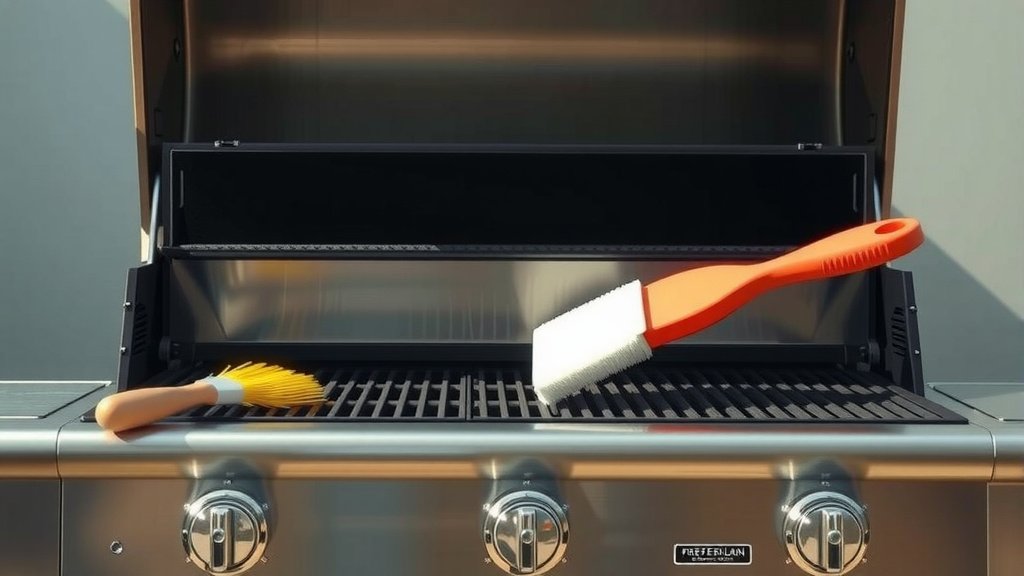
To effectively clean a gas grill, you should primarily use a high-quality grill brush with stiff bristles or a bristle-free scraper, along with warm soapy water and a degreaser for tougher grime.
For more detailed tasks, a soft cloth, a sponge, aluminum foil, and sometimes a vacuum cleaner or baking soda paste can be beneficial when cleaning a gas grill.
- Get started by giving your grill a quick burn-off to turn food bits into ash.
- Grab a sturdy grill brush for the grates; wire or bristle-free options work best.
- Don’t forget the inside parts: remove grates, clean burner covers, and check drip pans.
- Warm soapy water and a mild degreaser are your best friends for cutting through grease.
- Finish with a wipe-down of the exterior, leaving your grill ready for its next cooking adventure.
What To Use To Clean A Gas Grill?
Cleaning your gas grill effectively means having the right tools and knowing a few simple tricks. You want to remove burnt food and grease without damaging surfaces.
A good starting point always involves a robust grill brush, warm soapy water, and a degreaser. These items are your primary defense against stubborn build-up.
Why Cleaning Your Gas Grill Matters
Imagine grilling a juicy steak on a dirty surface. Not appealing, right? Cleaning your grill is about more than just aesthetics; it’s about safety and taste.
Regular cleaning prevents flare-ups, ensures even cooking, and extends the lifespan of your appliance. It also keeps your food tasting its best, free from old, burnt residue (Food Safety Experts).
Essential Cleaning Tools You’ll Need
Before you start, gather your supplies. Think of it like preparing for a cooking adventure, but instead, you’re getting ready to battle grease.
You will need a grill brush, a scraper, a bucket, dish soap, a degreaser, a soft cloth, and sometimes aluminum foil. These items form your essential cleaning kit.
Choosing the Right Grill Brush
Picking the correct brush is important. Some grillers prefer wire brushes for their scrubbing power, while others worry about stray bristles.
Many experts now suggest using bristle-free brushes or grill scrapers. These options minimize the risk of metal bristles ending up in your food, a serious safety concern (Consumer Reports).
Step-by-Step Grill Grate Cleaning
The grates are where the magic happens, so they need the most attention. We recommend cleaning them both before and after each use.
A quick clean before you start cooking prevents previous meals from sticking to your fresh food. A thorough clean afterward prepares it for next time.
The Hot Burn-Off Method
This is your easiest first step. Turn your gas grill to high for about 10-15 minutes after cooking. This process helps burn off any leftover food particles.
Once cooled slightly, use your grill brush to easily scrape away the now-charred residue. It crumbles off, making your job much simpler.
Soaking and Scrubbing Grates
For grates that have seen better days, a good soak can work wonders. After the burn-off, let the grates cool down completely.
Place them in a bucket of warm, soapy water with a splash of degreaser. Let them soak for 30 minutes to an hour. Then, scrub with your brush and rinse thoroughly.
Cleaning the Burner Tubes and Heat Tents
These components are vital for consistent heat and proper function. Over time, grease and debris can block burner holes or corrode heat tents.
Carefully remove the grates and heat tents. Use a soft brush or a vacuum cleaner to remove any loose debris from the burner tubes. Inspect the heat tents for damage.
Dealing with Grease Trays and Drip Pans
The grease tray and drip pan catch all the drippings and can become quite messy. Neglecting them can lead to dangerous flare-ups and unwanted pests.
Remove the tray and pan. Scrape out any solidified grease into a trash bag. Wash them with warm, soapy water and degreaser. Rinse well and replace.
Exterior Care for Your Gas Grill
The outside of your grill deserves some love too. Keeping it clean protects the finish and makes your outdoor cooking area look tidy.
Use a mild dish soap and water solution with a soft cloth to wipe down the exterior. For stainless steel, follow the grain of the metal to avoid streaks. Always dry it completely.
Natural Cleaning Solutions for Your Grill
If you prefer to avoid harsh chemicals, some common household items can be very effective. These natural solutions are often gentler on surfaces and the environment.
Vinegar and baking soda are two superstars in the natural cleaning world. They tackle grease and grime without any strong odors or residues.
Vinegar Spray for a Shine
Mix equal parts white vinegar and water in a spray bottle. After cleaning off the major gunk, spray this solution onto your grates and interior surfaces.
Let it sit for about 10-15 minutes, then wipe clean with a cloth or scrub with your brush. It helps cut through grease and leaves a nice shine.
Baking Soda Paste for Tough Spots
For those extra stubborn, baked-on messes, baking soda creates a gentle abrasive paste. Mix a small amount of water with baking soda until you get a thick consistency.
Apply the paste directly to the problem areas. Let it sit for 20 minutes before scrubbing with a brush or sponge. Rinse thoroughly afterwards.
| Cleaning Item | Best Use | Notes |
|---|---|---|
| Grill Brush (Bristle-Free) | Grates (hot or cool) | Safest option, prevents wire ingestion. |
| Warm Soapy Water | Grates, interior, exterior, drip pan | Universal degreaser, gentle on most surfaces. |
| Degreaser Spray | Heavy grease on grates, drip pan, interior | More powerful for stubborn build-up. |
| White Vinegar | Shine, light degreasing, odor removal | Natural, streak-free finish. |
| Baking Soda Paste | Baked-on food, stubborn stains | Mild abrasive, excellent for tough spots. |
| Aluminum Foil | Grates (as a scrubber) | Good alternative if no brush is available. |
| Soft Cloth/Sponge | Exterior surfaces, wiping down | Prevents scratches on stainless steel. |
Your Quick Grill Clean-Up Checklist
Want a fast way to keep your grill in top shape after every cookout? Follow this simple list:
- Turn up the heat for a 10-minute burn-off right after cooking.
- Once cool, use your bristle-free brush to scrape grates clean.
- Empty and wipe out the drip pan or grease tray.
- Wipe down the exterior surfaces with a damp cloth.
- Cover your grill to protect it from elements until next time.
Safety First: Important Cleaning Tips
When cleaning your grill, always prioritize safety. Make sure the grill is completely cool before you start touching internal parts.
Disconnect the propane tank or turn off the natural gas supply. Wear gloves to protect your hands from grease and cleaning solutions. Never use harsh oven cleaners on grill parts, as they can damage the finish and delicate components (Grill Manufacturer Guidelines).
Conclusion
Keeping your gas grill clean is truly straightforward when you use the right tools and approach. From a simple burn-off and brush to a thorough soak and scrub, you have many options.
Regular maintenance ensures not just delicious food, but also a longer-lasting grill and safer grilling experiences for everyone. So go ahead, give your grill the care it deserves!
How often should I deep clean my gas grill?
Many grill experts suggest deep cleaning your gas grill at least twice a year, typically at the start and end of grilling season. However, if you grill very frequently, consider a deep clean every 2-3 months.
Can I use steel wool to clean my grill grates?
While steel wool is effective, it can scratch the finish of your grill grates, making them more prone to rust and food sticking in the future. It’s generally better to use a dedicated grill brush, a stiff nylon brush, or a crumpled piece of aluminum foil.
What if I don’t have a grill brush?
No grill brush? No problem! You can crumple up a sheet of aluminum foil into a ball and grip it with tongs. Use this homemade scrubber to rub off residue from your grates. A heavy-duty scour pad or even half an onion (cut side down) can also work in a pinch.
Is it safe to clean my grill with the gas on?
Absolutely not. For your safety, always ensure your gas grill is completely off and cooled down before you begin any cleaning, especially when dealing with internal components. Disconnect the gas supply as an extra precaution.
How do I prevent rust on my gas grill?
To prevent rust, always ensure your grill is dry before covering it after cleaning. Season your cast iron grates with cooking oil regularly. Also, consider investing in a good quality grill cover to protect it from the elements, and store your grill in a dry place if possible.
