
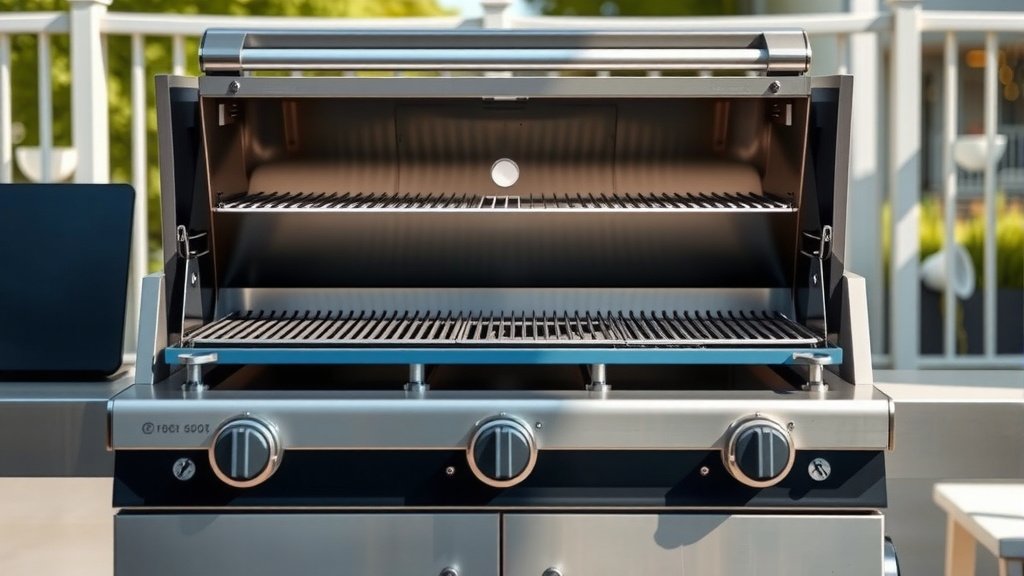
To deep clean a gas grill, you’ll want to start by disconnecting the propane tank and removing all grates, flavorizer bars, and heat tents.
Then, thoroughly scrub these components and the grill interior, including the firebox, with a degreaser and stiff brush, rinsing everything well before reassembly.
Here’s a quick look at how to give your gas grill a serious scrub-down:
- Always disconnect the gas first for safety.
- Remove and soak grates, flavorizer bars, and heat tents.
- Scrub the inside of the grill box, including burners, to remove grease and debris.
- Clean the outside surfaces, drip tray, and catch pan.
- Reassemble once everything is dry for a shiny, ready-to-grill machine.
How To Deep Clean A Gas Grill?
To deep clean a gas grill effectively, you’ll need to disassemble key components and thoroughly scrub away accumulated grease and food residue.
This process rejuvenates your grill, ensuring better performance and safer cooking for your next barbecue.
Why Bother with a Deep Clean?
You might wonder if a deep clean is truly necessary. Think of it like this: your grill works hard, cooking delicious meals week after week.
Over time, grease and food particles build up, affecting heat distribution and even flavor. A clean grill heats more evenly, cooks food better, and reduces flare-ups.
Many experts say a yearly deep clean helps extend your grill’s life and keeps it performing at its best (Grilling Manufacturer Association).
When Should You Deep Clean Your Grill?
Most grilling enthusiasts agree that a comprehensive deep clean is ideal at least once or twice a year, perhaps at the start of grilling season and again before storing it for winter.
Of course, if you use your grill very often, or notice excessive grease buildup, you might want to clean it more frequently. Listen to your grill; it often tells you when it needs attention.
Gathering Your Grill Cleaning Arsenal
Before you dive in, gather all your supplies. Having everything ready saves time and makes the job smoother. You wouldn’t start baking a cake without ingredients, right?
Essential Tools You’ll Need
The right tools make all the difference. We found that a sturdy collection of brushes and scrapers is your best friend for stubborn grime.
| Tool | Purpose |
|---|---|
| Wire or stiff bristle brush | Scrubbing grates, interior surfaces |
| Putty knife or plastic scraper | Removing baked-on residue |
| Bucket(s) | Soaking parts, holding soapy water |
| Sponge or rag | Wiping exterior, final touches |
| Garden hose | Rinsing everything clean |
Cleaning Solutions That Work
You have a few good options for cleaning solutions. A simple dish soap and warm water mix works wonders for general grease.
- Dish Soap and Warm Water: Ideal for general degreasing and mild buildup.
- Grill Degreaser: For really stubborn, caked-on grease, a dedicated grill degreaser can be very effective.
- White Vinegar: A natural, acidic cleaner that can help cut through grime and rust spots.
- Baking Soda Paste: Mix with a little water to create an abrasive scrub for tough areas.
Remember to always read the labels of any commercial cleaners and ensure they are safe for your grill’s materials.
Safety First: Pre-Cleaning Steps
Your safety is top priority. Before doing anything else, always disconnect the propane tank from the grill.
Close the gas valve on the tank, then carefully disconnect the regulator hose. This simple step prevents accidental gas leaks, making your cleaning process much safer.
Disassembly: Taking Your Grill Apart
Now, it’s time to gently take your grill apart. Carefully remove the cooking grates first. Next, lift out the flavorizer bars or heat tents that sit above the burners.
Depending on your grill model, you might also be able to remove the burner covers or the burners themselves. Take pictures as you go; it helps with reassembly!
Tackling the Grates and Flavorizer Bars
These parts bear the brunt of cooking. They are likely the greasiest. Many experts agree that these pieces need some serious attention.
Soak and Scrub Method
For your grates and flavorizer bars, we found soaking them makes scrubbing much easier. Fill a large bucket or utility tub with hot, soapy water (or a degreaser solution).
Let them soak for at least 30 minutes, or even a few hours for really tough grime. After soaking, grab your stiff brush and scrub away the loosened food and grease. Rinse them thoroughly with water.
Deep Cleaning the Grill Interior (Firebox)
The interior, or firebox, collects a surprising amount of grease and burnt debris. Use your putty knife or scraper to carefully remove any large chunks of carbonized gunk from the sides and bottom.
Then, spray with your chosen degreaser or soapy water and scrub vigorously with your wire brush. Rinse the entire interior with a garden hose until all soap and debris are gone. Let it air dry completely.
Cleaning Burner Tubes
Your burner tubes need clear holes for even flame. Gently brush the exterior of the burner tubes with a soft brush to remove any rust or debris.
You can use a paperclip or a small drill bit (by hand, not powered) to clear any clogged burner ports. Avoid using anything that might scratch or damage the ports themselves.
Don’t Forget the Drip Tray and Catch Pan
These components are designed to collect grease and drippings. They often get forgotten, but they are crucial for preventing grease fires.
Remove the drip tray and catch pan. Scrape out any solidified grease. Wash them with hot, soapy water, just like you would a greasy baking pan. Rinse well and allow them to dry.
Giving the Exterior a Good Shine
Once the inside is sparkling, turn your attention to the outside. Wipe down the lid, side shelves, and control panel with a damp cloth and mild soap. For stainless steel, a specialized stainless steel cleaner can make it gleam.
Avoid abrasive scrubbers on painted or coated surfaces to prevent scratches. A little polish can make your grill look brand new again!
The Reassembly Checklist
Before you start grilling again, double-check everything. A methodical reassembly ensures everything is in its proper place and functions safely.
- Are the burner tubes correctly seated?
- Are the flavorizer bars or heat tents positioned over the burners?
- Are the cooking grates sitting securely?
- Is the drip tray and catch pan back in place?
- Is the propane tank reconnected properly and checked for leaks (using soapy water)?
Maintenance Tips for a Longer-Lasting Grill
A deep clean is fantastic, but regular, smaller cleanings keep your grill in top shape. Always burn off food residue after each use by turning the heat up for a few minutes, then brush the grates.
Empty the grease tray regularly. Cover your grill when not in use to protect it from the elements. These small habits significantly extend the life and performance of your grill.
Conclusion
Deep cleaning your gas grill might seem like a big task, but it’s an investment in your grilling future. A clean grill isn’t just about aesthetics; it’s about safety, efficiency, and delicious food.
By following these steps, you’re not just cleaning a grill; you’re preserving a cornerstone of outdoor entertaining. So, roll up your sleeves, tackle that grime, and get ready for many more flavorful cookouts!
How often should I clean my grill grates?
It’s best practice to clean your grill grates after every use. Scrape off food residue while the grates are still warm (but not scorching hot) using a grill brush. This prevents buildup and makes deep cleaning less frequent.
Can I use oven cleaner on my gas grill?
While oven cleaner is very effective at cutting grease, many experts advise against using it on grill grates or interior surfaces. It can be too harsh for some materials, potentially damaging finishes or leaving chemical residues that could affect food flavor. Stick to dedicated grill cleaners or natural solutions.
What’s the best way to clean rusty grill grates?
For light rust, a mixture of white vinegar and baking soda can work wonders. Make a paste and apply it to the rusty areas, letting it sit for an hour before scrubbing with a stiff brush. For heavy rust, consider replacing the grates, as rust can compromise their integrity and pose a health risk.
Is it okay to use a wire brush on porcelain grates?
No, it’s generally not okay to use a wire brush on porcelain-coated grill grates. The metal bristles can scratch and chip the porcelain, leading to rust. Instead, opt for a soft bristle brush, a nylon brush, or even a wad of aluminum foil for porcelain surfaces.
How do I prevent grease fires in my grill?
Preventing grease fires is simple with regular maintenance. Always keep your grill’s drip tray and catch pan clean, emptying them frequently. Scrape off accumulated grease from the firebox and flavorizer bars often. A clean grill interior greatly reduces the risk of dangerous flare-ups.
