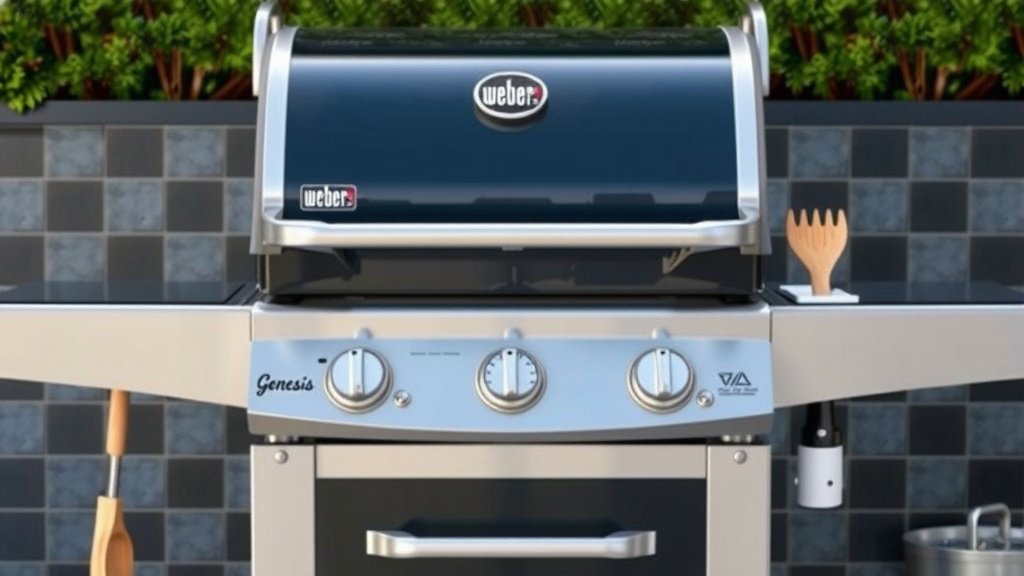
To clean your Weber Genesis gas grill, start by pre-heating to burn off food residue, then let it cool completely. Scrape the grates with a grill brush, clean Flavorizer bars, and empty the grease tray to ensure optimal performance and longevity.
Regular maintenance, including clearing out the cookbox and shining the exterior, keeps your Weber Genesis gas grill ready for your next barbecue session.
- For quick cleaning, pre-heat the grill high for 15 minutes to carbonize food, then brush grates.
- Always let your grill cool completely before attempting any deep cleaning for safety.
- Remove grates and Flavorizer bars for a thorough scrub with soapy water and a brush.
- Clean out the cookbox and grease management system regularly to prevent flare-ups.
- Wipe down the exterior surfaces with a mild cleaner and microfiber cloth for a sparkling finish.
How To Clean Weber Genesis Gas Grill?
Cleaning your Weber Genesis gas grill involves a few straightforward steps: a pre-heat burn-off, cooling down, scrubbing grates and internal components, and wiping down the exterior. This process helps maintain peak grilling performance.
Why Clean Your Grill Regularly?
You might wonder, “Is it really that important?” Keeping your grill clean isn’t just about appearances. It helps prevent dangerous flare-ups by removing grease build-up, ensuring your food cooks evenly. Many experts say a clean grill also prevents rust and extends the lifespan of your investment (Weber).
Gather Your Essential Cleaning Tools
Before you start, round up your gear. You’ll need a good grill brush, some dish soap, a bucket of warm water, and maybe a scraper. Having everything handy makes the job much smoother, saving you time and effort.
Safety First! Before You Start Cleaning
Always prioritize your safety. Ensure your grill is completely off and cool to the touch before cleaning. Disconnect the gas line, too. We found that wearing gloves can protect your hands from grime and cleaning agents.
Step-by-Step Cleaning Guide for Your Weber Genesis
Let’s dive into the actual cleaning. This systematic approach ensures you don’t miss any crucial areas, keeping your grill in top shape for years to come. Think of it like giving your car a full tune-up.
Pre-Clean Burn-Off: The Initial Blast
First, fire up your grill. Close the lid and let it run on high for about 15 minutes. This intense heat will carbonize most of the food residue on your grates, making it much easier to scrape off later. It’s like baking off the tough bits.
Cool Down and Disconnect
Once the burn-off is done, turn off the grill and the gas supply. Let it cool down completely. This can take a while, so grab a cold drink and relax. Never try to clean a hot grill; safety is key.
Tackling the Grates: Your Cooking Surface
The cooking grates see the most action. They’re where your steaks and veggies sizzle. Regular cleaning here means better-tasting food and fewer sticky situations. We found that a good wire brush is your best friend here.
| Cleaning Method | When to Use | What You’ll Need | Key Benefit |
|---|---|---|---|
| Post-Cook Brush | After every use (while warm) | Stiff grill brush | Prevents build-up, quick & easy |
| Deep Soak & Scrub | Monthly or as needed | Warm soapy water, non-abrasive scrubber | Removes stubborn grime, sanitizes |
| Steam Clean | Periodically | Grill brush with water tray | Breaks down residue with steam |
For a deeper clean, remove the grates. Soak them in warm, soapy water. Use a non-abrasive scrubber or a grill brush to dislodge any stuck-on bits. Rinse well and dry them before putting them back.
Flavorizer Bars: The Heat Shields
These V-shaped bars protect your burners and vaporize drippings, adding flavor. Over time, they collect grease and debris. Scrape them gently with a plastic scraper or a dedicated Flavorizer bar tool. Many experts say to avoid wire brushes here to prevent damage.
Burner Tubes: The Heart of the Heat
The burner tubes distribute gas. If they’re blocked, your grill won’t heat evenly. Use a clean, soft brush (like a toothbrush) to gently brush off any debris from the burner ports. Be very careful not to bend or damage them. We found that a small pipe cleaner can clear stubborn blockages.
The Cookbox and Grease Management System
This is where all the grease and food bits collect. Use a plastic scraper to push all the debris into the bottom grease tray. It’s often surprising how much builds up! Cleaning this area reduces flare-ups significantly.
Drip Tray and Catch Pan
Beneath the cookbox, you’ll find the drip tray liner and catch pan. Remove the old liner if you’re using one, and discard it. Wash the catch pan with warm soapy water. Make sure it’s completely dry before reassembling.
Exterior Shine and Polish
Your grill’s exterior deserves some love too. For stainless steel, use a specialized stainless steel cleaner and a microfiber cloth. For painted surfaces, warm soapy water works wonders. Always wipe with the grain for the best finish. It’s like waxing a car.
Side Tables and Shelves
Don’t forget the side tables. These are often made of durable plastic or stainless steel. A simple wipe-down with warm, soapy water and a rinse will make them sparkle. They are great for prep, so keep them clean!
Checklist for a Quick Clean-Up
Sometimes you need a fast refresh. Here’s a quick list to get your grill ready in a flash:
- Pre-heat grill on high for 10-15 minutes.
- Brush grates thoroughly with a stiff grill brush.
- Turn off gas and let cool slightly.
- Empty and clean the grease catch pan.
- Wipe down side tables and exterior.
Deep Cleaning vs. Regular Wipe-Down
Think of it like dental hygiene. A quick brush after every meal is good, but you also need a deeper clean now and then. A regular wipe-down after each cook prevents build-up. A deep clean, perhaps monthly or seasonally, tackles the hidden grime and ensures everything is in tip-top shape. We found a deep clean is a good opportunity for inspection.
Common Cleaning Mistakes to Avoid
Many people make small errors that can impact their grill. Forgetting to cool the grill down before cleaning is a big one. Also, using harsh chemical cleaners can damage surfaces. Stick to mild soaps and specialized grill cleaners. Never use abrasive pads on stainless steel.
Maintaining Your Weber Genesis Between Cleans
A little bit of effort after each cook goes a long way. Always brush your grates while the grill is still warm. Keep your grill covered when not in use to protect it from the elements. This simple habit keeps your grill ready and reduces deep cleaning frequency.
When to Call a Pro?
Sometimes a cleaning task goes beyond your comfort level. If you’re dealing with a gas leak suspicion or internal components that seem severely rusted or broken, it might be time to call a certified technician. Your safety comes first.
Conclusion
Cleaning your Weber Genesis gas grill isn’t just a chore; it’s an investment in delicious meals and lasting enjoyment. By following these steps, you’ll keep your grill performing like new, free from grease and grime. Regular care ensures every barbecue is a success, letting you focus on the food and fun. So, roll up your sleeves and get that grill shining!
How often should I deep clean my Weber Genesis grill?
You should aim for a deep clean of your Weber Genesis grill at least two to four times a year, depending on how often you use it. For frequent grillers, a quarterly deep clean is highly recommended to maintain hygiene and performance.
Can I use oven cleaner on my Weber Genesis grill grates?
Using oven cleaner on your Weber Genesis grill grates is generally not recommended. Oven cleaners contain harsh chemicals that can damage the grate’s finish and may leave behind residues that are unsafe for cooking surfaces. Stick to specialized grill cleaners or warm, soapy water.
What should I do if my grill has rust spots?
If you notice rust spots, especially on cast iron grates, clean them thoroughly with a stiff brush and warm soapy water. For stubborn rust, a rust eraser or fine steel wool can be used carefully. After cleaning, dry the area immediately and consider applying a thin layer of cooking oil to season and protect the surface from future rust.
Is it safe to use a pressure washer on my gas grill?
It is not safe or advisable to use a pressure washer directly on your Weber Genesis gas grill. The high-pressure water can damage delicate electrical components, burners, igniters, and other internal parts, potentially leading to malfunctions or safety hazards. Hand cleaning is always the best approach.
How do I prevent flare-ups while grilling?
To prevent flare-ups, regularly clean your grill grates and the grease management system, including the Flavorizer bars and drip tray. Also, trim excess fat from meats before grilling and avoid using too much oil or marinades that create excessive drippings. Grilling with the lid open when searing can also help manage flare-ups.