
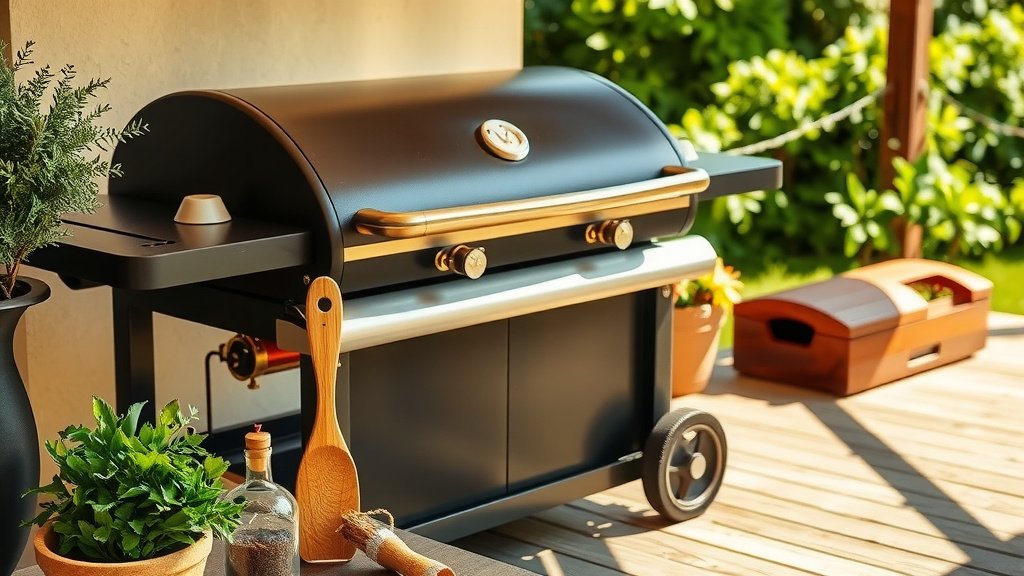
To season a Blackstone grill, apply a thin layer of high-smoke-point oil to the griddle surface, heat it until it smokes, and then let it cool, repeating this process several times.
This creates a naturally non-stick, rust-resistant cooking surface by baking oil into the metal, crucial for optimal performance and longevity of your Blackstone grill.
- Achieve a non-stick surface by seasoning your Blackstone grill properly.
- Use high-smoke-point oils like flaxseed, avocado, or grapeseed for best results.
- The seasoning process involves cleaning, applying thin oil layers, and heating until smoking.
- Repeat the oil and heat cycle multiple times to build up a durable layer.
- Regular maintenance seasoning extends your griddle’s life and improves cooking.
How Do You Season A Blackstone Grill?
Seasoning your Blackstone grill means applying thin coats of oil and baking them onto the surface to create a durable, non-stick, and rust-proof layer.
You’ll build up several layers over time, transforming the silver griddle into a dark, glossy, and cooking-ready surface.
Why Bother Seasoning Your Griddle?
You might wonder, “Is this step really necessary?” Yes, it absolutely is! Think of seasoning as giving your griddle a protective shield and a cooking advantage.
This baked-on oil layer prevents your food from sticking, making cooking and cleanup so much easier. It also shields the metal from rust, ensuring your investment lasts for years to come.
The Science of Seasoning
When you heat oil on the griddle, it undergoes a process called polymerization. This means the oil molecules break down and then form a hard, plastic-like coating that binds to the metal.
Each thin layer you apply adds to this protective coating, creating a durable and slick surface. It’s like painting with oil, but for your cooking surface.
What You Need for the Job
Before you get started, gather a few basic items. You’ll need paper towels, a pair of tongs, high-smoke-point oil, and maybe some griddle scraper tools.
Having everything ready helps the process go smoothly and quickly. No one wants to scramble for supplies mid-seasoning, right?
Choosing the Right Oil for Seasoning
The type of oil you pick truly matters. You want an oil with a high smoke point, meaning it can get very hot before it starts to burn.
Many experts say flaxseed oil is fantastic for a tough initial layer, but avocado, grapeseed, or even vegetable oil work well too (Blackstone Griddles Guide).
| Oil Type | Smoke Point (Approx.) | Notes for Seasoning |
|---|---|---|
| Flaxseed Oil | 225°F (107°C) | Creates a very hard, durable layer. |
| Avocado Oil | 520°F (271°C) | Excellent high smoke point, neutral flavor. |
| Grapeseed Oil | 420°F (216°C) | Good all-around choice, widely available. |
| Vegetable Oil | 400°F (204°C) | Common, affordable, gets the job done. |
| Blackstone Seasoning & Conditioning Oil | High | Formulated specifically for griddles. |
Initial Seasoning: Your Step-by-Step Checklist
Getting your brand-new griddle ready is super important. This initial seasoning sets the foundation for all your future cooking adventures.
Think of it as preparing a new canvas for a masterpiece. Here’s a quick checklist to guide you:
- Unpack and inspect your griddle carefully.
- Wash the griddle surface thoroughly with hot, soapy water.
- Rinse completely to remove all soap residue.
- Dry the griddle immediately and completely to prevent rust.
- Position your griddle in a well-ventilated area outdoors.
The First Clean-Up
When you first get your griddle, it might have a protective coating from the factory. This needs to come off.
Wash the surface with warm, soapy water and a soft cloth, then rinse thoroughly. Make sure it’s completely dry; water is the enemy of raw steel!
Applying the First Thin Layer of Oil
Turn your griddle on medium-high heat. Once it starts to warm up, put a small amount of your chosen oil onto the surface—about a tablespoon or two.
Use paper towels held with tongs to spread the oil thinly and evenly across the entire cooking surface, as well as the sides.
Let it Smoke! (And Keep Going)
Now, turn the heat to high. You’ll see the oil start to smoke. Let it smoke until it stops. This means the oil has polymerized and bonded with the griddle.
The surface might look blotchy or uneven after the first layer, and that’s perfectly normal. Don’t worry, it gets better with each layer.
Repeat, Repeat, Repeat for a Strong Base
Once the griddle stops smoking, turn off the heat and let it cool completely. This cooling step is important.
After it cools, repeat the oil application and heating process. We found that 3 to 5 layers are ideal for a strong initial seasoning (Griddle Chef’s Handbook).
Maintenance Seasoning: Keeping It Prime
Your griddle isn’t a “set it and forget it” kind of tool. Regular use and proper care will keep that seasoning beautiful.
After each cook, while the griddle is still warm, scrape off any food debris and wipe it down with a thin coat of oil. This helps reinforce the seasoning.
Daily Doses of Oil
Just like you moisturize your skin, your griddle needs its daily dose of oil. A very thin layer of cooking oil after each clean-up keeps the surface protected.
This small habit makes a big difference in preventing rust and maintaining that smooth, non-stick cooking experience.
Dealing with Flakes or Rust Spots
Sometimes, despite your best efforts, you might see flakes of seasoning or even a little rust. Don’t panic; it’s fixable!
Scrape off any loose flakes or rust with a griddle scraper, then re-season just that area, or the whole griddle, following the steps you learned (Consumer Reports Griddle Guide).
Common Seasoning Mistakes to Avoid
Everyone makes mistakes, especially when learning something new. But with seasoning, avoiding a few pitfalls can save you frustration.
The most common errors involve using too much oil or not heating the griddle long enough. Let’s make sure you dodge these.
- Using too much oil: A thick layer of oil won’t polymerize correctly and will just create a sticky, gummy mess. Less is truly more here.
- Not heating long enough: If the oil doesn’t smoke completely, it means it hasn’t fully bonded. Be patient and let the griddle do its work.
- Not cleaning properly: Any food debris left on the griddle can become part of your seasoning layer, making it uneven and prone to flaking.
- Letting it air dry: Water is your griddle’s nemesis. Always dry it immediately and completely after washing to avoid rust.
Conclusion
Seasoning your Blackstone grill might seem like a chore at first, but it’s a vital part of owning and loving your griddle. It builds a beautiful, non-stick surface that makes cooking a joy and cleanup a breeze.
By following these steps, you’ll not only protect your investment but also unlock the full potential of your outdoor cooking. So, grab that oil and get seasoning; your griddle (and your taste buds) will thank you!
What is the best oil to season a Blackstone griddle?
For initial seasoning, flaxseed oil is often praised for creating a very hard, durable layer. However, avocado oil, grapeseed oil, or Blackstone’s own conditioning oil are also excellent choices due to their high smoke points and neutral flavors.
How many times should you season a new Blackstone grill?
For a brand new Blackstone grill, you should aim for at least 3 to 5 full layers of seasoning during its initial setup. Each layer involves applying a thin coat of oil, heating it until it smokes, and then letting it cool.
What if my Blackstone griddle gets sticky after seasoning?
If your griddle feels sticky, it usually means you applied too much oil or didn’t heat it long enough for the oil to fully polymerize. To fix this, you can try to heat the griddle to a high temperature to burn off the excess oil, or gently scrub the sticky areas with a griddle scraper and then re-season with very thin oil coats.
Can I cook on my Blackstone grill right after seasoning?
Yes, once you’ve completed the initial 3-5 layers of seasoning and the griddle has cooled, it’s ready for its first cook. In fact, cooking fatty foods like bacon or burgers can even help further establish your seasoning layer.
How do I maintain my Blackstone griddle’s seasoning?
After each use, scrape off any food debris while the griddle is still warm. Then, wipe it down with a paper towel and apply a very thin layer of cooking oil. This helps protect the surface from rust and reinforces the existing seasoning.
