
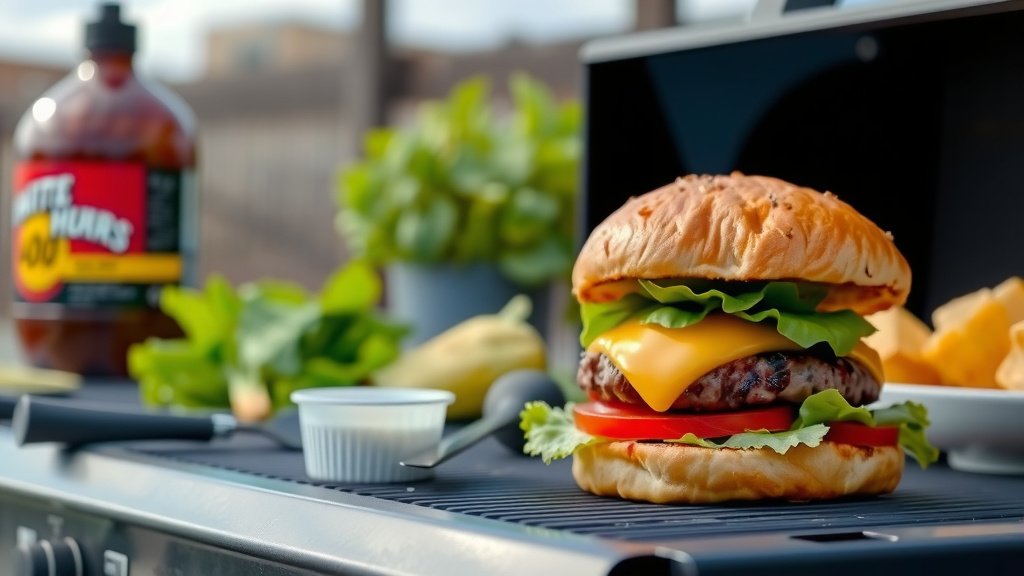
Cooking burgers on a pellet grill at 400°F generally takes about 8-12 minutes for medium-rare to medium doneness, depending on burger thickness. Always check the internal temperature to ensure safety and your desired doneness.
For a juicy burger on your pellet grill, aim for an internal temperature of 160°F for ground beef as recommended by the USDA, which usually means cooking for about 10 minutes at 400°F, flipping once.
Here’s a quick overview of what you’ll learn about grilling burgers at 400°F on your pellet grill:
- Achieve perfect burger doneness in about 8-12 minutes.
- Ensure food safety by reaching an internal temperature of 160°F.
- Learn the best practices for flipping, resting, and checking for doneness.
- Discover how to prevent common grilling mistakes for juicy results.
- Master your pellet grill settings for consistent, delicious burgers every time.
How Long To Cook Burgers On Pellet Grill At 400?
You can expect to cook most 1/2-inch thick burgers for about 10-12 minutes on a pellet grill set to 400°F. Thicker patties, like 3/4-inch, might take up to 15 minutes to reach safe internal temperatures.
Understanding Your Pellet Grill at 400°F
Your pellet grill is an amazing tool, offering consistent heat and smoky flavor. At 400°F, it’s hot enough to create a nice crust, but not so aggressive that it burns the outside before the inside cooks.
Think of it like a convection oven with a smoky kiss. The circulating hot air cooks your burgers evenly from all sides. This consistent heat reduces hot spots often found on traditional gas or charcoal grills.
The Importance of Burger Thickness
The thickness of your burger patty dramatically impacts cooking time. A thinner patty cooks faster, naturally. A thicker patty needs more time for heat to penetrate to the center.
For uniform cooking, aim for patties of similar thickness. This helps ensure all your burgers finish around the same time. We found that 1/2-inch thick patties are a sweet spot for quick, even cooking.
Patty Preparation for Success
Before grilling, gently form your patties. Don’t overwork the meat; this can make them tough. Create a small dimple in the center of each patty.
This dimple helps prevent the burger from bulging in the middle as it cooks. It keeps your burgers nice and flat, perfect for toppings later. Season your patties just before they hit the grill.
Preheating Your Pellet Grill: A Must-Do Step
Don’t skip preheating! It’s just like baking a cake; you wouldn’t put it in a cold oven. Preheating ensures your grill grates are hot enough for a good sear.
Set your pellet grill to 400°F and let it warm up for at least 10-15 minutes. You want to hear that sizzle when the burgers hit the grates. A good preheat equals a great crust.
Checking Your Grill Temperature
While your grill’s display shows 400°F, the grate temperature might vary slightly. Using an external probe can give you a more accurate reading. This ensures you are truly cooking at your desired heat.
Consistency is key for predictable cooking times. Knowing your grill’s quirks helps you master your burgers. We found that most pellet grills hold their set temperature quite well.
Grilling Times for Different Doneness Levels (Approximate)
Everyone has a favorite doneness for their burger. Here’s a general guide for 1/2-inch thick patties cooked at 400°F:
| Doneness | Internal Temperature (USDA says 160°F for ground beef) | Approximate Cooking Time (Total) |
|---|---|---|
| Rare | 125-130°F | 6-8 minutes |
| Medium-Rare | 130-135°F | 8-10 minutes |
| Medium | 135-140°F | 10-12 minutes |
| Medium-Well | 140-145°F | 12-14 minutes |
| Well-Done | 150-160°F | 14-16 minutes (aim for 160°F for safety) |
The Flip-and-Check Strategy
A good rule of thumb is to flip your burgers once. Place them on the hot grates, close the lid, and cook for about 5-6 minutes on the first side. This develops a nice crust.
Then, flip them over and cook for another 3-6 minutes, depending on your desired doneness. Resist the urge to press down on your burgers. You’ll squeeze out all those tasty juices.
The Thermometer: Your Burger’s Best Friend
Forget guesswork; a reliable instant-read thermometer is essential. It’s the only way to truly know the internal temperature of your burger patty. We found that this tool prevents undercooked or overcooked burgers.
Insert the thermometer into the side of the patty, making sure it reaches the very center. Avoid touching the grill grates. Many experts say an internal temperature of 160°F is ideal for ground beef (USDA recommendations).
Why Internal Temperature Matters
Cooking to the correct internal temperature isn’t just about taste; it’s about food safety. Ground beef can harbor bacteria that are eliminated at higher temperatures (FoodSafety.gov). You want to enjoy your meal, not regret it later.
Even if you prefer a less cooked burger, it’s wise to consider safety. Knowing the temperature gives you confidence in every bite. It takes the mystery out of grilling.
The Golden Rule of Resting Your Burgers
Once your burgers reach the desired internal temperature, take them off the grill. But don’t serve them immediately! Let them rest for 3-5 minutes before serving. This step is a game-changer.
Resting allows the juices inside the burger to redistribute throughout the patty. This means a juicier, more flavorful burger. Cutting into it too soon lets all those good juices run out.
Tips for Resting Burgers
Place your cooked burgers on a clean plate or cutting board. You can loosely tent them with foil, but don’t seal them tightly. A tight seal can trap steam and make your crust soggy.
While they rest, you can prepare your buns and toppings. It’s the perfect transition time to get everything ready for serving. Your patience will be rewarded with a superior burger experience.
Troubleshooting Common Pellet Grill Burger Issues
Sometimes things don’t go exactly as planned. Is your burger cooking too fast? Maybe your grill temperature is running high. If it’s too slow, perhaps your grill isn’t quite at 400°F.
Always trust your thermometer and adjust your cooking time. Remember, every grill has its own personality, and learning it takes a little practice. You’ll become a burger master in no time.
Burger Checklist for Success
Before you fire up that grill, run through this quick mental checklist:
- Are patties evenly thick?
- Is your pellet grill preheated to 400°F?
- Do you have an instant-read thermometer ready?
- Are your seasonings applied?
- Do you have a plate ready for resting?
- Are your buns and toppings prepared?
Conclusion
Cooking delicious burgers on your pellet grill at 400°F is a satisfying experience when you know the ropes. Focus on patty thickness, proper preheating, and most importantly, using that instant-read thermometer. Aim for an internal temperature of 160°F for food safety (USDA guidelines).
Remember to flip once, avoid pressing, and always give your burgers a few minutes to rest. This simple process helps guarantee juicy, flavorful results every single time. Now, go enjoy those perfectly grilled burgers!
FAQs About Grilling Burgers on a Pellet Grill
How do I prevent my burgers from sticking to the pellet grill grates?
Ensure your grill grates are clean and well-oiled before placing the patties. A properly preheated grill to 400°F also helps create a non-stick surface, forming a quick crust that releases easily.
Can I cook frozen burgers directly on a pellet grill at 400°F?
While possible, cooking frozen burgers will significantly increase your cooking time. It’s always best to thaw burgers completely in the refrigerator before grilling for more even cooking and better texture. If you must cook from frozen, be prepared for longer cooking times and monitor the internal temperature closely.
What kind of pellets are best for burgers?
For burgers, a blend of pellets like hickory, oak, or a competition blend works wonderfully. These offer a robust but not overpowering smoky flavor that complements beef well. Experiment to find your favorite flavor profile!
Should I add cheese to my burgers while they are still on the grill?
Yes, absolutely! For perfectly melted cheese, place a slice on each burger during the last 1-2 minutes of cooking. Close the grill lid to allow the cheese to melt beautifully without burning the patty.
My burgers always turn out dry. What am I doing wrong?
Dry burgers often result from overcooking or pressing down on the patties while they grill, which squeezes out vital juices. Use a thermometer to avoid overcooking past your desired doneness, especially the 160°F mark, and resist flattening your burgers with a spatula.
