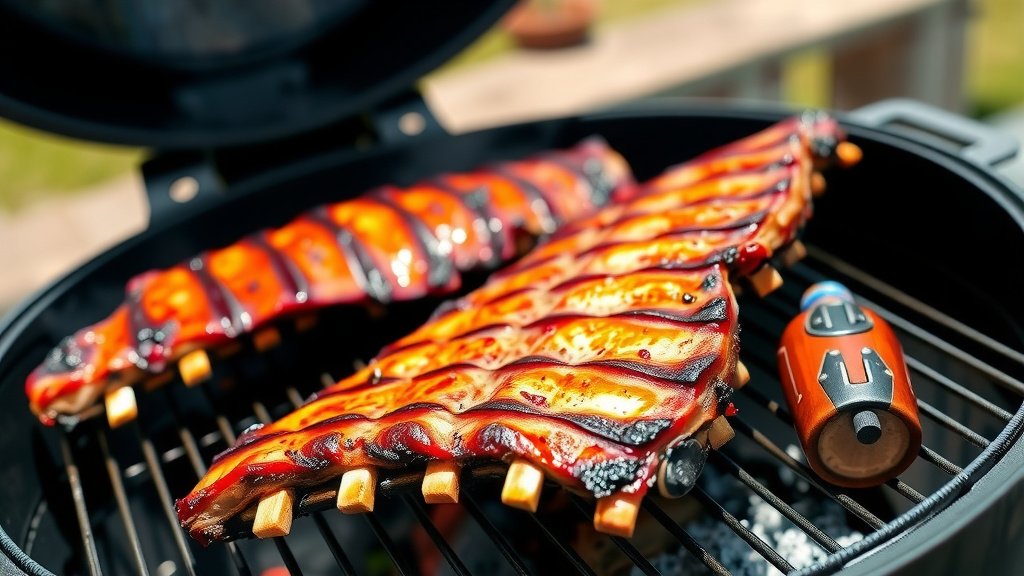
To smoke ribs on a charcoal grill, you create a two-zone fire by pushing lit charcoal to one side, adding wood chunks for smoke, and placing the ribs on the indirect heat side.
Maintaining a steady temperature between 225-275°F (107-135°C) for several hours is essential for achieving tender, smoky ribs on your charcoal grill.
Ready to create some incredible smoked ribs right in your backyard? It might sound a bit intimidating at first, but with a charcoal grill, some wood, and a little patience, you’ll be pulling off ribs that impress everyone. We’re here to guide you step-by-step to that delicious, smoky perfection. You got this!
Here’s a quick overview of how you can smoke ribs on your charcoal grill:
- Choose your favorite ribs and prep them by removing the membrane.
- Season generously with your go-to rub for flavor.
- Set up your charcoal grill with a two-zone fire, adding wood chunks.
- Maintain a consistent low temperature around 225-275°F.
- Smoke until the ribs are tender, often using a “3-2-1” method for spare ribs.
- Rest the ribs before slicing to keep them juicy.
How To Smoke Ribs On A Charcoal Grill?
Smoking ribs on a charcoal grill involves controlling indirect heat and infusing flavor with wood smoke. This method gives you that classic barbecue taste right at home.
Preparing Your Ribs for Perfection
Great ribs begin with great preparation. Taking a few moments before cooking makes a big difference in the final taste and texture you achieve. It is about setting yourself up for success.
Choosing the Right Ribs
There are different types of ribs, but for smoking, you’ll often see baby back ribs or spare ribs. Baby back ribs are smaller and leaner, while spare ribs are meatier and more flavorful due to their fat content. Many pitmasters often lean towards spare ribs for a richer smoke experience (Cook’s Illustrated).
Trimming and Seasoning Your Rack
First, always remove the membrane from the back of the ribs. This thin layer can make ribs chewy and prevents your rub from penetrating the meat. Just slide a knife under an edge and pull it off with a paper towel. Then, apply your favorite dry rub generously to all sides. Don’t be shy; the rub is where a lot of your flavor comes from. Let them sit for 30 minutes to an hour, or even overnight in the fridge.
Setting Up Your Charcoal Grill for Smoking
The secret to smoking on a charcoal grill is creating a consistent, indirect heat source. This isn’t like direct grilling a steak; it is a slower, gentler process. You want to make a cozy, smoky environment for your ribs.
Two-Zone Fire Setup
To set up a two-zone fire, pile your lit charcoal briquettes or lump charcoal on one side of the grill. This creates a hot zone for direct heat and a cooler zone for indirect cooking. You’ll place your ribs over the cooler, indirect side. This keeps them from burning while they slowly cook.
Wood Chunks: The Flavor Secret
Once your charcoal is ready, add a few wood chunks directly onto the lit coals. We found that apple, cherry, hickory, or pecan woods are fantastic choices for ribs. They provide a delicious, smoky aroma and taste. Avoid wood chips, as they burn too quickly; chunks offer a longer, more consistent smoke. Don’t add too many at once; you want a thin blue smoke, not thick white smoke.
Maintaining Temperature: The Key to Tender Ribs
Controlling your grill’s temperature is perhaps the most important skill for smoking. You are aiming for a low and slow cook. This breaks down the tough connective tissues in the ribs, making them incredibly tender.
Many experts say to target a temperature range between 225-275°F (107-135°C) for smoking ribs. Consistency is more important than hitting an exact number. Think of it like a marathon, not a sprint.
| Rib Type | Target Temperature | Approximate Cook Time |
|---|---|---|
| Baby Back Ribs | 225-250°F | 4-6 hours |
| Spare Ribs | 250-275°F | 5-7 hours |
Monitoring Your Grill
Use a reliable grill thermometer, not just the one built into your grill lid. Place it near the ribs on the grate for an accurate reading of the cooking environment. Adjust your grill vents to control airflow and temperature. More open vents mean more oxygen and higher heat; closing them slightly lowers the temperature. Resist the urge to constantly open the lid; “if you’re lookin’, you ain’t cookin’,” as the saying goes.
The 3-2-1 Method: A Popular Approach
The 3-2-1 method is a widely used technique, especially for spare ribs, to achieve fall-off-the-bone tenderness. It breaks the smoking process into three distinct phases. This method works well for many home grillers.
- Phase 1 (3 hours): Smoke – Place the seasoned ribs on the indirect side of the grill, bone-side down. Maintain your target temperature and let the smoke do its work.
- Phase 2 (2 hours): Wrap – Remove the ribs and wrap them tightly in foil or butcher paper with a splash of apple juice or cider vinegar. Return them to the grill. This steams the ribs, making them incredibly tender.
- Phase 3 (1 hour): Unwrapped Finish – Unwrap the ribs, brush with barbecue sauce if desired, and return them to the grill for the final hour. This allows the sauce to set and creates a nice bark.
When Are Ribs Done? Don’t Guess!
Knowing when your ribs are perfectly cooked is a bit of an art, but there are some reliable tests. You are looking for a specific texture, not just a time on the clock. Every rack of ribs is a little different.
The Bend Test and Temperature Check
A good indicator is the bend test: pick up one end of a rack with tongs. If the ribs are done, they should bend significantly and almost crack in the middle, but not break apart. You can also insert a thermometer into the thickest part of the meat (avoiding bone); many sources suggest an internal temperature of 195-203°F (90-95°C) for ultimate tenderness (AmazingRibs.com). This high temperature helps melt collagen.
Resting Your Ribs: A Must-Do Step
Just like a good steak, ribs need to rest after coming off the grill. This allows the juices to redistribute throughout the meat, making them even more moist and flavorful. Don’t skip this easy, important step.
Remove the ribs from the grill and let them rest, loosely tented with foil, for 15-20 minutes. Cutting them too soon means all those delicious juices will run out onto your cutting board. Nobody wants dry ribs!
Common Pitfalls and How to Avoid Them
Even experienced grillers can run into issues. Being aware of potential problems can help you steer clear of them. Learning from common mistakes helps you get better with each cook.
- Temperature Swings: Use a good thermometer and adjust vents slowly. Avoid large temperature fluctuations.
- Too Much Smoke: Use wood chunks sparingly. A little smoke goes a long way. Heavy white smoke tastes bitter.
- Dry Ribs: Wrapping helps prevent drying out. You can also spritz with apple cider vinegar during the unwrapped phase.
- Undercooked Ribs: Don’t rush the process. Low and slow is the motto. Rely on the bend test and temperature.
Must-Have Tools for Smoking Ribs
Having the right gear makes the process smoother and more enjoyable. You don’t need a fancy smoker to get great results; your charcoal grill is very capable. These few items will make a world of difference:
- Charcoal Chimney Starter: For quick and easy lighting of charcoal without lighter fluid.
- Reliable Digital Thermometer: To monitor grill temperature and meat temperature accurately.
- Heat-Resistant Gloves: For handling hot grates, charcoal, and ribs safely.
- Long Tongs and Spatula: Essential for moving ribs and managing charcoal.
- Aluminum Foil or Butcher Paper: For wrapping ribs during the “2” phase of the 3-2-1 method.
- Spray Bottle: For spritzing ribs with liquid like apple juice or water to keep them moist.
Conclusion
Smoking ribs on a charcoal grill is a truly rewarding experience, transforming tough cuts into melt-in-your-mouth masterpieces. With careful temperature control, the right wood, and a bit of patience, you can achieve amazing results right in your own backyard. You now have all the practical steps to confidently tackle your next rack of ribs. Enjoy the process, and get ready for some incredibly tasty barbecue!
What is the best type of wood for smoking ribs?
Many experts say that fruitwoods like apple and cherry impart a mild, sweet flavor to ribs. Hickory and pecan offer a stronger, more traditional BBQ smoke flavor. Experimenting with different woods helps you find your personal favorite.
How do I keep my charcoal grill at a consistent low temperature?
You can maintain a consistent low temperature by arranging your charcoal in a snake or “C” shape and only lighting one end. Adjust your bottom and top vents to control airflow. Smaller vent openings restrict oxygen, which lowers the temperature, while wider openings increase it.
Should I use a water pan when smoking ribs on a charcoal grill?
Yes, many grillers find a water pan helpful. Placing a pan of water on the grate above the direct heat zone adds moisture to the cooking environment, which helps keep the ribs from drying out. It also helps stabilize the grill’s temperature.
Can I smoke ribs without wrapping them?
Absolutely! Smoking ribs unwrapped, often called the “Texas Crutch” alternative, produces a firmer bark and a chewier texture. It typically takes longer to cook the ribs this way, but many prefer the richer crust. Just make sure to monitor moisture levels.
My ribs turned out dry, what went wrong?
Dry ribs usually mean the temperature was too high, or they cooked for too long without enough moisture. Using a water pan, wrapping the ribs, or spritzing them during the cook can all help retain moisture. Also, ensure you don’t overcook past the tender point.