
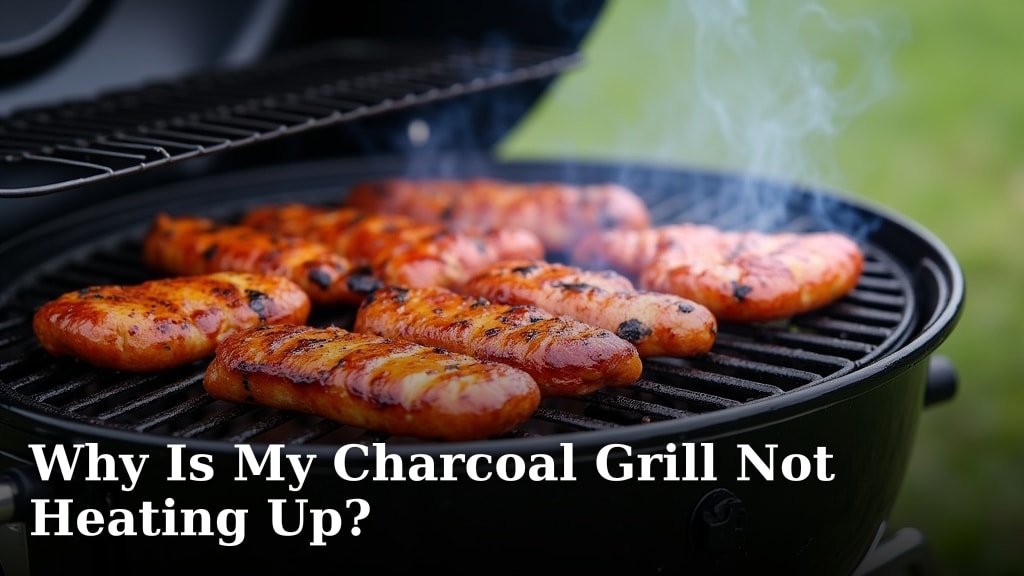
Your charcoal grill is not heating up, most likely, because of poor airflow or lousy charcoal. You need proper oxygen to get those coals glowing hot. If your charcoal isn’t good quality or has gotten damp, it just won’t ignite well.
There’s nothing worse than getting ready to grill only to find your coals aren’t cooperating. We’ve all been there, wondering why our charcoal grill isn’t heating up. Usually, it comes down to a few common culprits that are easy to fix once you know what to look for. Don’t worry, your backyard BBQ isn’t doomed!
- Check your grill’s vents for blockages.
- Make sure your charcoal is dry and good quality.
- Don’t overload the grill with too much charcoal.
- Use a charcoal chimney for best results.
- Give your coals enough time to ash over.
Below, we’ll walk through the main reasons your charcoal grill might be struggling to get hot and how to get it sizzling for your next cookout.
Common Reasons Your Charcoal Grill Isn’t Getting Hot
If your charcoal grill isn’t heating up, the problem often comes down to a few key issues: airflow, charcoal quality, or how you’re lighting it. Getting charcoal to burn hot requires understanding these basic principles.
Airflow Obstruction: The Oxygen Problem
Charcoal needs plenty of oxygen to burn efficiently and get hot. Think of it like a roaring campfire; if you smother it, the flames die down. The same goes for your grill. If air can’t get in, or exhaust can’t get out, your coals will just smolder weakly.
Blocked Vents and Dampers
Your grill has vents at the bottom (intake) and often on the lid (exhaust). These need to be fully open when you’re trying to heat up. If they’re clogged with old ash, grease, or debris, air circulation is hampered. Always check these first.
- Bottom Vents: These allow fresh oxygen to reach the coals. If they’re closed or blocked, your fire won’t get enough air to grow.
- Top Vent (Lid Damper): This lets hot air and smoke escape, creating a draft that pulls in fresh air from the bottom. If it’s closed, the smoke chokes the fire.
We found that many people forget to clear out the previous cookout’s ash. A thick layer of old ash can sit right on top of the bottom vents, effectively blocking them. Always dump out your ash before starting a new fire (Weber).
Overfilling the Grill with Charcoal
It might seem counterintuitive, but sometimes too much charcoal is the problem. If you pile the briquettes too high or pack them too tightly, you create a dense mass where air can’t easily flow through. This can suffocate the fire before it even gets going.
Aim for a charcoal arrangement that allows for some space between pieces. This air gap is crucial for oxygen circulation around each briquette, allowing them to ignite and burn well. We’ll discuss optimal arrangements later.
Poor Quality or Improper Charcoal
The type and condition of your charcoal play a huge role in how hot your grill will get. Not all charcoal is created equal, and even good charcoal can go bad.
Damp or Old Charcoal
Have you ever tried to light damp wood? It just smokes and sputters. The same happens with charcoal. If your charcoal has been stored in a damp place, it will absorb moisture. Wet charcoal is very difficult to light and won’t get hot. It just won’t.
Even if it’s not visibly wet, old charcoal can lose its effectiveness. Over time, briquettes can degrade or absorb moisture from the air, making them harder to ignite and reach high temperatures. Always store your charcoal in a dry, sealed container.
Low-Quality Briquettes vs. Lump Charcoal
There are generally two main types of charcoal: briquettes and lump charcoal. Each has its pros and cons, but quality varies greatly.
Briquettes: These are uniform in size and shape, made from compressed sawdust and other binders. Cheap briquettes often contain fillers that don’t burn well, produce a lot of ash, and generate less heat. Good quality briquettes will light consistently and burn for a longer duration.
Lump Charcoal: This is simply charred wood, giving you irregular pieces. Lump charcoal tends to burn hotter and cleaner than briquettes because it’s pure wood. However, it can burn faster. If your lump charcoal pieces are too small or dusty, they might not generate enough heat.
When choosing, look for brands known for minimal fillers and consistent burn quality. It makes a real difference in your grilling experience.
Ignition Issues: Getting the Fire Started Right
You can have perfect airflow and premium charcoal, but if you don’t start the fire correctly, your grill will still struggle to heat up. It’s not just about lighting a match; it’s about building a stable, hot fire.
Not Using a Charcoal Chimney Starter
This is, hands down, one of the best tools for lighting charcoal. A chimney starter works by using the “chimney effect” to create a strong draft. You fill it with charcoal, put some newspaper or a fire starter underneath, and light it. The design draws air up through the coals, making them ignite quickly and evenly.
If you’re trying to light charcoal directly in the grill using lighter fluid or small fire starters, it can be hit or miss. Lighter fluid often just burns off quickly, leaving many coals unlit. A chimney starter ensures a consistent, strong heat source to get all your coals glowing.
Many grilling experts recommend a chimney starter as the most effective and chemical-free way to light charcoal (AmazingRibs.com).
Not Enough Lighter Fluid (or Too Much)
While we generally recommend chimney starters, if you do use lighter fluid, there’s a delicate balance. Not enough fluid means the coals won’t catch fire properly. They’ll just smolder. Too much fluid can create overpowering fumes that make your food taste off, and it can burn off too quickly before the coals are truly hot.
If using fluid, apply it, wait a minute for it to soak in, then light. Never add fluid to already lit coals! That’s a serious fire hazard. Make sure the fluid has burned off completely and the coals are ashed over before cooking.
Insufficient Time to Heat Up and Ash Over
Patience is a virtue, especially with charcoal grilling. You can’t just light the charcoal and immediately throw on your steaks. Charcoal needs time to reach its optimal cooking temperature. This usually means waiting until the briquettes are mostly covered in a light gray ash.
Depending on your charcoal and method, this can take anywhere from 15 to 30 minutes, sometimes longer. If you try to cook before your coals are properly ashed over, they haven’t reached their peak heat, and your food won’t cook evenly or get those great sear marks.
Grill-Specific Issues: Beyond the Coals
Sometimes, the problem isn’t just about the charcoal or how you light it. Your grill itself might be contributing to the issue.
Leaky Lids and Poor Seals
A charcoal grill works like an oven in some ways. It needs to hold heat. If your grill lid doesn’t seal properly, a lot of heat can escape. This makes it harder for the internal temperature to rise and stay consistent. A leaky lid also disrupts the airflow, as air can enter from places other than the designated vents.
Check your lid for warps or gaps. While most charcoal grills aren’t airtight, excessive gaps can certainly prevent your grill from getting as hot as it should.
Using the Wrong Type of Grill for Your Needs
Are you trying to sear steaks on a tiny portable grill meant for hot dogs? Different grills are designed for different purposes. A small, thin-walled portable grill won’t retain heat as well as a large, heavy-gauge kettle grill. Understand the limitations of your equipment.
For high-heat searing, you generally need a grill with good air circulation and thick walls that can hold and radiate heat effectively. If your grill is struggling, consider if it’s the right tool for the job you’re asking it to do.
Quick Checklist: Why Isn’t My Grill Heating Up?
Before you get too frustrated, run through this quick checklist:
- Are all bottom and top vents fully open and clear of ash?
- Is your charcoal dry and of good quality?
- Did you use a charcoal chimney starter to light the coals?
- Have you waited for the coals to be mostly ash-covered before cooking?
- Is there sufficient space for airflow among the coals?
- Does your grill lid seal reasonably well, without large gaps?
| Problem | Symptom | Solution |
|---|---|---|
| Blocked Airflow | Coals smolder, low heat, excessive smoke | Clear vents, don’t overpack charcoal |
| Damp Charcoal | Hard to light, smokes a lot, won’t glow red | Use fresh, dry charcoal; store properly |
| No Chimney Starter | Uneven lighting, slow to heat up | Invest in a chimney starter (they’re worth it!) |
| Not Enough Time | Coals look black/partially lit, low cooking temp | Wait 15-30 minutes for coals to ash over |
| Leaky Lid | Heat escapes, grill takes forever to get hot | Check lid seal, consider a new grill if severe |

Conclusion
Don’t let a cold grill ruin your BBQ plans. By understanding the basics of airflow, charcoal quality, and proper ignition, you can troubleshoot most heating issues. Remember, a hot charcoal grill relies on enough oxygen and good, dry fuel. Take the time to set up your coals correctly and let them ash over.
Armed with this knowledge, you’re ready to get that grill sizzling. Go ahead, apply these tips, and enjoy perfectly cooked food off a properly heated charcoal grill!
Frequently Asked Questions
How can I make my charcoal burn hotter?
To make your charcoal burn hotter, ensure all your grill’s vents are fully open to maximize airflow. Use a chimney starter for a consistent light, and arrange your coals with small gaps for oxygen circulation. Good quality, dry charcoal also burns hotter than damp or cheap briquettes.
Why does my charcoal grill take so long to heat up?
Your charcoal grill likely takes a long time to heat up due to insufficient airflow, damp charcoal, or not allowing enough time for the coals to properly ash over. Blocked vents or an overpacked grill can suffocate the fire. Patience is key; wait until coals are mostly gray before cooking.
Can old charcoal go bad and not heat up?
Yes, old charcoal can go bad. Over time, it can absorb moisture from the air, making it harder to light and preventing it from reaching high temperatures. For best results, always store charcoal in a sealed, dry container and try to use it within a reasonable timeframe after opening.
Is it better to use briquettes or lump charcoal for heat?
Lump charcoal generally burns hotter and cleaner than briquettes because it’s pure wood. However, good quality briquettes can also provide excellent heat and tend to burn longer. The best choice depends on your specific grilling needs and preference for burn time versus peak temperature.
What’s the ideal temperature for grilling with charcoal?
The ideal temperature varies depending on what you’re cooking. For searing, you’ll want temperatures around 450-600°F (high heat). For general grilling, 350-450°F (medium heat) is common. Low and slow cooking often uses temperatures between 225-275°F. Always monitor with a good thermometer.
