
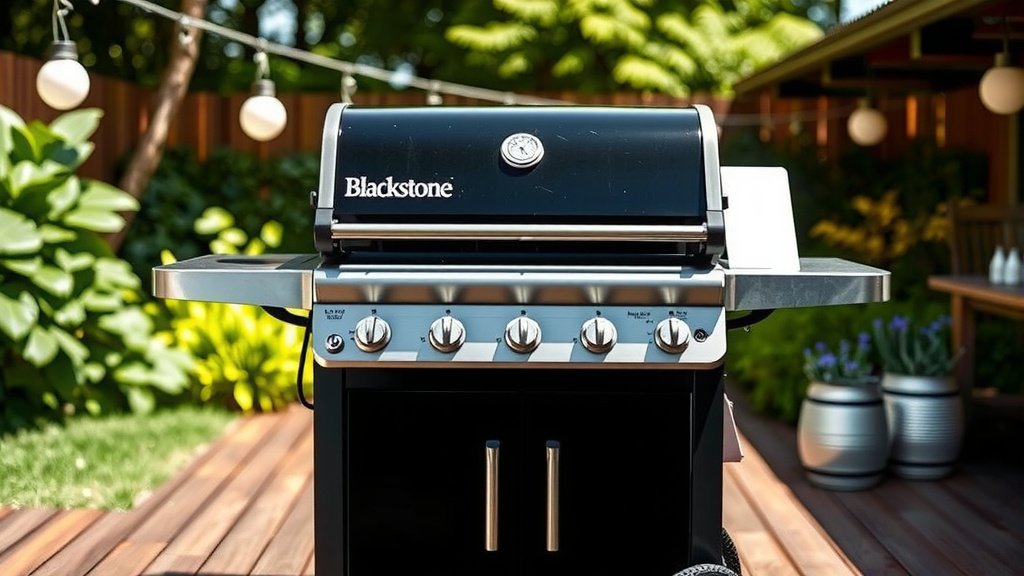
The best way to clean a Blackstone grill involves a simple routine: scrape off food debris while the griddle is warm, then use water and oil to protect its vital seasoning. This process helps maintain the non-stick surface and prevents rust.
Maintaining your Blackstone griddle’s surface through consistent, gentle cleaning is far better than aggressive scrubbing. It ensures your grill is always ready for delicious meals.
- For daily cleaning, scrape leftover food while the griddle is warm, then wipe with water and oil.
- Deep cleaning happens less often, tackling stubborn spots with a grill stone or vinegar.
- Always re-oil your Blackstone after cleaning to protect its seasoned surface from rust.
- Avoid soap or harsh chemicals, as these can strip away the crucial seasoning layer.
- The right tools, like a metal scraper and paper towels, make the cleaning process simple and effective.
What’s The Best Way To Clean A Blackstone Grill?
The best way to clean your Blackstone grill involves a simple routine of scraping, wiping, and re-oiling after each use to maintain its prized seasoning. For deeper cleans, a bit more effort helps tackle stubborn build-up without harsh chemicals.
Why Cleaning Your Blackstone Grill Matters
Imagine your Blackstone griddle as a well-seasoned cast-iron skillet; its dark, smooth surface is its superpower. Cleaning it correctly protects this seasoning, which is your grill’s natural non-stick layer. It also keeps your food tasting great.
We found that regular cleaning also prevents rust buildup, extending the life of your investment (Blackstone Griddles User Manuals). Neglecting it can lead to a sticky, uneven cooking surface.
The Daily Cleaning Ritual: After Every Cook
Think of this as a quick shower for your griddle. It’s fast, easy, and essential for maintaining that lovely non-stick surface. You want to tackle messes while they are still warm and manageable.
Gather Your Essential Cleaning Tools
You don’t need a lot of fancy gadgets to keep your griddle spotless. We found that a few simple items do the trick. Having these ready makes the cleaning process much smoother and less of a chore.
- Metal scraper: Your best friend for pushing off food bits.
- Paper towels: For wiping down oil and residue.
- Water: A squeeze bottle makes this easy.
- Cooking oil: Any high-smoke point oil works (vegetable, canola, flaxseed).
- Griddle cover: To protect your clean surface until next time.
Step-by-Step Daily Blackstone Cleaning
Ready to give your Blackstone some love? This simple routine takes just minutes. You’ll be surprised how quickly you can get it clean and ready for its next cooking adventure.
Step 1: Scrape Off Food Debris
After you finish cooking, turn off the burners but leave the griddle warm. Grab your metal scraper. Gently push any leftover food and grease towards the grease trap. You want to get rid of all the loose bits.
Many experts say working with a warm surface helps loosen stuck-on food (Griddle Cooking Enthusiast Forums). It’s like scraping off soft butter versus hard butter.
Step 2: Add Water and Steam Clean
Once most of the debris is gone, squeeze a bit of water onto the warm griddle surface. Be careful, as it will steam instantly! Use your scraper to work the water around, loosening any stubborn bits.
This steaming action helps lift anything clinging to the surface. It’s a bit like using a steam cleaner for your kitchen floor, just on a smaller, hotter scale. Use a paper towel to wipe up the dirty water.
Step 3: Wipe Down Thoroughly
After the water has done its work, use several paper towels to wipe the entire surface clean. Keep wiping until no more black residue comes off. You want a clean, smooth, slightly damp surface at this point.
This step is where you truly remove the last of the cooked-on grime. We found that going through a few paper towels ensures a really clean finish.
Step 4: Re-oil and Season
The final, and perhaps most important, step: oiling. Pour a small amount of cooking oil onto the griddle. Use a fresh paper towel to spread it evenly across the entire surface. You want a very thin, glossy coat.
This oil layer protects the griddle from moisture and rust. It also reinforces the seasoning, keeping your Blackstone non-stick and happy. Think of it as moisturizing your skin after a shower.
When to Perform a Deep Clean on Your Blackstone
Sometimes your griddle might look a bit worse for wear, especially after cooking particularly sticky foods. A deep clean isn’t an everyday task. You’ll typically do this a few times a season, or when you notice performance dipping.
Deep cleaning targets those super stubborn spots that a quick daily scrub can’t handle. It helps restore your griddle to its optimal cooking condition without stripping the seasoning.
Deep Cleaning Techniques for Stubborn Grime
For tougher situations, you might need a little extra firepower. Remember, the goal is always to clean without destroying that hard-earned seasoning. We want to be gentle but effective.
Using a Griddle Brick or Grill Stone
If you have really baked-on gunk, a griddle brick or grill stone can help. Use it on a warm griddle with a bit of water or oil. Rub gently in small circles over the stubborn areas. This abrasive action helps lift tough spots.
Many guidelines suggest using these sparingly, as they can wear down the seasoning if used too aggressively (Griddle Care Guides). Think of it as exfoliating; you do it occasionally, not daily.
Vinegar for Rust Spots
Sometimes, despite your best efforts, a little rust might appear. A splash of white vinegar can help. Pour it on the rust spots, let it sit for a few minutes, then scrub with a non-abrasive pad. This can help loosen the rust.
Always remember to immediately rinse thoroughly with water, then dry completely and re-oil heavily after using vinegar. You need to re-season that spot quickly to prevent more rust.
Common Blackstone Cleaning Mistakes to Avoid
It’s easy to make a few missteps that can damage your griddle. Knowing what not to do is just as important as knowing what to do. Your Blackstone will thank you for being careful.
| Mistake | Why It’s Bad | The Right Way |
|---|---|---|
| Using Dish Soap | Strips away the protective seasoning. | Use only water, then re-oil. |
| Not Re-oiling | Leaves the griddle vulnerable to rust. | Always apply a thin coat of cooking oil after cleaning. |
| Cold Cleaning | Food debris becomes harder to remove. | Clean while the griddle is still warm. |
| Excessive Scraping | Can scratch the surface and remove seasoning. | Scrape gently, let water do the work. |
Maintaining Your Griddle’s Seasoning
Cleaning and seasoning are two sides of the same coin when it comes to griddle care. Each cleaning should end with re-oiling to maintain and build up that fantastic seasoning. It’s like building muscle, consistency is key.
We found that a well-seasoned griddle not only cooks better but also resists rust much more effectively. It’s your natural defense mechanism against wear and tear.
Your Post-Cook Clean Checklist
Here’s a quick reminder of the steps to take after every cook. Keep this in mind, and your Blackstone will serve you well for years.
- Griddle still warm? Yes.
- Food debris scraped into trap? Yes.
- Water applied and scraped clean? Yes.
- Surface wiped dry with paper towels? Yes.
- Thin layer of cooking oil applied? Yes.
Conclusion
Cleaning your Blackstone grill might seem like a chore, but it’s truly a simple process that guarantees delicious results for years to come. By following these straightforward steps, you protect your investment and ensure every meal is a joy.
Remember, consistency is your best friend here. A few minutes of care after each cook will keep your griddle in top shape, ready for countless breakfasts, lunches, and dinners. Happy grilling!
What kind of oil should I use to season my Blackstone?
You should use high-smoke point cooking oils like vegetable oil, canola oil, flaxseed oil, or even Blackstone’s own griddle seasoning and conditioning blend. These oils create a durable, non-stick surface.
Can I use soap on my Blackstone griddle?
No, you should never use dish soap or harsh detergents on your Blackstone griddle. Soap strips away the seasoned layer, which acts as your griddle’s natural non-stick coating and rust protection.
How often should I deep clean my Blackstone grill?
A deep clean isn’t needed after every use. You should deep clean your Blackstone grill a few times a season, or whenever you notice significant stuck-on grime that the daily cleaning routine can’t handle. Consistency in daily cleaning reduces the need for frequent deep cleans.
What if my Blackstone griddle starts to rust?
If you notice rust, gently scrub the affected area with a grill stone or a mild abrasive pad. You can also use white vinegar to help loosen the rust before scrubbing. Always clean thoroughly, rinse, dry completely, and immediately re-season the rusted area heavily with cooking oil.
Is it better to clean a Blackstone grill hot or cold?
It is always best to clean your Blackstone grill while it is still warm, but not scorching hot. The warmth helps to loosen food debris and makes scraping and wiping much easier. Cleaning on a cold griddle makes stuck-on food much harder to remove.
