
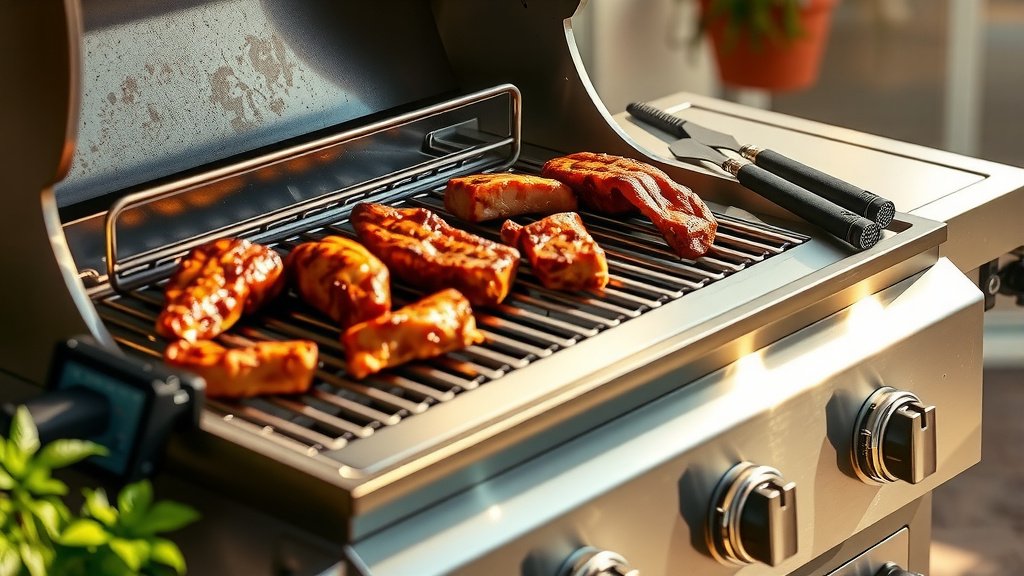
On a gas grill, medium-high temperature typically falls between 375°F and 450°F (190°C to 232°C). This range provides a good balance of heat, allowing you to sear foods effectively while still cooking them through without burning.
You’ll often find this setting perfect for a wide variety of meals, from juicy steaks to crispy chicken, offering versatile heat that adapts to many of your grilling needs.
Here’s a quick overview of what you’ll learn about medium-high grilling:
- Medium-high heat ranges from 375°F to 450°F on your gas grill.
- It’s ideal for searing meats, cooking poultry, and crisping vegetables.
- Learning to control your grill’s temperature is key to perfect results.
- Indirect heat setup can help manage flare-ups at these temperatures.
- Always use a reliable grill thermometer for accuracy.
What Temperature Is Medium High On Gas Grill?
Medium-high heat on a gas grill usually measures between 375°F and 450°F (190°C to 232°C). This is a sweet spot for many grill masters, offering enough punch to get those beautiful grill marks without overcooking your food too quickly.
Why Medium-High Heat Matters
You might wonder, why bother with specific temperatures? Well, precision makes all the difference when grilling. Medium-high heat isn’t just a number; it’s a zone where many foods cook best. It helps you achieve that perfect crust while keeping the inside tender.
The Benefits of Medium-High Grilling
Using medium-high heat offers several advantages. You get a fantastic sear on meats, which locks in juices and creates amazing flavor. This temperature also cooks foods efficiently, reducing your overall grilling time. Plus, it’s versatile enough for a variety of ingredients.
How to Achieve Medium-High Temperature on Your Gas Grill
Getting your grill to the right temperature is simpler than you think. Start by opening the lid and turning on one or two burners to high. Close the lid and let your grill preheat for 10-15 minutes. Once it reaches the desired range, adjust the burner controls to maintain that steady medium-high heat.
Monitoring Your Grill’s Temperature
Reliable temperature monitoring is crucial. Your grill’s built-in thermometer is a good starting point, but we found that many experts recommend a separate, high-quality digital grill thermometer. This often provides a more accurate reading of the cooking surface temperature (Grill Master magazine).
Consider this quick checklist for temperature success:
- Clean your grill grates before preheating.
- Ensure your gas tank has enough fuel.
- Preheat with the lid closed for at least 10 minutes.
- Use a reliable grill thermometer to check the internal air temp.
- Adjust burner knobs slowly to fine-tune the heat.
- Keep the lid closed as much as possible to maintain consistency.
What Can You Cook at Medium-High Heat?
This temperature range is incredibly versatile. You can grill thicker cuts of meat, poultry, and even some denser vegetables. It’s truly a workhorse setting for backyard cooks.
Ideal Foods for Medium-High Grilling
Many foods shine at medium-high heat. Think about those beautiful steaks you see at restaurants—often cooked with this kind of heat. It’s also great for chicken breasts, pork chops, and even tougher vegetables like corn on the cob or bell peppers.
Foods That Love Medium-High Heat
- Steaks (ribeye, sirloin)
- Chicken breasts and thighs
- Pork chops and tenderloin
- Thicker fish fillets (salmon, swordfish)
- Burgers
- Most vegetables (asparagus, zucchini, bell peppers)
- Shrimp and other shellfish
Grill Zone: Direct vs. Indirect Heat at Medium-High
Understanding direct and indirect heat zones can really up your grilling game, especially at medium-high temperatures. It’s like having different ovens on one grill.
Using Direct Heat for Searing
Direct heat means your food is right over the flame. At medium-high, this is perfect for searing. Imagine getting those beautiful char marks on a steak in just a few minutes per side. This intense heat quickly browns the surface, creating amazing texture and flavor.
Creating an Indirect Heat Zone
For thicker items that need more time without burning, an indirect heat zone is your friend. Simply turn off one or more burners, placing your food over the unlit section. This allows food to cook slowly through radiant heat, preventing the outside from charring before the inside is done.
Here’s a quick guide to common grilling temperatures and what they’re best for:
| Temperature Range | Heat Level | Typical Use |
|---|---|---|
| 225°F – 275°F (107°C – 135°C) | Low | Smoking, slow cooking (ribs, brisket) |
| 300°F – 350°F (149°C – 177°C) | Medium-Low | Roasting whole chickens, delicate fish |
| 375°F – 450°F (190°C – 232°C) | Medium-High | Searing steaks, chicken, burgers, most vegetables |
| 475°F – 550°F+ (246°C – 288°C+) | High | Quick searing, thin cuts, pizzas |
Troubleshooting Common Medium-High Heat Issues
Even seasoned grillers face challenges. If your grill isn’t hitting or holding medium-high, don’t fret. We’ve all been there, standing over the grill wondering what’s happening. It’s usually a simple fix.
If Your Grill Isn’t Getting Hot Enough
Check your gas tank first—is it full? A common issue is the tank’s overfill protection device (OPD) engaging. Try turning off your burners, closing the tank valve, disconnecting and reconnecting the regulator, then slowly reopening the tank valve before turning on your burners (National Propane Gas Association).
Dealing with Flare-Ups at Medium-High Heat
Flare-ups happen when fat drips onto the heat source. At medium-high, this can be more common. Keep a spray bottle of water handy to douse small flames, or move your food to an indirect heat zone until the flare subsides. Trimming excess fat from meats can also help prevent them.
Maintaining Consistent Temperature
Keeping a steady temperature is key. Avoid lifting the lid too often; every time you do, heat escapes, and your grill has to work harder to recover. Adjust your burner knobs gradually, making small changes until the thermometer reads correctly.
Safety First: Grilling with Medium-High Heat
Grilling is fun, but safety should always be your top priority. High heat means potential for burns and fires, so a little awareness goes a long way.
Essential Grilling Safety Tips
Always keep your grill a safe distance from your home and any flammable materials. Have a fire extinguisher or a bucket of sand nearby, just in case. Never leave a hot grill unattended, especially at medium-high temperatures where things can heat up quickly (U.S. Fire Administration).
Conclusion
Understanding what temperature is medium high on your gas grill, typically 375°F to 450°F, truly makes you a better griller. This versatile heat range is your secret weapon for perfectly seared steaks, juicy chicken, and deliciously cooked vegetables. By mastering temperature control and using both direct and indirect heat, you’ll open up a world of culinary possibilities in your backyard. So, go ahead, fire up that grill with confidence, and enjoy the amazing flavors you create!
FAQ: How do I know if my grill is at medium-high without a thermometer?
While a thermometer is best, you can use the “hand test.” Hold your hand about five inches above the grates. If you can only keep it there for 3-4 seconds, your grill is likely in the medium-high range. Be careful, though, as this method isn’t as accurate as a good thermometer.
FAQ: Can I grill delicate fish at medium-high heat?
It depends on the fish. Thicker, firmer fish like salmon or swordfish can handle medium-high heat, especially if you use an indirect zone or keep the grilling time short. For very delicate fish, a slightly lower medium heat (around 325-375°F) might be a safer bet to prevent it from sticking or falling apart.
FAQ: How often should I clean my gas grill grates for optimal temperature?
It’s best practice to clean your grill grates before each use. Leftover food debris can block heat flow and cause uneven temperatures or flare-ups. A quick scrub with a wire brush after preheating will do the trick.
FAQ: My gas grill runs hotter on one side. How can I still use medium-high heat effectively?
This is common! You can embrace it by turning your grill into a two-zone setup. Use the hotter side for searing (direct medium-high) and the slightly cooler side for finishing or slower cooking (indirect medium-high). Just rotate your food as needed to ensure even cooking.
FAQ: Is medium-high heat too hot for most vegetables?
Not at all! Many vegetables, like bell peppers, onions, zucchini, and asparagus, actually thrive on medium-high heat. This allows them to caramelize and soften without becoming mushy. Just keep an eye on them and turn frequently to avoid burning.
