For grilling steak on a gas grill, aim for a grill surface temperature between 450°F and 500°F (232°C to 260°C) for direct searing, then adjust for indirect cooking to finish.
This high initial temperature ensures a beautiful sear, creating that flavorful crust you love, before moving to lower, indirect heat for even cooking to your desired doneness.
- The ideal gas grill temperature for steak starts high, around 450-500°F, for searing.
- Always use a meat thermometer to check your steak’s internal temperature, not just grill time.
- Employ a two-zone grilling setup for searing and then finishing your steak perfectly.
- Resting your steak after grilling is crucial for juicy results.
- Different steak thicknesses and desired doneness levels will affect total grilling time.
What Temperature For Steak On Gas Grill?
You’re looking for a gas grill temperature of about 450°F to 500°F (232°C to 260°C) for the initial sear. This hot zone will give your steak that amazing crust. Then, you’ll finish cooking it over a cooler, indirect heat zone, typically around 300°F (150°C).
Why Grill Temperature Matters for Steak
Getting the grill temperature right isn’t just a suggestion; it’s a game-changer for your steak. Too low, and you’ll steam the meat rather than sear it. Too high, and you’ll burn the outside before the inside is cooked.
We found that achieving a perfect sear requires high heat. This reaction, often called the Maillard reaction, creates those rich, complex flavors and a crispy exterior. Without it, your steak just won’t have that classic steakhouse appeal.
The Searing Factor
Think of searing as painting the steak with flavor. When you place steak on a very hot grill, the surface caramelizes quickly. This fast cooking prevents the interior from overcooking right away. Many experts say a quick, intense sear is foundational to a great steak.
Indirect Heat Explained
After the sear, you move your steak to a cooler part of the grill. This is your indirect heat zone. Here, the steak cooks gently through to its desired doneness. It’s like finishing in an oven, but with all the smoky grill flavor. This method helps avoid a burnt exterior and raw interior.
Understanding Steak Doneness
Knowing your desired doneness is key to successful grilling. Do you like it rare, medium, or well-done? Each level corresponds to a specific internal temperature. You can’t guess; a reliable meat thermometer is your best friend here.
Internal Temperature is Key
We’ve often heard people say, “I just cook it for X minutes per side.” While that can be a starting point, it’s not foolproof. Steak thickness varies, and so does your grill’s actual heat. Research often connects precise internal temperatures with consistent doneness (USDA).
Forget the old “touch test.” A good digital instant-read thermometer will give you certainty. Stick it into the thickest part of the steak, avoiding any bones.
| Doneness Level | Internal Temperature (F) | Internal Temperature (C) | Look and Feel |
|---|---|---|---|
| Rare | 125-130°F | 52-54°C | Cool red center |
| Medium-Rare | 130-135°F | 54-57°C | Warm red center |
| Medium | 135-140°F | 57-60°C | Warm pink center |
| Medium-Well | 140-145°F | 60-63°C | Slightly pink center |
| Well-Done | 150-155°F | 66-68°C | Little to no pink |
Setting Up Your Gas Grill for Steak
Setting up your gas grill correctly is half the battle won. It’s not just about turning it on; it’s about creating different heat zones. This setup allows you to control the cooking process precisely.
Two-Zone Grilling
A two-zone setup is crucial for steak. For a typical three-burner gas grill, you’d turn one or two burners to high and leave one burner off. This creates a hot zone for searing and a cooler zone for finishing.
On a two-burner grill, you might put one burner on high and the other on low. The goal is always to have a spot for intense heat and a spot for gentle heat. This technique helps you achieve a restaurant-quality steak right in your backyard.
Preheat is Essential
Never put steak on a cold grill! You wouldn’t bake in a cold oven, right? Preheat your gas grill for at least 10-15 minutes with the lid closed. You want those grates screaming hot to get a good sear. This also helps to clean the grates naturally.
Step-by-Step Grilling Guide
Ready to grill that perfect steak? Follow these steps, and you’ll be enjoying a juicy, flavorful masterpiece in no time. It’s simpler than you might think!
- Prepare Your Steak: Pat your steak dry with paper towels. Season generously with salt and black pepper on all sides. Some people like a little olive oil rub as well.
- Preheat Your Grill: Set up two zones. Turn one or two burners to high for direct heat, and leave one off for indirect heat. Close the lid and preheat until the direct zone reaches 450-500°F (10-15 minutes).
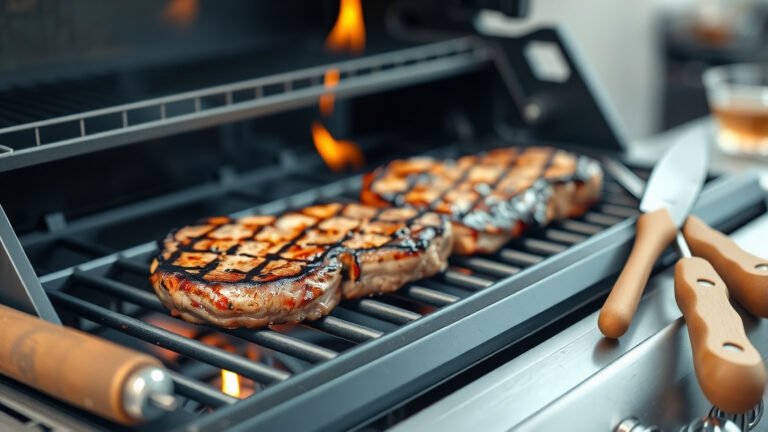
- Sear the Steak: Place your seasoned steak directly over the high heat. Sear for 2-3 minutes per side, until a beautiful brown crust forms. Don’t move it around too much during this step.
- Move to Indirect Heat: Once seared, move the steak to the cooler, indirect heat zone. Close the lid to allow it to cook evenly.
- Monitor Internal Temperature: Insert a meat thermometer into the thickest part. Cook until it reaches about 5°F below your target doneness temperature. For medium-rare, aim for 125°F before resting.
- Remove and Rest: Take the steak off the grill once it hits the target temperature.
Tips for a Perfect Steak Every Time
Achieving consistently great steaks is a skill developed over time. These simple tips can help you elevate your grilling game. We found these suggestions to be incredibly helpful for many home cooks.
Quick Steak Grilling Checklist
- Pat your steak dry before seasoning.
- Season generously right before grilling.
- Always preheat your grill to a high temperature.
- Use a two-zone setup for searing and finishing.
- Have an instant-read thermometer handy.
- Don’t forget to rest your steak after grilling.
Rest Your Steak!
This is arguably the most overlooked step, but it’s so important! Once your steak comes off the grill, transfer it to a cutting board and let it rest for 5-10 minutes. Covering it loosely with foil can help. During this time, the juices, which have rushed to the center during cooking, redistribute throughout the meat. This results in a much juicier, more tender steak. Cutting into it too soon lets all those delicious juices run out, leaving you with a dry steak.
Conclusion
Mastering the art of grilling steak on a gas grill truly comes down to understanding and controlling temperature. Start with a blazing hot grill for that incredible sear, then shift to a cooler zone to gently cook the interior to perfection. Always rely on an instant-read meat thermometer to hit your desired doneness, and never, ever skip that crucial resting period. With these straightforward tips, you’re all set to grill a steak that will impress everyone, including yourself. Happy grilling!
How do I know my gas grill is hot enough for steak?
You know your gas grill is hot enough when it reaches 450-500°F (232-260°C) with the lid closed for at least 10-15 minutes. You can use a grill thermometer or even hold your hand briefly a few inches above the grate; if you can only hold it there for 2-3 seconds, it’s likely hot enough for searing.
Should I keep the lid open or closed when grilling steak?
For searing, keep the lid open so you can monitor for burning and achieve a concentrated crust. Once you move the steak to the indirect heat zone to finish cooking, close the lid. This traps heat, allowing the steak to cook through more evenly, similar to an oven.
Can I grill thick and thin steaks at the same temperature?
You can start both thick and thin steaks at the same high searing temperature. However, thin steaks will finish cooking much faster on direct heat, possibly not needing indirect heat at all. Thick steaks (over 1.5 inches) definitely benefit from a sear-and-finish method using both direct and indirect heat.
What if my steak is burning on the outside but still raw inside?
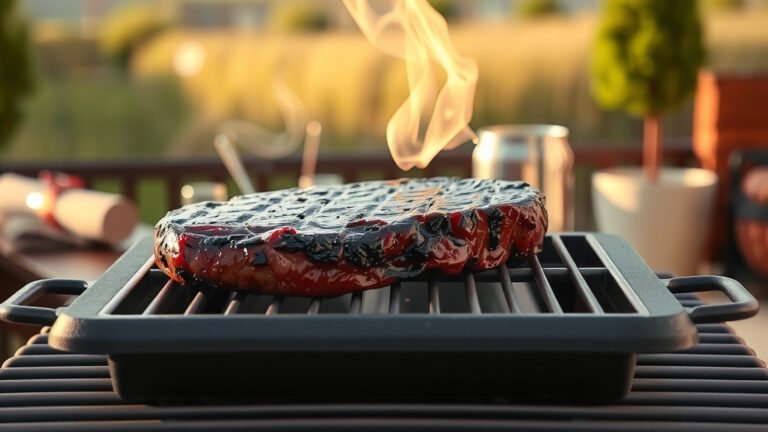
If your steak is burning on the outside, your direct heat zone is too hot, or you’re searing for too long. Reduce the burner intensity slightly for the direct zone, or shorten the searing time. Ensure you move the steak to a cooler, indirect heat zone immediately after achieving a good sear to cook the interior.
How long should I rest my steak after grilling?
You should rest your steak for at least 5 to 10 minutes after removing it from the grill. For very thick cuts, you might even consider 10-15 minutes. This allows the internal juices to redistribute, ensuring a tender and flavorful bite throughout the entire steak.