
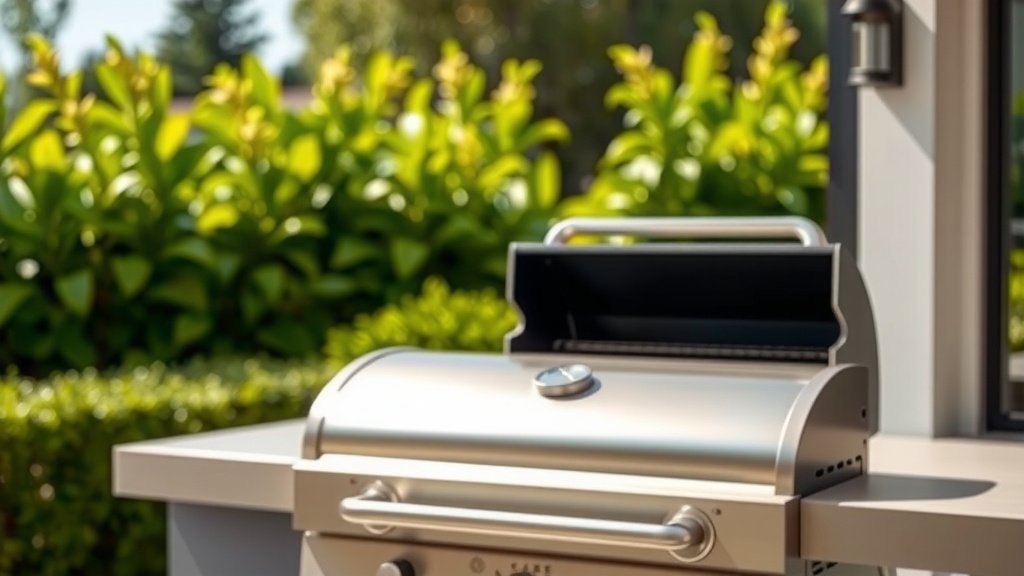
Using a propane BBQ grill involves safely connecting the gas tank, checking for leaks, igniting the burners, and controlling the heat for perfect cooking.
Always start by ensuring your grill is clean and stable before you even think about firing up that propane BBQ grill.
Here’s a quick look at what you’ll learn in this guide:
- Always perform a leak test before igniting your grill.
- Preheat your grill to the right temperature for even results.
- Understand the difference between direct and indirect heat zones.
- Clean your grates after every use to prevent food from sticking.
- Store propane tanks upright and away from any heat source.
How To Use A Propane BBQ Grill?
Using a propane BBQ grill is straightforward once you understand a few key steps and safety practices.
It’s all about preparation, careful setup, and smart temperature management.
Safety First: Getting Started Right
Before you even think about lighting your grill, safety must be your top priority. A little caution goes a long way to prevent accidents.
Treat your propane grill with respect, and it will serve you well for many years of delicious meals.
A Quick Pre-Grill Checklist
Taking a moment for these checks can save you a lot of trouble later on. Many safety guidelines strongly advise this routine.
- Check your gas hose for any cracks, fraying, or wear.
- Ensure your grill is stable on a level surface.
- Clean cooking grates of any old food residue.
- Have a fire extinguisher or a bucket of sand nearby.
- Grill outdoors only, in a well-ventilated area.
Connecting Your Propane Tank Like a Pro
Connecting the propane tank is simple, but it needs to be done correctly. This is where the fuel meets your grilling machine.
A secure connection prevents gas leaks, which is essential for safe operation.
First, make sure all burner knobs on your grill are in the “off” position. Then, align the propane tank valve with the regulator on your grill.
Screw the connector clockwise until it’s snug. Don’t overtighten it; hand-tight is usually sufficient.
Performing the Essential Leak Test
This test is non-negotiable every time you connect a new tank. It’s a quick step that provides peace of mind.
Ignoring this could lead to serious safety issues, as many experts warn.
To do a leak test, open the propane tank valve slowly. Mix some soapy water in a spray bottle or cup.
Spray or brush the soapy water onto the hose and connection points. If you see bubbles forming, you have a leak.
If you find bubbles, tighten the connection or replace the hose if it’s damaged. Close the tank valve immediately if you smell gas.
Igniting Your Propane Grill Safely
Once your tank is connected and tested, it’s time to light up. This part is exciting, but follow the steps carefully.
It ensures a smooth start to your grilling adventure without any unexpected surprises.
Steps for a Smooth Start
Lighting a propane grill is usually quite simple with the built-in igniter.
However, it’s good to know the exact sequence for safety and efficiency.
First, open the lid of your grill. This allows any accumulated gas to escape, which is a key safety tip.
Next, slowly open the propane tank valve all the way. Then, turn one burner knob to the “high” position.
Push the igniter button immediately and hold it for a few seconds until the burner lights. If it doesn’t light after a few tries, turn the gas off and wait a few minutes before trying again.
Once one burner is lit, you can turn on the other burners as needed. Close the lid and allow the grill to preheat.
Mastering Temperature and Grilling Techniques
Controlling your grill’s temperature is like being the conductor of an orchestra. It dictates how well your food cooks.
Understanding heat zones allows you to cook a wider variety of foods perfectly.
Direct vs. Indirect Heat: What to Use When
Most propane grills offer the flexibility of direct and indirect cooking methods. Knowing which to use is a game-changer.
Think of it as having different tools for different jobs in your grilling toolbox.
| Heat Type | Best For | Temperature Range |
|---|---|---|
| Direct Heat | Burgers, steaks, hot dogs, thin vegetables | High (450-650°F) |
| Indirect Heat | Whole chickens, roasts, ribs, delicate fish | Medium (300-400°F) |
For direct heat, you cook food directly over the lit burners. This is ideal for quick-cooking items like a juicy steak.
Indirect heat involves placing food over unlit burners, with lit burners on either side. This method is great for larger cuts that need slow cooking, like a whole chicken.
Dealing with Hot Spots and Flare-Ups
Every grill has its quirks, and hot spots are common. You might notice some areas cook faster than others.
Learning to manage these helps you achieve evenly cooked results across all your food.
To manage hot spots, rotate your food periodically for even cooking. Many grill masters find this simple trick very effective.
Flare-ups happen when fat drips onto the flames. To control them, move your food away from the flames temporarily.
You can also turn down the burner directly under the flare-up. Never use water to put out a grease fire on your grill.
Keeping Your Grill Clean and Ready
Cleaning your grill isn’t just about hygiene; it affects performance and longevity. A clean grill is a happy grill.
It also prevents old food bits from tainting the flavor of your new meal, which we found is a common complaint.
Post-Grill Burn-Off and Brushing
After you finish cooking, there’s one simple step that makes cleaning much easier. It uses the grill’s own heat to your advantage.
This method helps burn off leftover food particles, making them easier to remove.
After removing your food, turn all burners to high, close the lid, and let it heat for about 10-15 minutes.
Once cooled slightly, use a stiff wire brush or a grill scraper to scrape off the burnt residue from the grates. Many experts suggest doing this while the grill is still warm.
For tougher spots, some research suggests a crumpled aluminum foil ball can work wonders.
Common Questions and Quick Fixes
Even seasoned grillers run into small issues sometimes. Knowing how to quickly troubleshoot can save your dinner.
Most common problems have simple solutions, so don’t fret if something seems off.
When Your Grill Won’t Light
A grill that won’t light can be frustrating, but it’s often an easy fix. Don’t panic; let’s diagnose the problem.
We found that checking a few key areas usually resolves this issue quickly.
First, check your propane tank. Is it empty? Is the valve fully open?
Next, inspect the igniter. Is it clicking? Is the spark visible? Sometimes, it just needs a good cleaning or a new battery if it uses one.
If the igniter fails, you can always light your grill manually with a long lighter or a match through the side lighting hole. Be extra careful when doing this.
Storing Your Propane Tank Safely
Proper storage of your propane tank is just as important as proper use. Safety guidelines are clear on this point.
You want to protect both the tank and your home from potential hazards.
Off-Season Storage Best Practices
When grilling season winds down, or if you’re going away, store your tank correctly. This keeps it in good condition.
It also adheres to crucial safety recommendations to prevent accidents.
Always disconnect the tank from the grill valve when not in use for extended periods. Cap the tank valve to protect it.
Store propane tanks upright, outdoors, and away from any heat source or direct sunlight. Never store a propane tank indoors, not even in a garage or shed.
Keep them away from ignition sources like pilot lights or electrical appliances. This is a crucial safety rule, as many fire departments advise.
Conclusion
Using a propane BBQ grill can be incredibly rewarding, offering delicious meals and fun times. By following these steps, you’ll feel confident and safe every time you fire it up.
Remember that safety, proper connection, careful lighting, and good cleaning habits are the foundation of great grilling. Happy grilling, and enjoy those fantastic flavors!
Can I leave my propane tank connected to the grill?
While many people do, for safety, it’s best to turn off the tank valve after each use. For longer periods of inactivity, like overnight or for several days, it’s safer to disconnect it entirely. This reduces the risk of leaks.
How do I know if my propane tank is almost empty?
You can tell if a propane tank is running low by pouring hot water down the side of the tank. The propane inside absorbs the heat, leaving a cool line where the liquid propane ends. The tank will feel cold to the touch at that level.
What if my grill won’t light?
First, check the propane tank level and ensure the valve is fully open. Then, inspect the igniter; it might need cleaning or a new battery. If all else fails, you can light the grill manually with a long lighter or match, being very careful.
How often should I clean my grill?
You should clean your grill grates after every use by burning off food residue and brushing them. A deeper clean of the grates, flavorizer bars, and drip tray should happen every 2-3 months, or more often if you grill frequently.
Is it safe to grill in the rain?
Grilling in light rain is generally safe if you use a covered area, like an open patio or awning. Never grill under a completely enclosed structure. Protect yourself and the grill from direct exposure, and always ensure good ventilation.
