
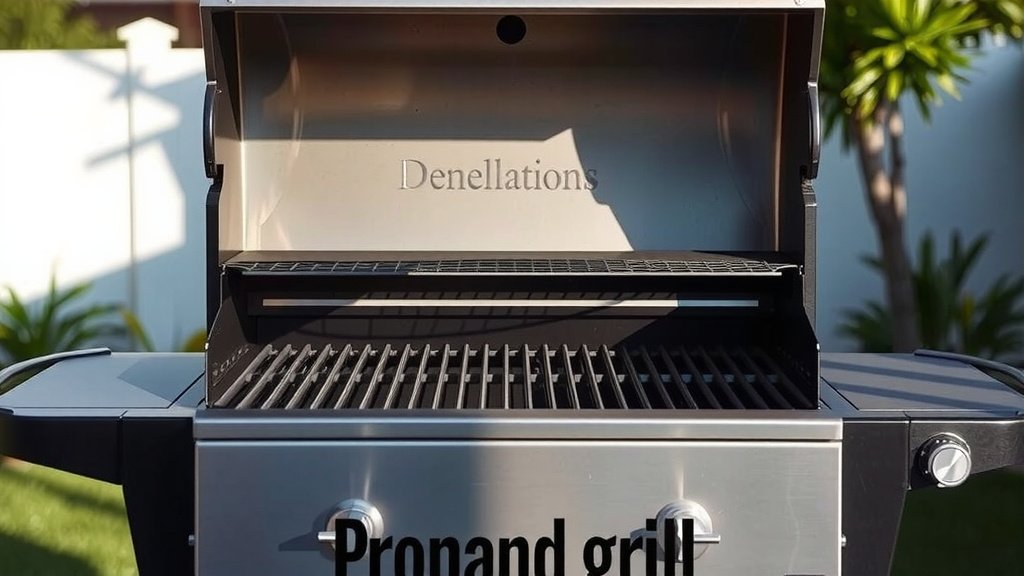
To turn on a propane grill, first open the grill lid for safety, then slowly turn on the propane tank valve counter-clockwise, open one burner knob to a high setting, and press the igniter button until the burner lights.
Always ensure your propane tank is securely connected and check for any gas leaks before attempting to light your grill to ensure safe operation.
Here’s a quick summary for getting your propane grill fired up fast:
- Always open the grill lid first.
- Make sure your propane tank is connected tightly.
- Slowly open the propane tank valve all the way.
- Turn on one burner to high, then press the igniter.
- If it doesn’t light, try again or use a manual lighter.
How To Turn On A Propane Grill?
Turning on your propane grill is a simple process once you know the steps. You will soon be grilling your favorite foods with confidence.
Safety First: Your Grill’s Best Friend
Before you even think about lighting a flame, safety must be your top priority. Always check your grill for any issues.
We found that a quick visual inspection can prevent problems (Consumer Reports). Is the gas line clear? Are there any kinks?
Make sure the area around your grill is free from anything flammable. Think about tablecloths, dry leaves, or paper plates. Clear them away.
We often hear stories about small mishaps that could have been avoided with a simple check. Don’t let that happen to your grilling fun.
The Tank Check: More Than Just Fullness
Before connecting, give your propane tank a quick once-over. Is it upright? Is the valve handle easily accessible?
Many experts say to shake it gently to gauge the remaining fuel, but a scale is more accurate. A nearly empty tank means no flame!
Ensure the tank’s main valve is fully closed before you even start connecting it to the grill hose. This prevents any accidental gas escape.
Connecting the Propane Tank: A Quick Guide
Connecting your propane tank is straightforward. You will see a large black plastic nut on the grill’s gas hose. Line it up with the tank’s valve.
Turn this nut clockwise by hand. It should feel snug and secure. There’s no need for wrenches; hand-tightening is enough.
Overtightening can damage the connection, potentially causing leaks. We found that a firm hand-tightening does the trick every time.
Once connected, you can perform a quick leak test. Mix some soapy water and brush it over the connection points. Bubbles mean a leak.
The Art of Opening the Gas Valve
Now, it’s time to open the main gas valve on your propane tank. You need to do this slowly.
Turn the valve handle counter-clockwise. Why slowly? A rapid opening can trigger the safety bypass valve inside the hose regulator.
If the bypass valve activates, you will get very low flame, even if the tank is full. We call this the “low flow state” problem.
Open it all the way until it stops. This ensures maximum gas flow to your grill. Now your grill is ready for ignition.
Preparing Your Grill: Hoods and Burners
Before you try to light any burner, always open the grill lid. This is a very important safety step.
If gas builds up inside a closed grill, it can cause a sudden flare-up or even a small explosion when ignited. We don’t want that!
Next, locate your burner knobs. Most grills have several. You will only need to turn on one for lighting.
Make sure all other burner knobs are in the “off” position. We want a controlled ignition, not a fiery surprise.
Finding Your Ignition Button
Your grill will have an igniter button. It’s often a red or black button near the burner knobs.
Some grills have a single button for all burners, while others have individual igniters per burner. Take a quick look at your model.
When you press it, you should hear a clicking sound. This is the igniter sparking, trying to light the gas.
Lighting Your Propane Grill: The Right Sequence
Okay, it’s showtime! With the lid open and tank valve fully open, turn one burner knob to the “high” setting.
Immediately after turning on the burner, press and hold the igniter button. You should hear rapid clicks.
Keep pressing the igniter for a few seconds. Watch for the flame to appear. You will often see a small orange or blue flame start.
Once one burner is lit, you can then turn on the other burners to your desired temperature. Easy, right?
Troubleshooting Common Lighting Issues
What if it doesn’t light? Don’t panic. Many experts suggest a few quick checks if your grill refuses to light.
| Problem | Quick Fix |
|---|---|
| No gas flow (low flame) | Close tank valve, disconnect, wait 5 min, reconnect, open valve slowly. |
| Igniter not sparking | Check igniter battery (if applicable), ensure connections are clean. |
| Burner clogged | Turn off gas, use a wire brush to clear burner holes. |
| Propane tank empty | Replace or refill the propane tank. |
Sometimes, the igniter simply needs a new battery. Many newer grills use a single AA or AAA battery. Check your manual.
Manual Lighting: When the Igniter Fails
If your igniter decides to take a day off, you can still light your grill manually. Always have a long lighter or grill-specific matches nearby.
With the grill lid open, turn one burner to the “high” setting. Quickly, but carefully, insert the lit lighter or match close to the burner port.
The burner should light instantly. Be careful to keep your hand and arm away from the flame as it ignites. Safety first, remember?
Never lean over the grill when manually lighting it. Use a long tool to keep a safe distance.
Maintaining Your Grill for Easy Start-Ups
A well-maintained grill is a happy grill. Regular cleaning can prevent many lighting problems.
Keep your burner tubes free of debris and spider webs. Spiders love to make homes in those small tubes, blocking gas flow.
Many guidelines point to checking your gas hose for cracks or wear once a year (NFPA). Replace it if you see any damage.
A little care goes a long way in ensuring your grill lights up reliably every time you need it.
What About Breaking In a New Grill?
Just bought a new propane grill? Congratulations! Before you cook, you need to “season” it.
This means burning off any manufacturing oils or residue. Turn all burners to high for about 15-20 minutes with the lid closed.
This process also helps to properly season the grates, creating a non-stick surface. Think of it like seasoning a cast-iron pan.
Here’s a quick checklist before your next grilling session:
- Is the propane tank full enough?
- Are all connections tight?
- Is the area around the grill clear?
- Is the grill lid open?
- Do you have a backup lighter handy?
Conclusion
Mastering how to turn on a propane grill is a fundamental step for any home chef. By following these clear, step-by-step instructions, you can ensure a safe and successful grilling experience every time.
Remember, safety checks, proper connection, and the correct lighting sequence are your keys to enjoying delicious grilled meals. Happy grilling!
FAQs About Turning On a Propane Grill
Why does my propane grill have a low flame even with a full tank?
A common reason for a low flame is the bypass safety mechanism in your grill’s regulator. If you open the propane tank valve too quickly, this mechanism can activate, restricting gas flow. To fix it, turn off all burner knobs and the tank valve. Disconnect the regulator from the tank, wait about 5 minutes, then reconnect and slowly open the tank valve fully before trying to light a burner.
Can I light my propane grill without an igniter?
Yes, you absolutely can light your propane grill without a working igniter. You will need a long lighter or grill matches. With the grill lid open, turn one burner to the “high” setting, and then immediately place the lit lighter or match close to the burner port. Be very careful to keep your hands clear and light it quickly.
How do I check for a propane leak on my grill?
To check for a propane leak, mix equal parts dish soap and water in a spray bottle or bowl. With the tank valve open, spray or brush the soapy solution over all gas connections, including where the regulator connects to the tank and the hose connects to the grill. If you see bubbles forming, that indicates a gas leak. Turn off the gas immediately and tighten or replace the faulty connection.
How long should I preheat my propane grill before cooking?
Most experts recommend preheating your propane grill for about 10 to 15 minutes before you start cooking. This allows the grill grates to reach the desired temperature, which helps with searing and prevents food from sticking. The exact time can vary depending on your grill’s power and the outdoor temperature.
What should I do if my grill smells like gas but won’t light?
If you smell gas but your grill won’t light, immediately turn off the propane tank valve and all burner knobs. Keep the grill lid open to allow any accumulated gas to disperse. Wait several minutes for the gas smell to clear before attempting to light it again. If the issue persists or the smell is strong, do not attempt to light it and consider having your grill inspected by a professional.
