
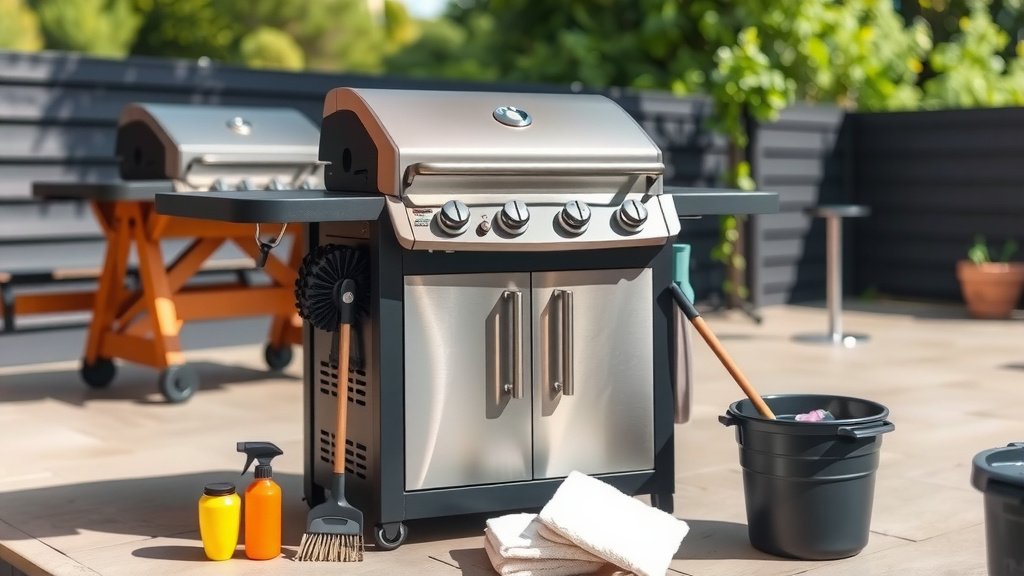
Properly cleaning a Blackstone grill involves **scraping off food debris**, wiping down the griddle surface, and applying a thin layer of oil to season and protect it.
You should clean your Blackstone grill after every use to prevent rust and maintain its **non-stick cooking surface** for delicious meals.
- Always clean your Blackstone griddle while it’s still warm to make food debris easier to remove.
- Use a metal scraper to push off food remnants into the grease trap.
- Wipe the surface clean with paper towels and a little water, avoiding harsh soaps.
- Crucially, re-oil the griddle after each cleaning to maintain its seasoning and prevent rust.
- Regular care extends your grill’s life and keeps your food tasting great.
How To Properly Clean A Blackstone Grill?
Cleaning your Blackstone grill might seem daunting at first, but it’s really quite simple. We found that a few easy steps after each use will **keep your griddle in top shape** for years.
Why Cleaning Your Blackstone Matters
Think of your griddle as a well-seasoned cast iron pan, just much bigger. Proper cleaning protects this seasoning, which is that **natural non-stick layer** you love. Neglecting it can lead to rust and sticking food, which nobody wants when cooking a big breakfast or searing steaks.
Essential Cleaning Tools You’ll Need
Before you begin, gather your tools. You won’t need anything fancy. Many experts suggest a good **metal griddle scraper**, some paper towels, a spray bottle of water, and cooking oil. That’s usually it for daily cleaning.
Your Post-Cook Cleaning Checklist
Cleaning right after cooking is a game-changer. Here’s a quick checklist to keep you on track:
- Scrape all food debris into the grease trap.
- Add a small amount of water to help loosen stubborn bits.
- Wipe the griddle clean with paper towels.
- Apply a thin, even layer of cooking oil to the entire surface.
- Let the griddle cool completely.
Step-by-Step: The Post-Cook Clean
Let’s walk through the process, step by step. This is the routine you’ll follow most often, ensuring your grill is always ready.
Scraping Off The Grime
As soon as you finish cooking and the griddle is still warm, grab your scraper. Many Blackstone users say to start pushing all the food bits and grease into the **rear grease management system**. Make sure you get everything. This initial scrape removes the bulk of the mess.
Washing Away Residue
Once scraped, some sticky bits might remain. We found that a small amount of water, sprayed onto the warm surface, helps a lot. It creates steam and lifts residual food. You might even use the scraper again to push the water and loosened grime into the grease trap. Follow up with a few paper towels to **wipe the surface clean**.
Drying It Completely
This step is critical. After wiping with paper towels, ensure the griddle is totally dry. Any moisture left behind can lead to rust, and that’s the enemy of a well-maintained griddle. You can use **more paper towels** or let the residual heat finish the job.
The All-Important Re-Seasoning
Now for the vital step: re-seasoning. Once the griddle is clean and dry, apply a thin layer of cooking oil. Use a paper towel to spread it evenly over the entire cooking surface. This protects the griddle and maintains your non-stick seasoning. Think of it as **moisturizer for your griddle**.
Dealing With Stubborn Stuck-On Food
Sometimes, food gets really stuck. Don’t worry, it happens to the best of us. There are a few tricks for these tougher situations.
Using Water: Hot vs. Cold
For really sticky messes, adding hot water to a warm griddle creates more steam and helps loosen things more effectively than cold water. Many experts suggest this technique for **burnt-on residue**. Just be cautious of the steam!
The Power of Baking Soda Paste
If water isn’t enough, consider a baking soda paste. Mix baking soda with a little water to form a thick paste. Apply it to the stubborn spots, let it sit for a few minutes, then scrub gently with a non-abrasive pad. We found that this method can **work wonders on tough spots** without damaging the seasoning (Blackstone Griddle Care Guide).
Deep Cleaning Your Blackstone Grill
While daily cleaning is essential, a deeper clean is sometimes necessary. This goes beyond just the griddle surface.
When To Deep Clean?
How often should you deep clean? It depends on your usage. If you grill frequently, perhaps once a month. If it’s stored for a while, a deep clean before use is a good idea. Look for signs like **excessive grease build-up** on the sides or around the burner area.
| Cleaning Type | Frequency | Key Focus |
|---|---|---|
| Routine Cleaning | After every use | Griddle surface, re-seasoning |
| Stubborn Spot Treatment | As needed | Baked-on food, sticky residue |
| Deep Cleaning | Monthly (heavy use) / Seasonally (light use) | Full griddle, body, grease trap |
Cleaning The Grill Body and Accessories
Don’t forget the rest of your grill. The body, side shelves, and grease cup also need attention. Wipe them down with a damp cloth and mild soap. Ensure to **empty and clean the grease cup** regularly to prevent overflows and pests.
Common Cleaning Mistakes To Avoid
To keep your Blackstone happy, avoid these common pitfalls. Knowing what NOT to do is as important as knowing what to do.
Using Harsh Soaps
Resist the urge to use dish soap directly on your griddle surface. Dish soap strips away the seasoning you’ve worked so hard to build. Stick to **water and scraping** for the griddle itself. For the outer body, mild soap is fine.
Not Re-Seasoning
Forgetting to re-oil after cleaning is a surefire way to invite rust. Many experts say that the thin layer of oil is your griddle’s best defense against moisture. Make it a **non-negotiable final step** in your cleaning routine.
Leaving Water On The Surface
As mentioned, water and cast iron are not friends for long. Always dry your griddle completely. This goes for accidental rain or even high humidity. A **dry, oiled surface** is a happy surface.
Maintaining Your Blackstone’s Longevity
Beyond cleaning, a little ongoing care will make your Blackstone last. We found that consistent, small efforts pay off greatly over time.
Proper Storage
If you store your griddle outside, invest in a good quality cover. This protects it from the elements, dust, and debris. A **well-fitting cover** keeps your griddle ready for your next cookout.
Regular Inspection
Occasionally, take a moment to look over your griddle. Check for any rust spots developing, or areas where the seasoning might be thinning. Catching these issues early means **quick, easy fixes** before they become bigger problems.
Conclusion
Cleaning your Blackstone grill doesn’t have to be a chore; it’s an essential part of the cooking experience. By following these simple steps, you’ll protect your investment, maintain that prized non-stick surface, and ensure countless delicious meals for years to come. Remember, a little care after each use goes a long way in keeping your griddle a **reliable cooking companion**.
What kind of oil should I use for seasoning my Blackstone grill?
Many experts recommend using oils with a high smoke point for seasoning, such as flaxseed oil, canola oil, vegetable oil, or grapeseed oil. These oils create a durable, protective layer on the griddle surface when heated.
Can I use steel wool or abrasive scrubbers on my Blackstone griddle?
No, you should avoid using steel wool or highly abrasive scrubbers on your Blackstone griddle. These can scratch the surface and strip away the valuable seasoning, making it more prone to rust and sticking.
What if my Blackstone griddle develops rust? How do I remove it?
If rust appears, don’t panic. You can often remove light rust by scrubbing it with a mild abrasive pad and some oil. For heavier rust, you might need to use a rust eraser or fine-grit sandpaper, followed by a thorough re-seasoning process (Blackstone Griddle User Manual).
How do I clean the grease trap on my Blackstone grill?
The grease trap, or cup, should be emptied regularly after each cook, especially if you cook greasy foods. You can simply remove it, discard the grease, and then wash it with warm, soapy water. Ensure it’s dry before placing it back.
Is it okay to leave food debris on the griddle overnight?
Leaving food debris and grease on the griddle overnight is not ideal. It can lead to the food hardening, making it much harder to remove, and potentially attract pests. More importantly, it can promote rust formation on the griddle surface, especially if any moisture is present.
