
To safely store propane tanks, always keep them upright and outdoors in a well-ventilated area, away from direct sunlight and heat sources. Never store them indoors, in a garage, or in a shed, as this can create a fire or explosion hazard. Following these simple steps will help you properly store propane tanks safely.
Many homeowners use propane for grilling, camping, and heating. Knowing the right way to store your tanks is important for your safety and the safety of your family. Improper storage can lead to dangerous situations, so it’s vital to understand the best practices for handling these cylinders.
- Store tanks upright.
- Keep them outdoors.
- Ensure good ventilation.
- Avoid direct sunlight and heat.
Let’s walk through exactly how to safely store your propane tanks, step by step.
Mastering Safe Propane Tank Storage
Storing your propane tanks correctly is easier than you think, and it’s essential for keeping your home and family safe. Let’s explore the key practices.
Choosing the Perfect Outdoor Spot
Where you put your tank matters a lot. You want a spot that’s safe from the elements and well away from anything that could cause a spark.
Why Outdoors is Non-Negotiable
You might wonder, “Can’t I just tuck it in the garage?” The answer is a firm no. Propane is heavier than air. If there’s a leak indoors, the gas can settle in low areas. This creates a hidden, explosive hazard (National Fire Protection Association, NFPA).
Outdoors, any leaked gas will safely dissipate into the open air. Think of it like airing out a room; the fresh air carries the gas away.
Ventilation is Your Best Friend
When we say “outdoors,” we mean somewhere with excellent air circulation. A corner of your patio, a dedicated storage area away from your home, or even a well-ventilated shed (with open sides or vents, not a sealed structure) works well.
Avoid enclosed spaces like tool sheds or under decks unless they are specifically designed with ample ventilation. You want fresh air constantly moving around the tank.
Sunshine and Heat are Enemies
Imagine a hot summer day. The sun beats down, heating everything it touches. This includes your propane tank. Heat causes pressure to build inside the tank.
While tanks are designed to handle some pressure, extreme heat is risky. Keep your tanks in a shady spot, away from direct sunlight, grills, fire pits, or any heat-producing equipment.
Proper Tank Orientation and Security
It’s not just where you store it, but how. Standing upright and being secure prevents accidental damage or leaks.
Always Keep Tanks Upright
You might see propane tanks on their sides in some commercial settings. For home use, however, always store them upright and stable. Tanks have a safety relief valve designed to work properly when the tank is vertical.
If a tank is on its side and the valve opens, liquid propane could escape instead of just gas. This is far more dangerous.
Securing Your Tanks
A tank falling over can damage the valve or hose. This could lead to a leak. We found it’s a good idea to secure your tanks so they can’t be easily knocked over.
You can use a wall bracket, a sturdy fence, or even place them in a purpose-built storage caddy. Just make sure whatever you use is strong enough to keep the tank steady.
Distance from Your Home and Ignition Sources
Just like you keep your grill a safe distance from your house, the same applies to your stored propane tanks.
Maintain a Safe Distance
Many safety guidelines suggest keeping tanks a certain distance from your home (Consumer Product Safety Commission, CPSC). While specific distances can vary by local code, a general rule of thumb is at least 10 feet from any building openings like windows or doors.
This separation helps ensure that if a leak were to occur, the gas has more space to disperse before reaching your living areas.
Away from Sparks and Flames
This might seem obvious, but it’s worth repeating: keep propane tanks far away from any ignition sources. This includes:
- Grills (even when cold)
- Fire pits or outdoor fireplaces
- Electrical outlets or appliances
- Combustible materials like woodpiles or gasoline cans
- Vehicles that might be running or parked nearby
Imagine accidentally dropping a lit cigarette near a leaking tank. The consequences could be devastating.
Inspecting Your Tanks for Safety
A quick check can prevent a big problem. Regular inspection is part of responsible tank ownership.
Look for Damage and Rust
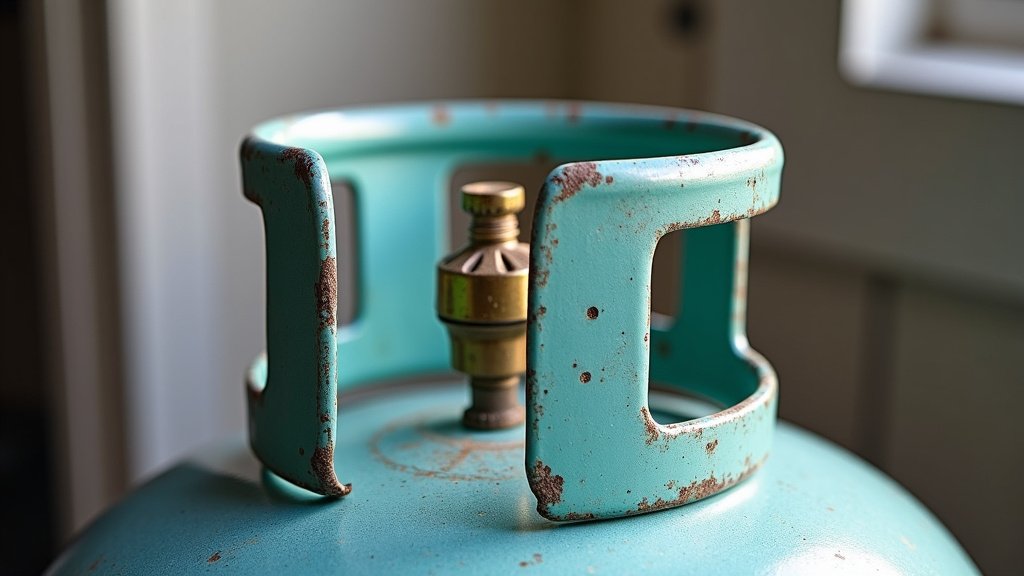
Before storing your tank, take a moment to look it over. Do you see any dents, gouges, or significant rust? These could compromise the tank’s integrity.
Rust, especially around the welds or valve area, can weaken the metal. If you find significant damage, it’s time to replace the tank.
Check the Valve and Connections
Ensure the tank valve is tightly closed when not in use. You don’t want any gas slowly leaking out during storage. Also, check the cap or plug that protects the valve opening.
If you have any hoses or regulators attached for storage, make sure they are in good condition and not cracked or frayed. It’s often best to disconnect them for long-term storage.
Understanding Tank Exchange vs. Refill
How you acquire your propane can impact your storage routine.
| Feature | Propane Tank Exchange | Propane Tank Refill |
|---|---|---|
| Convenience | Quick, no waiting. | Can involve waiting in line. |
| Tank Ownership | You don’t own the tank; you swap it. | You keep your original tank. |
| Inspection | Tanks are inspected by exchange company. | You are responsible for tank condition. |
| Cost Efficiency | Often higher per gallon, but includes tank upkeep. | Generally lower per gallon if you own a good tank. |
| Ideal For | Occasional users, those wanting easy swaps. | Frequent users, those who prefer owning their tank. |
With tank exchanges, you get a “new” (to you) tank each time. These tanks are typically inspected by the exchange company. If you refill your own tank, you’re responsible for its ongoing condition and ensuring it hasn’t expired.
Special Considerations for RVs and Campers
RV tanks have unique storage needs, especially when traveling or parking for the season.
Propane Tanks in RVs
Many RVs have permanently mounted propane tanks. These are designed for vehicle use and have specific safety features. When parking your RV, ensure the area is well-ventilated and free from ignition sources, just as you would for portable tanks.
Always shut off the main valve on the tank when the RV is stored for extended periods or when not in use.
Portable Tanks for Camping
Smaller tanks for camping stoves or portable heaters should be stored with the same care as larger BBQ tanks. Keep them out of tents, vehicles, and enclosed spaces. Store them upright, in the shade, and away from campfires or cooking areas.
After your camping trip, don’t just toss them in the garage. Find an appropriate outdoor storage spot at home.
Don’t Forget These Key Safety Steps
Sometimes, the smallest details make the biggest difference in safety. A little vigilance goes a long way.
Child and Pet Safety
Propane tanks should be stored where children and pets cannot access them. They are heavy, and the valves can be tempting to curious hands or paws. Imagine a child playing with the valve or knocking a heavy tank over. We want to avoid that entirely.
Consider a locked enclosure or a spot out of their reach and sight.
What About Empty Tanks?
An “empty” propane tank is never truly empty. It will always contain some residual gas, and the pressure within can still fluctuate with temperature. Treat empty tanks with the same caution as full ones.
Store them upright, outdoors, and secured. The same rules apply because there’s still a potential for a hazard.
Don’t Overfill Tanks
When getting a tank refilled, ensure the dispenser doesn’t overfill it. Tanks are meant to be filled to about 80% capacity to allow for expansion if temperatures rise. Overfilling can lead to the pressure relief valve opening, releasing gas.
Reputable refill stations should know this standard procedure, but it’s good to be aware yourself.
Your Propane Tank Safety Checklist
To summarize, here’s a quick checklist to help you ensure your propane tanks are stored safely:
- Store tanks outdoors only.
- Always keep tanks upright and secure.
- Ensure the storage area is well-ventilated.
- Keep tanks out of direct sunlight and away from heat.
- Maintain a safe distance from your home and all ignition sources.
- Regularly inspect tanks for damage or rust.
- Treat “empty” tanks with the same care as full ones.
Conclusion
You now have the essential knowledge to store your propane tanks with confidence. Remember, a little attention to detail goes a long way in preventing accidents. By keeping tanks outdoors, upright, and away from heat and ignition sources, you’re actively protecting your home and loved ones.
Prioritizing safe storage isn’t just about following rules; it’s about peace of mind. Make these simple steps a routine part of your propane usage. Stay vigilant, stay safe, and enjoy the convenience propane offers without the worry.
Frequently Asked Questions
Can I store a propane tank in my car or trunk?
No, you should never store a propane tank inside your car or trunk, even for short periods. Vehicle interiors can quickly heat up, especially in the sun, causing pressure to build dangerously inside the tank. Always transport tanks securely in an open truck bed or well-ventilated trailer, and remove them immediately upon arrival.
How long can I store a full propane tank?
Propane itself does not expire, so a full tank can technically be stored for many years. However, the tank itself has a certification date, usually stamped on the collar. Most tanks need to be recertified or replaced every 10-12 years from their manufacturing date. Always check this date before refilling.
What should I do if I smell gas near my stored tank?
If you smell gas, immediately move away from the tank and call your local fire department or propane supplier. Do not try to find the leak yourself, turn on lights, or use any electrical devices. A gas smell indicates a potential leak, which requires professional attention to prevent a dangerous situation.
Is it okay to store multiple propane tanks together?
Yes, you can store multiple propane tanks together, as long as each tank follows all the safety guidelines. Ensure they are all stored upright, outdoors, in a well-ventilated area, and away from heat and ignition sources. Avoid stacking them or placing them in a way that could cause them to fall.
Do small camping propane cylinders need the same storage rules?
Absolutely. Even small 1-pound camping propane cylinders contain pressurized fuel and should be treated with the same respect as larger tanks. Keep them outdoors, upright, and away from direct sunlight, heat, and any ignition sources. Never store them inside your tent, camper, or home.
