
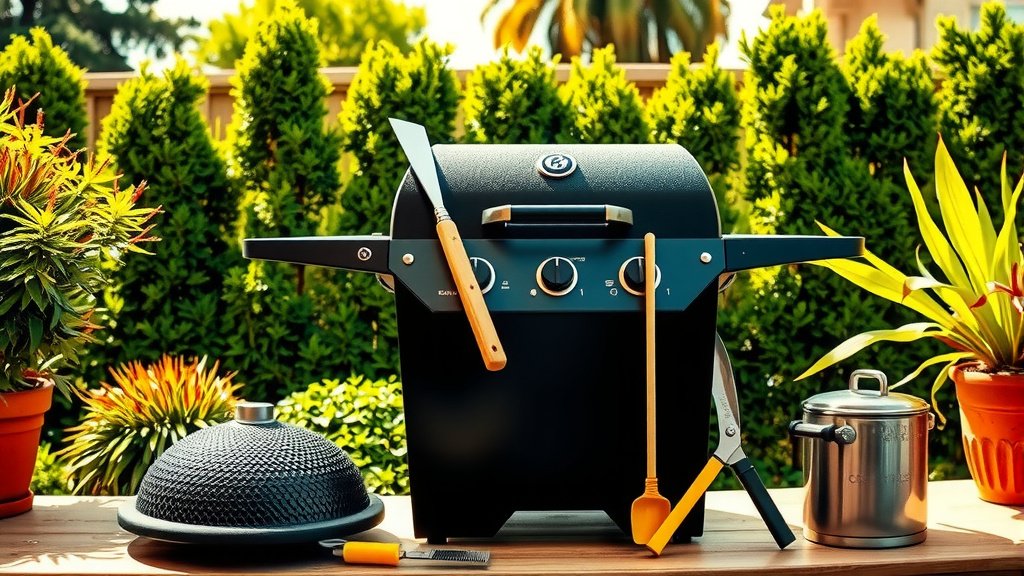
To restore a Blackstone Grill, begin by thoroughly cleaning the griddle surface to remove rust and old seasoning, then re-season it with several thin layers of cooking oil.
This process typically involves scraping, scrubbing with a rust eraser or sandpaper, washing, drying completely, and then applying and burning off multiple thin coats of oil to protect your Blackstone griddle.
- Clean and Scrape: Remove all rust and old food residue from your Blackstone.
- Deep Scrubbing: Use abrasives like steel wool or a rust eraser for tough spots.
- Wash and Dry: Clean the surface with warm water, then dry it thoroughly to prevent new rust.
- Re-Seasoning: Apply multiple thin layers of high smoke point oil, burning each layer off.
- Regular Maintenance: Keep your griddle seasoned and clean after every use for longevity.
How To Restore A Blackstone Grill?
Restoring a Blackstone Grill means bringing its cooking surface back to a non-stick, rust-free, and ready-to-use condition, often involving a deep clean and fresh seasoning.
You’re probably looking at your Blackstone and thinking, “Can I save this?” We get it. A well-loved griddle can look pretty rough after many cooks, but restoration is absolutely possible.
Why Does Your Blackstone Need Restoring?
Over time, your griddle faces a lot. Food sticks, seasoning wears down, and sometimes, you might even spot a bit of rust. It’s a natural part of using any metal cooking surface.
Maybe you forgot to oil it after a cook, or perhaps it sat uncovered in humid weather. Whatever the reason, these issues can impact your cooking experience and the taste of your food.
The Enemy: Rust and Pitted Surfaces
Rust is iron oxide, a result of iron meeting moisture and oxygen. On your Blackstone, it appears as reddish-brown patches, making your griddle less non-stick and potentially unsafe for cooking.
Pitted surfaces occur when rust eats into the metal. This makes food stick even more and can be tricky to clean. But don’t worry, most issues are fixable with a little effort.
Gather Your Restoration Toolkit
Before you start, make sure you have the right tools. Having everything ready saves time and frustration. Think of it like preparing for a cooking adventure!
- A sturdy metal spatula or scraper
- Griddle cleaning bricks or heavy-duty scrub pads
- Steel wool (fine and coarse grades)
- Rust eraser or sandpaper (medium to fine grit)
- High smoke point cooking oil (flaxseed, grapeseed, avocado)
- Paper towels or clean lint-free rags
- Warm water
- Heat-resistant gloves
Step-by-Step Restoration Process
Ready to bring your Blackstone back to life? This process might seem like a lot, but taking it step-by-step makes it manageable. You’ll be cooking on a fresh surface soon!
Step 1: Scrape Off the Gunk
First, heat your griddle to a medium-high temperature. This helps loosen any old food bits and seasoning. Use your metal scraper to push off anything loose into the grease trap efficiently.
Apply firm pressure, working across the entire surface. Don’t be shy; you want to remove as much debris as possible. Many experts agree initial scraping is crucial for deep cleaning.
Initial Scraping Tips
Angle your scraper slightly for best results. Work in sections, moving from the back to the front. You’ll see a lot of black residue come off, which is a good sign that you’re making progress.
Step 2: Tackle the Rust and Old Seasoning
Once cooled, it’s time for the heavy lifting. Use your griddle brick or steel wool on any remaining stubborn spots. For rust, apply consistent pressure to grind it away. This step is where the real transformation begins.
If you have really tough rust or pitting, research shows that finer grit sandpaper can be highly effective. Work in small circular motions until the shiny metal underneath begins to show. Remember, patience is your friend here.
Abrasive Options for Stubborn Rust
Many griddle enthusiasts find a rust eraser works wonders for light to medium rust. For heavier spots, a combination of coarse steel wool followed by a finer grade is often recommended. Always wear heat-resistant gloves for safety.
Some even suggest using a drill attachment with a wire brush for very large, heavily rusted areas, but always use extreme caution and protect your eyes when trying such methods.
Step 3: Wash It Down (Carefully!)
After all that scrubbing, you’ll have a lot of dust and residue. Now, grab some warm water and a clean rag or paper towels. Wipe down the entire surface thoroughly. Avoid using soap, as it can strip away existing seasoning or make new seasoning harder to build. The goal is to simply rinse away the debris.
Post-Wash Drying is Key
Immediately after washing, turn on your griddle to medium heat. You want to completely evaporate all moisture from the surface. Any lingering water droplets will cause flash rust, undoing your hard work. Watch for steam, and once it stops, your griddle is ready for the next step.
Step 4: The Crucial Re-Seasoning
This is where your griddle gets its non-stick protection and beautiful dark patina back. Seasoning is simply baking thin layers of oil onto the metal, creating a protective barrier. It’s like giving your griddle a fresh coat of armor.
Choosing the Right Seasoning Oil
Selecting the right oil is important for a durable seasoning. You need an oil with a high smoke point that polymerizes well. Many sources found that certain oils excel at creating a strong seasoning layer.
| Oil Type | Smoke Point | Pros | Cons |
|---|---|---|---|
| Flaxseed Oil | 350°F (177°C) | Excellent durable seasoning | Expensive, can be brittle |
| Grapeseed Oil | 420°F (216°C) | Good all-around, high smoke point | Less durable than flaxseed |
| Avocado Oil | 520°F (271°C) | Very high smoke point, neutral flavor | More costly than others |
| Vegetable Oil | 400-450°F (204-232°C) | Affordable, easy to find | Less durable seasoning |
Layering for a Perfect Finish
Apply a very thin, even layer of your chosen oil to the entire griddle surface using a paper towel. Think “barely there” thin. Too much oil will result in a sticky, gummy surface. Then, turn your griddle to high heat. You’ll see it smoke—that’s the oil polymerizing and bonding to the metal. Let it smoke until it stops, usually 15-20 minutes, or until the surface turns dark and dry. Turn off the griddle and let it cool slightly. Repeat this oiling and heating process at least 4-5 times. Many experts suggest 5-7 layers for a robust seasoning (Blackstone Griddle Owners Manual).
Maintaining Your Restored Griddle
Once restored, you want to keep that beautiful surface. Regular cleaning and re-oiling are your best friends. It’s much easier to maintain than to restore again. A few simple habits will make a big difference.
After each cook, scrape off food residue while the griddle is still warm. Then, add a small amount of water to deglaze and scrape again. Finish by wiping with a paper towel and applying a very thin layer of cooking oil. This quick routine helps preserve your hard work.
Here’s a quick checklist for daily griddle care:
- Scrape while warm to remove food.
- Deglaze with water if needed.
- Wipe clean with paper towels.
- Apply a thin layer of cooking oil.
- Cover your griddle when not in use.
Common Restoration Mistakes to Avoid
Restoring your griddle can be straightforward, but a few common missteps can hinder your progress. Avoiding these will make your restoration smoother. We found that these errors pop up quite often with new griddle owners.
One major mistake is using too much oil when seasoning. This leads to a sticky, gummy surface that burns unevenly. Remember, a thin, almost invisible layer is key for polymerization.
Another error is not fully drying the griddle after washing. Any residual water can cause flash rust, forcing you to re-do your cleaning efforts. Always heat your griddle to completely evaporate moisture. Drying is non-negotiable.
When to Call It Quits?
Is there a point of no return for a Blackstone? For most cases, probably not. These griddles are built to be durable and can handle a lot of wear. Most rust and surface issues are fixable with effort.
However, if your griddle surface is severely warped, has deep cracks, or holes that go beyond surface pitting, then restoration might not be effective or safe. In such rare cases, it might be time to consider a replacement. But before you do that, give the restoration process a real try. You might be surprised at what your Blackstone can endure!
Conclusion
Restoring your Blackstone Griddle is a rewarding process that extends its life and improves your cooking. With patience and the right steps—from thorough scraping and scrubbing to careful re-seasoning—you can transform a neglected griddle into a gleaming cooking surface. Remember that regular maintenance is the ultimate key to keeping your griddle in top shape. You’ve got this; enjoy those amazing griddle meals!
FAQ: How often should I re-season my Blackstone grill?
You should aim to re-season your Blackstone grill every time you notice food starting to stick, or if the surface looks dry and dull. For regular users, a light re-seasoning with one or two oil layers might be beneficial every few weeks or months, in addition to the thin layer of oil applied after each use.
FAQ: Can I use soap to clean my Blackstone during restoration?
During the restoration process, it’s best to avoid soap directly on the griddle surface. Soap can strip away existing seasoning and may make it harder for new seasoning layers to properly bond. Stick to warm water and thorough scraping/scrubbing for cleaning.
FAQ: What’s the best oil for seasoning a Blackstone griddle?
Many experts agree that high smoke point oils like grapeseed oil, avocado oil, or flaxseed oil are excellent choices for seasoning a Blackstone griddle. Vegetable oil and canola oil are also good, more affordable options. The most important factor is applying very thin layers and letting each layer completely polymerize.
FAQ: How do I prevent rust on my Blackstone after restoration?
To prevent rust after restoration, always keep your griddle seasoned, apply a thin layer of cooking oil after every use, and ensure it’s completely dry before covering. Store your Blackstone in a dry environment and use a griddle cover to protect it from moisture and humidity.
FAQ: Is it possible to restore a heavily rusted Blackstone?
Yes, it is definitely possible to restore a heavily rusted Blackstone griddle in most cases. It might require more elbow grease, stronger abrasives like steel wool or sandpaper, and more seasoning layers, but the underlying steel is typically resilient enough to be brought back to life.
