
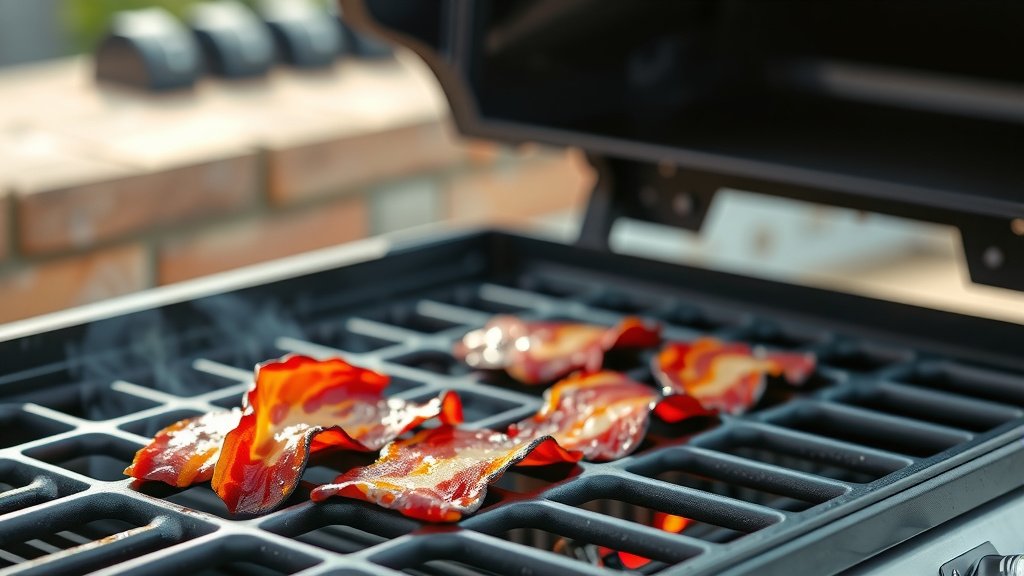
To cook bacon on a gas grill, preheat your grill to a steady medium-low heat, aiming for 350-375°F (175-190°C), then lay the strips flat directly on the grates or in a cast-iron skillet.
Keep a close eye on the bacon, flipping it every few minutes until it crisps to your liking, which usually takes about 10-15 minutes for perfectly grilled, smoky strips.
- Preheat your gas grill to medium-low, about 350-375°F (175-190°C), for even cooking.
- You can cook bacon directly on grates or in a cast-iron pan for different results.
- Flip bacon frequently to ensure uniform crispiness and prevent burning.
- Grilling adds a fantastic smoky flavor that a stovetop simply cannot match.
- Always keep a vigilant watch to prevent flare-ups, especially with fatty foods like bacon.
How To Cook Bacon On A Gas Grill?
Cooking bacon on a gas grill involves setting the right temperature and choosing your cooking method, either direct on the grates or using a pan. We found that maintaining a consistent heat is key for perfect results.
Why Grill Your Bacon? The Flavor Factor
Have you ever thought about the amazing flavor grilling adds? Cooking bacon outside means you get that wonderful smoky taste infused into every slice. It’s a game-changer for your breakfast or burger toppings.
Plus, grilling bacon helps keep your kitchen clean. No greasy splatters all over your stovetop! It’s a win-win situation for flavor and tidiness.
Safety First: Essential Grill Practices
Cooking with fat on a grill requires attention. You need to be mindful of flare-ups, as melting bacon fat can drip and cause flames. Always have a spray bottle of water ready nearby, just in case (USDA).
Never leave your grill unattended when cooking bacon. Things can change quickly, so your watchful eye is your best safety tool.
Choosing Your Bacon Wisely
Not all bacon is created equal for grilling. Thicker-cut bacon often works better as it stands up to the heat without burning too fast. Thin slices might get too crispy too quickly.
Consider the fat content too. More fat means more flavor, but also a higher chance of flare-ups. A good balance is often best for grill cooking.
Gather Your Tools: What You’ll Need
Before you even light the grill, make sure you have everything ready. This makes the cooking process smooth and enjoyable. You wouldn’t start a road trip without packing, would you?
Here’s a quick list to get you organized:
- Gas grill with propane or natural gas.
- Tongs for flipping bacon.
- Heat-resistant gloves (optional, but helpful).
- Paper towels or a wire rack for draining cooked bacon.
- A baking sheet or platter for serving.
- A spray bottle filled with water.
- A heavy-duty cast-iron skillet or griddle (if using this method).
Grill Setup: Temperature is Everything
Preheating is not just a suggestion; it’s a necessity for even cooking. You want your grill grates to be hot enough to sear but not so hot they burn the bacon immediately. We found that a medium-low heat works best.
Aim for an internal grill temperature between 350-375°F (175-190°C). This allows the fat to render slowly, giving you crispy, not burnt, bacon. Close the lid for a few minutes after lighting to let it reach temperature.
Two Ways to Grill Bacon: Direct vs. Indirect
You have options when grilling bacon, and each has its pros and cons. Think about what kind of crispiness you’re after and how much smoke you want. Many experts suggest both methods can yield delicious results.
Method 1: Direct on the Grates
Cooking bacon directly on the grates gives it maximum smoky flavor and beautiful grill marks. It requires constant attention, but the results are often worth it. This method is great for quick crisping.
Method 2: Cast Iron Skillet or Griddle
Using a cast-iron skillet or griddle on your gas grill offers more control and less mess. It’s like cooking bacon indoors, but with all the outdoor grill flavor. This method also reduces flare-up risks significantly.
| Feature | Direct on Grates | Cast-Iron Skillet/Griddle |
|---|---|---|
| Smoky Flavor | Maximum | Good (via grill smoke) |
| Crispiness | Very crispy, slight char | Evenly crispy |
| Flare-Up Risk | High | Low |
| Cleanup | Grill grates, drip pan | Skillet, less grill cleanup |
| Control | Less direct control | More precise control |
The Cooking Process: Step-by-Step
Ready to get grilling? Let’s walk through the steps for perfect bacon, whether you choose direct heat or a skillet.
For Direct Grilling:
- Once your grill is preheated to medium-low, arrange bacon slices in a single layer on the clean grates. Do not overlap them.
- Close the lid for 2-3 minutes to let the heat penetrate.
- Open the lid and flip the bacon using tongs.
- Continue cooking, flipping every 2-3 minutes, until it reaches your desired crispiness. This usually takes 10-15 minutes total.
- Watch carefully for flare-ups! If they occur, move the bacon to a cooler spot or spray with water.
- When done, transfer the bacon to a plate lined with paper towels to drain excess fat.
For Skillet Grilling:
- Place a cast-iron skillet or griddle on your preheated grill.
- Allow the skillet to heat up for about 5-7 minutes. You can add a tiny bit of oil, but it’s often not needed.
- Lay bacon slices in a single layer in the hot skillet.
- Cook, flipping every few minutes, until the bacon is crispy and golden brown. This method often takes a bit longer, 15-20 minutes.
- Once cooked, carefully remove the skillet from the grill using heat-resistant gloves.
- Transfer bacon to a paper towel-lined plate to drain.
Signs of Perfect Doneness
How do you know when your bacon is just right? It really comes down to personal preference. Some people like it chewy, while others prefer it shatteringly crisp.
Look for a rich golden-brown color and the edges to curl slightly. The fat should be rendered and translucent, not white and raw. It should have a slightly firm texture when you pick it up with tongs.
Post-Grill Cleanup: Keep It Tidy
Once you’ve enjoyed your delicious grilled bacon, it’s time for a quick cleanup. This prevents lingering grease and keeps your grill ready for its next use.
If you cooked directly on grates, turn up the heat for 5-10 minutes to burn off any remaining fat. Then, brush the grates clean with a grill brush. For skillet users, let the skillet cool, then wash it as usual.
Your Grilled Bacon Checklist:
- Grill preheated to 350-375°F.
- Bacon laid in a single layer.
- Tongs ready for flipping.
- Spray bottle nearby for flare-ups.
- Bacon flipped every 2-3 minutes.
- Cooked to desired crispiness.
- Drained on paper towels.
Conclusion
Grilling bacon on a gas grill is a fantastic way to elevate your breakfast or sandwich game. You get incredible smoky flavor, less kitchen mess, and a truly enjoyable cooking experience outdoors. By following these simple steps—preheating your grill, choosing your cooking method, and staying attentive—you’re well on your way to perfectly crispy, flavorful bacon every time. So, fire up that grill and enjoy a fresh take on a classic!
Can I use aluminum foil to cook bacon on a gas grill?
Yes, you can use heavy-duty aluminum foil to cook bacon on a gas grill. Lay the bacon strips flat on a sheet of foil, creating a slight lip to contain grease, then place the foil directly on the grates. This method helps reduce flare-ups and makes cleanup easier, though the bacon might not get as crispy or smoky as direct grilling.
How do I prevent bacon from burning on the grill?
To prevent bacon from burning, ensure your grill is set to medium-low heat (around 350-375°F). Flip the bacon frequently, every 2-3 minutes, to promote even cooking and prevent one side from overcooking. Also, monitor for flare-ups and move the bacon to a cooler part of the grill or spray with water if flames appear.
What kind of bacon is best for grilling?
Thicker-cut bacon is generally best for grilling because it holds up better to the heat and is less prone to burning quickly compared to thinner slices. While standard-cut bacon can work, extra-thick or specialty cuts give you more control and a richer texture.
How long does it take to cook bacon on a gas grill?
Cooking bacon on a gas grill typically takes between 10 to 20 minutes, depending on your grill’s temperature, the bacon’s thickness, and your desired level of crispiness. Direct grilling often takes 10-15 minutes, while using a cast-iron skillet might extend cooking time to 15-20 minutes.
Can I reuse the bacon grease from grilling?
Yes, you can collect and reuse the bacon grease from grilling, especially if you used a cast-iron skillet. Simply pour the cooled grease through a fine-mesh strainer into a heat-safe container. Bacon grease adds wonderful flavor to many dishes, like eggs, vegetables, or even cornbread.
