
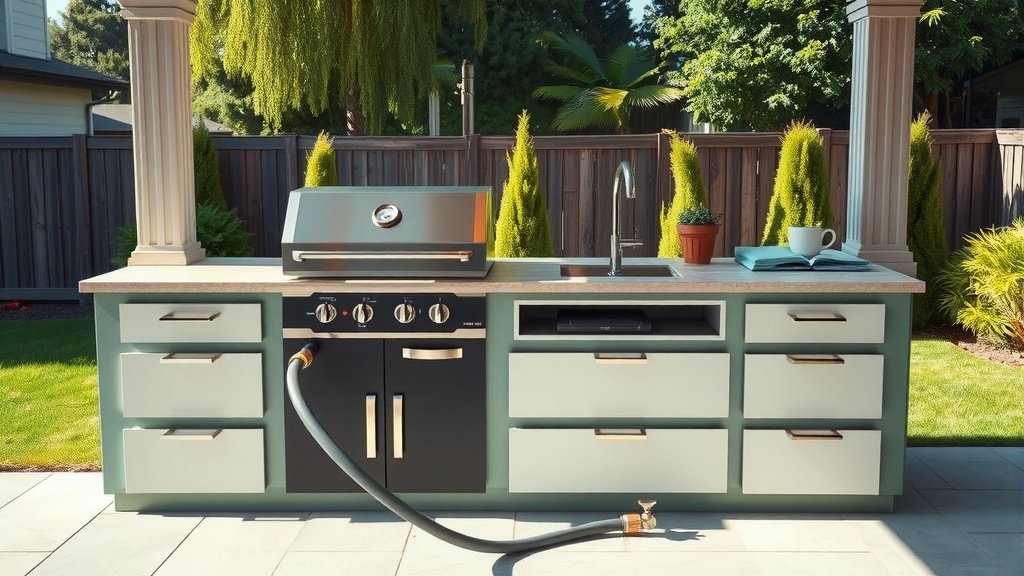
To run a natural gas line for an outdoor grill, you’ll need to plan the route, dig a trench (if underground), connect to your existing gas supply, install proper piping and fittings, and always test for leaks before use.
This is a project that often requires a permit and professional assistance to ensure safety and compliance with local building codes, especially when dealing with gas.
- Running a natural gas line for an outdoor grill involves careful planning and safety checks.
- You’ll need to understand local permits and regulations before starting any work.
- Key steps include line sizing, choosing proper materials, and meticulous leak testing.
- Many homeowners opt for professional help to ensure a safe, compliant installation.
- Always prioritize safety, like turning off your gas supply and calling utility locators.
How To Run Natural Gas Line For Outdoor Grill?
Running a natural gas line for your outdoor grill connects your appliance directly to your home’s gas supply. This removes the need for propane tanks and offers a continuous fuel source for your grilling enjoyment.
Why Consider Natural Gas for Your Grill?
Imagine never running out of fuel in the middle of a cookout. That’s the main perk! Natural gas is also often more cost-effective than propane over time, especially for frequent grillers. You get consistent heat and a clean burn, making your grilling experience smoother.
It adds a touch of convenience that many grill enthusiasts appreciate. No more trips to refill tanks means more time enjoying your backyard.
Is Running a Gas Line a DIY Project?
Many homeowners ask this important question. While some steps seem straightforward, working with natural gas carries serious risks. We found that many experts strongly advise against DIY for the main connections to your home’s gas supply (NFPA 54 guidelines).
Safety is the priority. An improper connection can lead to gas leaks, which are incredibly dangerous. Always consult with a licensed professional for the critical parts of this project.
Permits and Regulations: Your First Step
Before you even think about tools, you must check local building codes. You will almost certainly need a permit for any gas line extension. Many cities require inspections by a certified professional. We found that ignoring these steps can cause problems down the line, including safety hazards and issues with home insurance.
Also, remember to call 811 a few days before any digging. They will mark underground utility lines to prevent accidental damage. This free service protects you from serious harm or costly repairs.
Key Components You’ll Need
Gathering the right materials is crucial for a safe and durable installation. You’ll want components rated specifically for natural gas use outdoors. Think about your local weather conditions too; some materials handle extreme temperatures better.
- Black iron pipe or CSST (Corrugated Stainless Steel Tubing) approved for gas.
- Gas shut-off valve (full port ball valve).
- T-fitting for connecting to your existing gas line.
- Thread sealant approved for natural gas.
- Quick-disconnect fitting for your grill hose.
- Flexible gas line hose specifically for outdoor grills.
- Pipe wrenches and other basic plumbing tools.
- Trenching tools (if running underground).
Understanding Gas Line Sizing
Pipe sizing is not a guesswork game. It depends on your grill’s BTU rating and the length of the gas line run. Too small a pipe means your grill won’t get enough fuel, leading to low flames and frustrating cooks. Too large, and you waste materials and effort.
Many guidelines point to matching the line size to the appliance’s demand (International Fuel Gas Code). Consult with a professional or use online sizing charts. Here’s a simplified table to give you an idea:
| Grill BTU Rating | Pipe Length (Feet) | Recommended Pipe Size (IPS – Iron Pipe Size) |
|---|---|---|
| 40,000 BTU | 20 feet | 1/2 inch |
| 60,000 BTU | 20 feet | 3/4 inch |
| 40,000 BTU | 50 feet | 3/4 inch |
| 60,000 BTU | 50 feet | 1 inch |
Planning Your Route
Think about the safest and most direct path from your existing gas line to your grill. Will it be buried underground, or will it run above ground along a wall? Underground lines need to be buried at a specific depth, usually 12-18 inches, to protect them from damage (local codes vary).
Avoid running the line under structures, driveways, or areas where heavy equipment might traverse. Ensure there is adequate support if running above ground. A well-planned route saves time and prevents future problems.
The Installation Process: Step-by-Step
This overview assumes you have planned thoroughly and secured any needed professional help. Remember, safety always comes first.
Turning Off Your Gas Supply
Before any work begins, you must turn off the main gas supply to your home. Locate your main gas shut-off valve, usually near your gas meter. Turn the valve so the handle is perpendicular to the pipe. This critical step prevents gas leaks during connection.
Connecting to the Main Line
This is where professional help is most often needed. A T-fitting is typically used to branch off your existing gas line. Install a dedicated shut-off valve right after the T-fitting. This allows you to turn off gas to just the grill line without affecting the rest of your home.
Running the Line
Carefully run your chosen gas line material along your planned route. If burying, ensure the trench is dug to the required depth and free of sharp objects. If running above ground, secure the pipe with appropriate hangers and supports every few feet.
Installing the Quick-Connect Fitting
At the grill end of the line, install a quick-disconnect fitting. This handy component allows you to easily connect and disconnect your grill’s flexible hose. It’s a nice feature for moving your grill for cleaning or storage.
Testing for Leaks
This is a non-negotiable step. With the main gas supply still off, reconnect your flexible hose to the grill. Turn on the gas supply to your home. Then, open the new shut-off valve you installed. Spray a soapy water solution (dish soap and water) over all new connections. Bubbles indicate a gas leak.
Turning Gas Back On
If no bubbles appear, you’ve likely achieved a good seal. Turn off the new shut-off valve to the grill line. Then, slowly turn your home’s main gas supply back on. Once confirmed, you can open the grill line valve and use your outdoor grill.
Safety First: Non-Negotiables
Working with gas means safety is paramount. Never rush or take shortcuts. If at any point you feel unsure, stop and call a professional. It’s better to spend a little extra for peace of mind than risk your safety or property.
- Call 811 before digging.
- Turn off main gas supply before working.
- Use only approved materials for gas lines.
- Apply proper thread sealant.
- Test all connections thoroughly for leaks.
- Consult local codes and obtain permits.
- Hire a licensed gas technician for connections to the main line.
Cost Considerations
The cost varies greatly. A DIY project saves on labor but still involves material costs, permit fees, and potentially renting trenching equipment. Hiring a professional will include labor, materials, and permit handling. Many experts found that professional installation often ranges from a few hundred to over a thousand dollars, depending on line length and complexity.
Consider the long-term benefits of safety and peace of mind when weighing the costs. A proper installation adds value to your home and endless grilling enjoyment.
Conclusion
Running a natural gas line for your outdoor grill transforms your outdoor cooking experience, offering unmatched convenience and consistent fuel. While the idea of tackling this project yourself is appealing, the safety implications of working with natural gas are significant. Always prioritize thorough planning, understanding local regulations, and securing proper permits.
Whether you choose to involve a professional for the entire job or just for the critical connections, ensure every step is completed meticulously. With careful execution and adherence to safety protocols, you’ll soon enjoy the endless flames of your natural gas grill.
What kind of pipe is best for an outdoor gas grill line?
For outdoor natural gas lines, black iron pipe is a traditional and durable choice. Corrugated Stainless Steel Tubing (CSST) is also very popular due to its flexibility and ease of installation, but it requires specific bonding and grounding according to code.
Do I need a drip leg on my outdoor gas line?
Yes, many building codes require a drip leg (sediment trap) at the lowest point of the gas line before the appliance connection. This collects any debris or moisture in the gas stream, protecting your grill’s internal components.
How deep should a buried gas line for a grill be?
The required depth for a buried gas line varies by local code, but it’s typically between 12 to 18 inches. Always check with your local municipality or building department to confirm the exact depth required in your area.
Can I connect a natural gas grill directly to my home’s propane tank line?
No, natural gas and propane use different pressures and burner orifices. You cannot directly connect a natural gas grill to a propane tank line, nor vice versa. Such a connection would be extremely dangerous and damaging to the grill.
How do I test for gas leaks safely after installation?
The safest and most common method is to apply a soapy water solution (dish soap mixed with water) to all connections. If bubbles form, it indicates a gas leak. Always ensure your home’s main gas supply is turned off during initial work, and only turn it on slowly for leak testing.
