
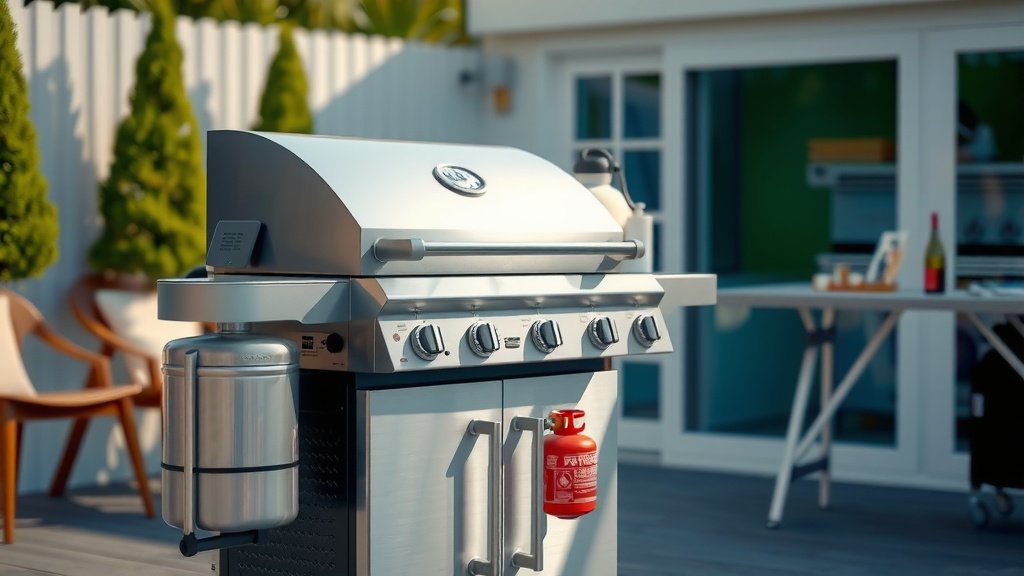
To connect propane to a gas grill, first ensure your grill and tank valves are off. Then, attach the grill’s regulator hose to the propane tank’s valve, twisting clockwise until snug.
Always perform a leak test with soapy water on all connections to ensure safe operation before lighting your grill.
- Safety First: Always turn off grill and tank valves before starting any connection.
- Inspect Connections: Check the grill regulator hose and propane tank valve for damage.
- Tighten Clockwise: Connect the regulator hose to the tank valve by turning it clockwise until it’s hand-tight.
- Leak Test is Essential: Use a soapy water solution to check for bubbles at connections, indicating a leak.
- Ignite Safely: Only light the grill once you’ve confirmed there are no leaks.
How To Connect Propane To Gas Grill?
Connecting a propane tank to your gas grill is a straightforward process when you follow safety steps. You will attach the grill’s regulator hose to the tank valve, ensuring a secure, leak-free seal.
Safety First: Your Grill Master’s Golden Rule
Before you even think about grilling, safety is your top priority. Treating your grill and propane tank with respect keeps everyone safe. We found that gas grill accidents often link back to improper connections or lack of maintenance (National Fire Protection Association – NFPA).
Understanding Propane Tank Valves
Your propane tank has a main valve on top. This controls the flow of gas. Always make sure this valve is fully closed before you begin any connection work. This prevents gas from escaping.
Gather Your Supplies: What You Will Need
You don’t need a lot of special tools for this job. Most of what you need is likely already part of your grill setup. What’s required, you ask? Just your propane tank, your gas grill, and a little soapy water.
- A filled propane tank
- Your gas grill with its attached regulator hose
- A spray bottle or small bowl
- Dish soap and water
Step-by-Step Propane Tank Connection
Let’s walk through connecting your tank. This process is like shaking hands: it needs to be firm, but not overly aggressive. Getting this right is key to your grilling success and safety.
Positioning Your Tank Correctly
Place your propane tank on a level surface next to your grill. Many grills have a special spot or hook for the tank. Ensure the tank is upright and stable. It should not wobble or tip easily.
Attaching the Regulator Hose
Locate the regulator hose coming from your grill. It has a large black or green connector on the end. This connector screws onto the valve on your propane tank. Line up the connector with the tank valve. Gently turn it clockwise. You’ll feel it catch the threads.
Tightening the Connection Securely
Continue turning the connector clockwise until it feels snug. Most modern connectors are designed to be hand-tightened only. You should not need a wrench. Over-tightening can damage the connection. Many experts say a good, firm hand-tightening is plenty.
The Essential Leak Test: Your Safety Net
Never skip this step! A leak test is your best friend when connecting a propane tank. It finds potential gas leaks before they become a big problem. This simple test confirms your connection is gas-tight.
Preparing Your Soapy Water Solution
Mix equal parts dish soap and water in a spray bottle or small bowl. You want a solution that creates good, visible bubbles. Think of it like bubble bath for your connections.
Performing the Leak Check
Once your tank is connected, turn the propane tank valve on slowly, counter-clockwise. You will hear a hiss for a moment, then it should quiet. Spray or brush your soapy water mixture liberally onto the tank valve and the regulator connection. Watch closely for bubbles.
What to Do If You Find a Leak
Seeing bubbles? Don’t panic! Bubbles mean gas is escaping. Turn off the propane tank valve immediately. Do not light your grill if you see bubbles or smell gas.
| Leak Test Result | What to Do Next |
|---|---|
| Small bubbles at connection | Turn off the tank valve. Tighten the connection a bit more. Retest with soapy water. |
| Large, persistent bubbles | Turn off the tank valve. Disconnect the regulator. Inspect the hose and connector for damage or dirt. Reconnect and retest. If issues persist, replace the hose. |
| Gas smell (even without bubbles) | Turn off the tank valve immediately. Do not use the grill. Move the grill to a well-ventilated area. Call a qualified technician or supplier for inspection. |
Turning On Your Gas Grill Safely
With a confirmed leak-free connection, you are ready to light up. Turn on the propane tank valve slowly, all the way open. Then, open your grill’s lid. Turn one burner knob to a “light” or “high” setting. Push the igniter button. The burner should light. If not, try again. Once one burner is lit, you can turn on others as needed.
Pre-Grill Season Checklist
A quick check before your first grill session can save you headaches later. We found that a brief inspection helps prevent many common problems.
- Check regulator hose for cracks, kinks, or damage.
- Ensure the tank valve is fully closed before connecting.
- Have your soapy water solution ready for the leak test.
- Confirm all grill burner knobs are in the OFF position.
- Know your specific grill’s lighting instructions.
Disconnecting Your Propane Tank
When the tank is empty or you need to store your grill, disconnecting is easy. First, turn off all the grill burner knobs. Then, turn the propane tank valve completely off by rotating it clockwise. Once the tank valve is off, you can unscrew the regulator connection counter-clockwise. Store your tank upright in a well-ventilated area.
Conclusion
Connecting your propane tank to your gas grill might seem like a small task, but getting it right ensures safe and enjoyable grilling. Always remember to prioritize safety by checking for leaks. Following these straightforward steps means you are ready to fire up your grill with confidence. Enjoy creating delicious meals outdoors!
FAQ: How Often Should I Check My Propane Hose?
You should inspect your propane hose for cracks, kinks, or damage at least once a year, ideally before your first use of the grilling season. If you grill often, checking it every few months is a smart move. Damage can occur from sun exposure, pets, or improper storage.
FAQ: Can I Use a Wrench to Tighten the Propane Connection?
No, you should not use a wrench to tighten the propane connection on most modern grills. These connections are designed for hand-tightening only. Using a wrench can over-tighten the connection, potentially damaging the threads on the valve or regulator, which could create a dangerous gas leak.
FAQ: What If My Grill Won’t Light After Connecting the Tank?
If your grill doesn’t light, first confirm the propane tank valve is fully open. Then, ensure you hear gas flowing when you turn on a burner. If not, your regulator might be in “bypass mode” (a safety feature). Try turning off all burners, closing the tank valve, disconnecting and reconnecting the regulator, then slowly opening the tank valve again before trying to light.
FAQ: Is It Normal to Hear a Hissing Sound When Turning On the Tank?
A very brief hiss when you first open the propane tank valve is common as gas enters the regulator. However, if the hissing continues or is loud, it indicates a leak. Turn off the tank valve immediately and perform a soapy water leak test as described in the article.
FAQ: Can I Leave My Propane Tank Connected to the Grill All the Time?
While many people leave their propane tanks connected, it is generally safer to turn off the tank valve after each use. For long-term storage or if you will not be using the grill for an extended period, it’s best to disconnect the tank and store it separately in a well-ventilated, upright position.
