
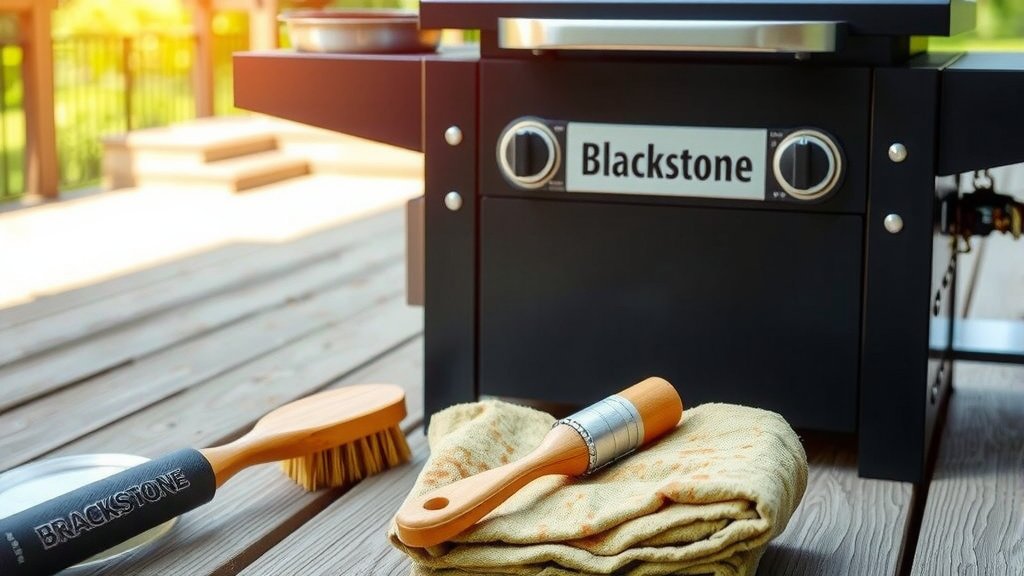
You can effectively clean rust off a Blackstone grill by using a white vinegar and water solution, followed by vigorous scrubbing with an abrasive pad. Always rinse the griddle well and immediately re-season it to build back its protective layer.
To remove rust from your Blackstone griddle, warm the surface, scrape off loose debris, then apply a vinegar-based solution and scrub with steel wool or a scour pad before rinsing and re-oiling.
TL;DR: Getting rust off your Blackstone griddle is straightforward if you follow a few key steps:
- Before you start, make sure you have the right tools ready.
- Heat the griddle gently to loosen any debris and then scrape it clean.
- Use a simple acidic solution, like vinegar, to break down the rust.
- Scrub the rusted areas with an abrasive pad until the rust is gone.
- Rinse the griddle completely and dry it very quickly to avoid new rust.
- Finally, apply several thin layers of cooking oil to re-season and protect your griddle surface.
How To Clean Rust Off Of A Blackstone Grill?
Cleaning rust off your Blackstone grill might seem daunting, but it’s a manageable task if you approach it systematically. We found that restoring your griddle to its former glory involves a few clear steps, focusing on safe and effective methods.
Why Does Your Blackstone Grill Rust?
Your Blackstone griddle is made from rolled steel, which is prone to rust when exposed to moisture and air without proper protection. Think of it like an iron skillet; if you don’t keep it seasoned, rust spots will appear.
Many experts say that improper seasoning or neglect after use are the main culprits. If the protective oil layer wears thin, or if moisture sits on the surface, rust can begin its work pretty quickly.
Recognizing Rust Types
Most rust you’ll find on a Blackstone is surface rust. This looks like reddish-brown patches on your cooking surface. It’s typically easy to remove. Deeper rust, though less common with proper care, might look pitted or flaky. This type requires a bit more effort, but it’s still often salvageable.
Essential Tools for Rust Removal
Before you begin the cleaning process, gather your supplies. Having everything ready makes the job much smoother. You’ll need some basic kitchen items and a few specialized cleaning tools. Here is a simple checklist:
- A sturdy metal scraper or griddle scraper
- Heat-resistant gloves (safety first, right?)
- White vinegar or lemon juice
- Water
- A scrub pad (like a Scotch-Brite pad) or steel wool
- Paper towels or clean cloths
- High-smoke point cooking oil (flaxseed, grapeseed, canola, or Blackstone seasoning blend)
- A spray bottle (optional, but very helpful)
The Step-by-Step Rust Removal Process
Ready to tackle that rust? Let’s walk through the steps together. This process is about being thorough and patient. Remember, you’re restoring a key piece of your outdoor cooking setup!
Step 1: Preheat and Scrape
Start by turning your Blackstone grill on to a medium heat setting for a few minutes. This helps loosen any caked-on food bits and prepares the surface. Once warm, use your metal scraper to remove any loose debris, food particles, or flaking rust.
Push everything into the grease trap. This initial scrape clears the way for the rust removal solution to work more effectively.
Step 2: Apply the Rust Remover Solution
Many people find that a simple acid works wonders. A mixture of white vinegar and water (equal parts) is highly effective. You can put this in a spray bottle for easy application.
If you prefer, lemon juice also contains citric acid and can be used. Apply the solution generously over the rusted areas. Let it sit for about 10-15 minutes. This gives the acid time to start breaking down the rust. You might even see some bubbling!
The Vinegar Method vs. Lemon Juice
Both vinegar and lemon juice are natural acids that help dissolve rust. Here’s a quick comparison:
| Feature | White Vinegar Method | Lemon Juice Method |
|---|---|---|
| Availability | Common household item | Also common, but can be pricier |
| Strength | Typically 5% acetic acid | Citric acid content varies |
| Odor | Strong, distinct vinegar smell | Fresh, citrus smell |
| Effectiveness | Highly effective for surface rust | Very good, especially with salt |
| Cost | Very inexpensive | Slightly higher cost per use |
Step 3: Scrub Away the Rust
Now for the elbow grease! Put on your heat-resistant gloves. Using your scrub pad or steel wool, vigorously scrub the rusted areas. You’ll see the rust lifting away as you scrub. If the solution dries out, reapply more vinegar mix.
Keep scrubbing until the rusty spots are gone and you see the bare metal. It might take some effort, but you’re getting there! Some research we found suggests that using a small amount of oil with the abrasive pad can also help lubricate the scrubbing process (Blackstone Grills Official Guide).
Step 4: Rinse and Dry Thoroughly
Once the rust is gone, it’s vital to rinse the griddle completely. Use clean water to wash away all traces of the rust, cleaning solution, and debris. You don’t want any acidic residue left behind.
After rinsing, immediately dry the griddle surface. Use paper towels or clean cloths. The key here is speed, as water will cause new flash rust to form quickly. You can even turn the heat on low for a few minutes to help evaporate any remaining moisture.
Step 5: Re-Season Your Griddle
This step is critical for protecting your griddle from future rust and restoring its non-stick properties. You’ve stripped away the old seasoning along with the rust.
Apply a very thin layer of high-smoke point cooking oil (like flaxseed, grapeseed, or even Blackstone’s own seasoning blend) to the entire cooking surface. Wipe it almost completely off with a paper towel. Then, heat the griddle to a high temperature until the oil stops smoking.
Repeat this process of applying a thin layer of oil, wiping, and heating at least 3-4 times. Each layer bakes on, forming a durable, non-stick, and rust-preventative coating. It’s like giving your griddle a new shield!
Preventing Future Rust on Your Blackstone
An ounce of prevention is worth a pound of cure, right? Once you’ve cleaned off the rust, you want to keep it away. We found that consistent care is your best defense against rust returning.
Always Clean After Each Use
After every cook, while the griddle is still warm, scrape off food debris. A little water can help steam off stubborn bits. Then, dry it completely and apply a very thin coat of cooking oil. This quick routine keeps your seasoning strong.
Seasoning is Your Best Defense
Think of seasoning as your griddle’s armor. The more layers, the better protected it is. Regularly re-seasoning, especially after heavy cleaning or cooking acidic foods, is essential. A well-seasoned griddle is naturally non-stick and highly resistant to rust.
Proper Storage Matters
When not in use, ensure your Blackstone is covered. A griddle cover protects it from rain, dew, and airborne moisture. If possible, store it in a dry area. Even storing it in a garage can make a big difference compared to leaving it exposed to the elements.
Conclusion
Cleaning rust off your Blackstone grill is a very achievable task that breathes new life into your cooking surface. By following these clear steps – identifying the rust, gathering your tools, systematically cleaning, and most importantly, re-seasoning – you can bring your griddle back to optimal condition. Remember, consistent care and proper seasoning are your best friends in the ongoing fight against rust. With a little effort, your Blackstone will be ready to cook countless delicious meals for years to come!
How do I tell if my Blackstone griddle has surface rust or deep rust?
Surface rust typically appears as a reddish-brown discoloration or light patches on the griddle top that aren’t deeply embedded. Deep rust, on the other hand, might show pitting, flaking, or a rough, uneven texture that suggests corrosion has eaten into the metal more significantly.
Can I use steel wool to clean my Blackstone griddle?
Yes, you can use steel wool or an abrasive scrub pad to remove rust from your Blackstone griddle. However, be prepared to re-season the griddle thoroughly afterward, as steel wool will strip away the existing seasoning along with the rust.
What kind of oil should I use to re-season my Blackstone after cleaning rust?
For re-seasoning, use a high-smoke point cooking oil such as flaxseed oil, grapeseed oil, canola oil, or the specific Blackstone brand seasoning and conditioner. These oils polymerize well, creating a durable, non-stick, and rust-protective layer.
Is it safe to cook on a Blackstone griddle that had rust?
Once you have thoroughly cleaned all the rust off your Blackstone griddle and properly re-seasoned it, it is generally safe to cook on. The key is to ensure all the rust has been removed and a fresh, protective seasoning layer has been applied.
How often should I season my Blackstone griddle to prevent rust?
You should ideally apply a thin layer of oil and re-season your Blackstone griddle after every use, especially after any cleaning that involves water. Additionally, a more extensive re-seasoning with several layers of oil is recommended after rust removal or deep cleaning to maintain its protective coating.
