
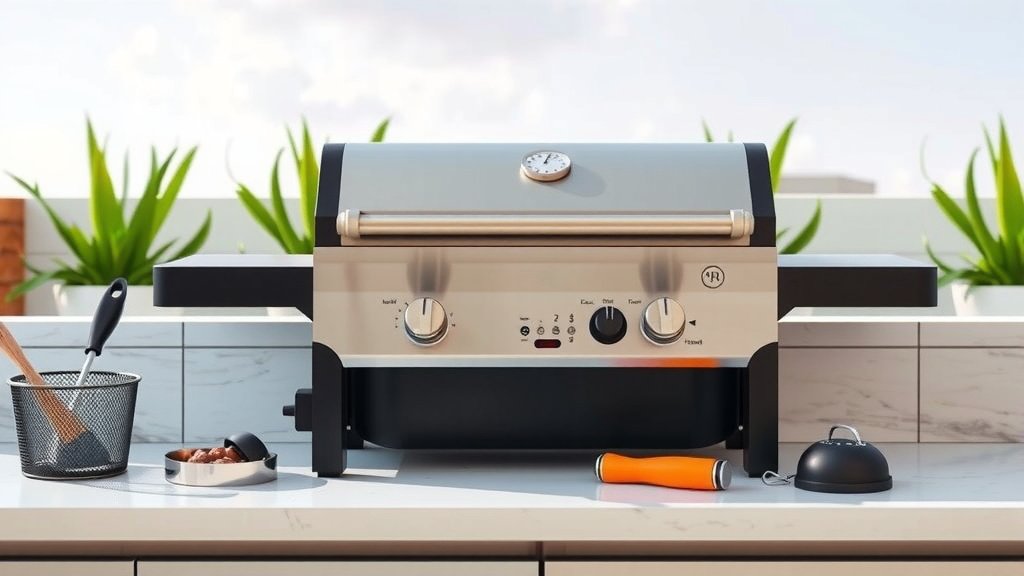
To clean an electric grill effectively, first unplug it and let it cool completely, then remove detachable parts and wipe down grilling surfaces with a damp cloth or sponge.
For tougher grease and food residue, use warm, soapy water and a non-abrasive scrubber, ensuring no water enters the electrical components to properly clean an electric grill.
Here’s a quick summary of what you’ll find:
- Always unplug and cool your grill before starting any cleaning.
- Use warm, soapy water and soft tools for most residue.
- Avoid harsh chemicals or abrasive scrubbers to protect the non-stick coating.
- Proper drying prevents rust and keeps electrical parts safe.
- Regular, light cleaning after each use makes deeper cleans much easier.
How To Clean Electric Grill?
Cleaning your electric grill involves cooling it down, removing detachable parts, and gently wiping the cooking surfaces with warm, soapy water to remove food debris and grease.
Always ensure the grill is unplugged and completely cool before you begin cleaning to avoid burns or electrical hazards.
Why Bother Cleaning Your Electric Grill?
You might wonder, “Is it really that big of a deal?” Yes, it is! A clean grill not only looks better but also cooks better. Imagine trying to grill fresh veggies on a surface covered in last week’s burger remnants.
Research shows that food residue can transfer flavors and even harbor bacteria (Food Safety and Inspection Service). Nobody wants that surprising taste of old steak on their breakfast pancakes, right?
Safety First: Unplug and Cool Down
Before you even think about touching your grill with a sponge, you absolutely must unplug it. No exceptions. Think of it like a safety switch.
Give your grill plenty of time to cool down. Rushing this step could lead to nasty burns or damage to your cleaning tools. Patience is a virtue here, truly.
Gathering Your Cleaning Arsenal
You don’t need fancy tools. Most of what you need is probably already in your kitchen. We find that simple supplies work best for a gentle, effective clean.
Have you ever tried cleaning with the wrong tools? It’s like bringing a spoon to a knife fight – frustrating and ineffective. Let’s make sure you’re properly equipped.
- Soft cloth or sponge
- Mild dish soap
- Warm water
- Paper towels
- Non-abrasive spatula or plastic scraper (for stubborn bits)
- Small brush (optional, for crevices)
Removing Detachable Parts
Many electric grills have removable plates, drip trays, or other components. This makes cleaning so much easier.
Carefully unclip or slide out these parts. Handle them gently to avoid bending or breaking any clips. This is where your grill’s user manual can be quite helpful (appliance manufacturers often include detailed instructions).
Tackling the Grill Plates
The grill plates are where all the action happens, so they’ll likely be the grimiest part. Don’t worry, it’s not as tough as it looks.
Are your grill plates non-stick? Most electric grills feature a special coating that needs gentle care. Abrasive scrubbers are the enemy of these surfaces.
For Light Residue and Grease
If you’ve cleaned your grill shortly after use, chances are the mess isn’t too bad. A simple wipe might do the trick.
Dip a soft cloth or sponge in warm, soapy water. Gently wipe down the grilling surfaces. You’ll see those food bits come right off. Many experts say wiping down immediately after the grill cools is the best practice.
Dealing with Stubborn Baked-On Bits
Sometimes, life gets in the way, and the grill sits for a bit. Baked-on food can be a challenge, but not impossible. Think of it like dried mud on shoes; it needs a little softening.
For those tough spots, we found that letting them soak works wonders. Place a few damp paper towels on the cooled grill plates and let them sit for 10-15 minutes. This helps loosen the crud without scraping.
After soaking, use a non-abrasive plastic scraper or a soft brush to gently lift the loosened bits. Follow up with your soapy sponge. Remember, patience wins the day.
Can You Use a Dishwasher?
Some electric grill plates are dishwasher safe. Always check your grill’s user manual first. If they are, that’s a huge time-saver!
If not, stick to hand washing. The high heat and strong detergents in dishwashers can sometimes damage non-stick coatings not designed for them.
Cleaning the Drip Tray and Housing
The drip tray catches all that delicious fat and juices. While it keeps your countertops clean, it also gets pretty messy itself.
Empty the drip tray and wash it with warm, soapy water. A quick scrub usually does the trick. For the exterior housing, a damp cloth is all you need.
Do you ever forget about the drip tray until it’s overflowing? It’s a common oversight! Regular emptying prevents bigger messes later.
Remember to wipe around the heating elements and the interior housing with a slightly damp cloth, being extremely careful not to get water into any electrical openings. Electricity and water are not friends.
Drying Your Grill Components
This step is often overlooked, but it’s really important. Just like drying dishes, you want your grill parts thoroughly dry before reassembling.
Why is proper drying so important? Moisture can lead to rust on metal parts and, even worse, can cause electrical shorts if it gets into the wrong places (Consumer Product Safety Commission guidelines often highlight moisture hazards).
Use a clean, dry cloth or paper towels to wipe everything down. Let parts air dry for a bit longer if you like. Ensure they are bone-dry before storing or using again.
A Quick Checklist for Cleaning Success
To ensure you’ve covered all your bases, here’s a handy checklist:
- Unplugged and cooled the grill?
- Removed all detachable parts?
- Cleaned grill plates with warm, soapy water and soft tools?
- Scraped stubborn bits gently?
- Washed the drip tray?
- Wiped down the exterior housing?
- Dried all components thoroughly?
When to Clean Your Electric Grill
Timing is everything, even with grill cleaning. The sooner you clean, the easier it generally is.
Think of it like cleaning a dish right after dinner versus letting it sit overnight. Which one is easier? The fresh mess, always.
| Cleaning Frequency | What to Clean | Why It Matters |
|---|---|---|
| After Every Use | Grill plates, drip tray | Prevents food buildup, maintains hygiene, extends non-stick life. |
| Monthly (or every 5-10 uses) | Full grill, housing, cords | Deeper clean, check for wear, ensure all components are working properly. |
Keeping Cords and Plugs Clean
While the focus is often on the cooking surfaces, don’t forget the power cord and plug. These also need a little attention.
Wipe the power cord and plug with a slightly damp cloth to remove any grease or dust. Make absolutely sure they are dry before plugging the grill back in.
Troubleshooting Common Cleaning Challenges
Sometimes you might face extra greasy messes or really sticky food. What then?
For very greasy residue, a small amount of distilled white vinegar diluted with water can sometimes help cut through it. Always test on a small, inconspicuous area first, especially on non-stick surfaces.
Conclusion
Cleaning your electric grill doesn’t have to be a dreaded chore. By following these simple, practical steps, you can keep your grill in top condition, ensuring delicious meals and extending its lifespan.
Remember, a little care goes a long way. Happy grilling!
What kind of soap is safe to use on an electric grill?
You should use a mild dish soap mixed with warm water. Harsh chemical cleaners or abrasive soaps can damage the non-stick coating on your grill plates, so always opt for gentle solutions.
Can I use steel wool or abrasive scrubbers on my electric grill?
No, you should avoid using steel wool, abrasive sponges, or harsh scrubbers. These can scratch and ruin the non-stick surface of your grill plates, making food stick and shortening the grill’s life. Stick to soft cloths or non-abrasive scrubbers.
How do I clean the heating elements on an electric grill?
Typically, electric grill heating elements do not require direct cleaning with water. If there’s any residue, ensure the grill is unplugged and cool, then gently wipe the elements with a dry or very slightly damp cloth. Never immerse heating elements in water.
What if food is really stuck to the grill plates?
For truly stuck-on food, try placing damp paper towels or a wet cloth directly on the cooled grill plates for about 10-15 minutes. This will help soften the residue, making it much easier to scrape off gently with a plastic scraper or soft brush.
How often should I deep clean my electric grill?
While you should wipe down your electric grill’s plates and empty the drip tray after every use, a deeper clean of the entire unit, including the housing and cords, is recommended every 5-10 uses or at least once a month. This keeps it hygienic and performing well.
