
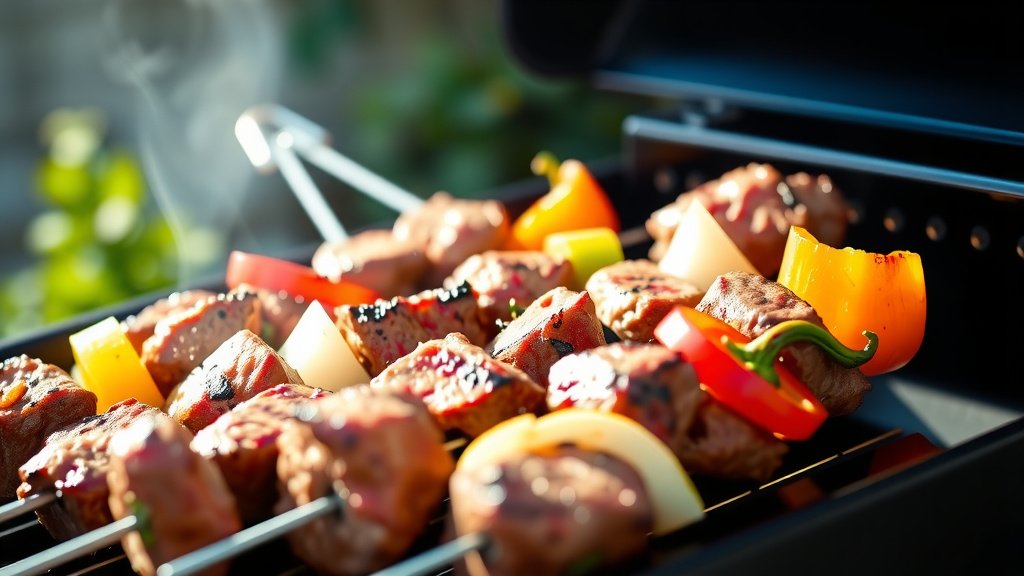
Typically, you’ll grill beef kabobs on a gas grill for 8-12 minutes over medium-high heat, turning them every few minutes for even cooking.
The precise time for grilling beef kabobs depends on factors like the beef cut, thickness, and your preferred doneness, aiming for an internal temperature of 135°F to 145°F for medium-rare to medium.
- For perfect beef kabobs, preheat your gas grill to medium-high (around 400-450°F).
- Grill for 8-12 minutes, flipping every 2-3 minutes, until beautifully seared on all sides.
- Use a meat thermometer to check internal doneness; 135°F for medium-rare, 140°F for medium.
- Always let your kabobs rest for 5 minutes after grilling to keep them juicy.
- Evenly cut beef and vegetables are key for uniform cooking results.
How Long To Grill Beef Kabobs On Gas Grill?
Grilling beef kabobs on a gas grill usually takes about 8 to 12 minutes. This timing ensures deliciously seared edges and a tender, juicy interior, depending on your preferred doneness.
Why Does Grilling Time Vary?
You might wonder why grilling times aren’t always exact. Several elements play a big part in how long your beef kabobs need on the grill. Understanding these will help you cook perfectly every time.
Thickness Matters Most
The size and thickness of your beef chunks are arguably the most critical factor. Thicker pieces require more time to cook through. Aim for uniform 1 to 1.5-inch cubes for the best results, as many grill experts recommend.
Desired Doneness Plays a Role
Do you like your beef kabobs medium-rare, medium, or well-done? Each level of doneness requires a different internal temperature, which directly impacts your grilling time. Your personal preference is key here.
Grill Temperature Fluctuations
Even on a gas grill, temperatures can vary. Wind, outside air temperature, and how often you lift the lid all affect the grill’s heat. Maintaining a consistent medium-high heat is essential for accurate timing.
Choosing the Best Beef for Kabobs
The cut of beef you select makes a huge difference in taste and tenderness. A good choice ensures your kabobs are both flavorful and enjoyable to eat.
Top Sirloin is a Popular Choice
Many grill enthusiasts choose top sirloin for kabobs. It’s a balance of tenderness and beefy flavor, and it’s readily available and affordable. We’ve found it cooks beautifully on the grill (USDA Food Safety and Inspection Service).
Prepping Your Kabobs Right
Great grilling starts long before the meat hits the grates. Proper preparation ensures your beef kabobs are moist, tender, and full of flavor.
The Magic of Marinades
Marinating your beef kabobs isn’t just for flavor; it helps tenderize the meat. Acids in marinades, like vinegar or citrus, help break down muscle fibers. Many chefs agree a good marinade is crucial for juicy kabobs.
Assembling Your Skewers Evenly
For even cooking, try to cut your beef and vegetables to similar sizes. Don’t pack them too tightly on the skewer, either. Leaving a little space allows heat to circulate, cooking everything more uniformly.
Setting Up Your Gas Grill for Success
Your gas grill is a powerful tool, but it needs to be set up correctly. This ensures your kabobs cook perfectly without burning or drying out.
Preheating is Key
Always preheat your gas grill to medium-high heat, typically around 400-450°F, before adding kabobs. This creates a hot surface for a beautiful sear and consistent cooking. Think of it like preheating your oven!
Understanding Hot and Cool Zones
Most gas grills have hotter and cooler spots. Learning where these zones are can help you manage your kabobs. You can move them to a cooler zone if they’re browning too quickly, preventing burns while the inside cooks.
Step-by-Step Grilling for Perfect Kabobs
Once your grill is ready, the actual cooking process is straightforward. Here’s how to achieve those amazing grill marks and perfectly cooked beef.
Flipping and Turning
Place your kabobs directly over the heat. Grill for 2-3 minutes per side, turning them until all sides are nicely seared. This method creates a delicious crust all around your beef. It’s like painting with flavor!
Internal Temperature: Your Best Guide
The best way to know if your beef kabobs are done is to use a meat thermometer. Visual cues can be misleading, but internal temperature never lies.
| Doneness Level | Internal Temperature | Grilling Time (Approx.) |
|---|---|---|
| Rare | 125-130°F | 6-8 minutes |
| Medium-Rare | 135-140°F | 8-10 minutes |
| Medium | 140-145°F | 10-12 minutes |
| Medium-Well | 145-150°F | 12-14 minutes |
| Well-Done | 155°F+ | 14-16 minutes |
Insert the thermometer into the largest piece of beef on a kabob, avoiding the skewer. We found this provides the most accurate reading for food safety (USDA guidelines).
The Critical Resting Period
Once your beef kabobs reach the desired internal temperature, remove them from the grill. Let them rest for 5 minutes on a clean cutting board, covered loosely with foil. This step is non-negotiable for juicy meat.
Resting allows the juices, which have been pushed to the center by the heat, to redistribute throughout the meat. Skip this, and you’ll find those wonderful juices spilling out when you cut into them.
Quick Tips for Amazing Beef Kabobs
Want to ensure your beef kabobs are the talk of the cookout? Here are some quick, actionable tips:
- Soak Wooden Skewers: If using wooden skewers, soak them in water for at least 30 minutes. This prevents them from burning on the grill.
- Don’t Overcrowd the Grill: Leave space between kabobs on the grates. Overcrowding lowers the grill temperature and steams the food instead of searing it.
- Keep an Eye on Veggies: Different vegetables cook at different rates. Consider skewering faster-cooking veggies separately or adding them later.
- Clean Your Grates: Start with clean grill grates to prevent sticking and for those perfect grill marks.
- Have Tongs Ready: Use long-handled tongs to turn kabobs gently. This prevents meat from tearing or falling off the skewer.
- Season Generously: Don’t forget to season your kabobs with salt and pepper, even after marinating, to enhance flavors.
Conclusion
Grilling beef kabobs on a gas grill is a rewarding experience, leading to tender, flavorful results with just a little attention to detail. Remember that 8 to 12 minutes is a great starting point, but always use a meat thermometer to confirm doneness.
By focusing on proper preparation, precise temperatures, and allowing your kabobs to rest, you’ll consistently create delicious meals. Enjoy the grilling process, and savor those wonderful beef kabobs!
How do I know when my beef kabobs are done?
The most reliable way to tell if your beef kabobs are done is by checking their internal temperature with a meat thermometer. Aim for 135-140°F for medium-rare, or 140-145°F for medium doneness. The beef will also have a firm, but not hard, feel.
Should I marinate beef kabobs overnight?
Yes, marinating beef kabobs overnight, for at least 6-8 hours, is ideal for maximizing flavor and tenderness. However, even a 2-hour marinade can make a noticeable difference. Just be cautious with acidic marinades, as marinating for too long can sometimes make the meat mushy.
Can I grill frozen beef kabobs?
We do not recommend grilling beef kabobs from frozen. For best results, always thaw your beef kabobs completely in the refrigerator before grilling. Grilling from frozen can lead to uneven cooking, with the outside burning before the inside is cooked, and can also be a food safety concern.
What vegetables pair well with beef kabobs?
Many vegetables pair wonderfully with beef kabobs! Popular choices include bell peppers (red, yellow, orange), red onion, zucchini, cherry tomatoes, and mushrooms. These vegetables cook at similar rates to the beef and add great color and flavor to your skewers.
How do I prevent beef kabobs from drying out?
To prevent beef kabobs from drying out, ensure you don’t overcook them. Use a meat thermometer to pull them off the grill at your desired internal temperature. Marinating the beef beforehand and allowing the kabobs to rest for a few minutes after grilling also helps lock in moisture.
