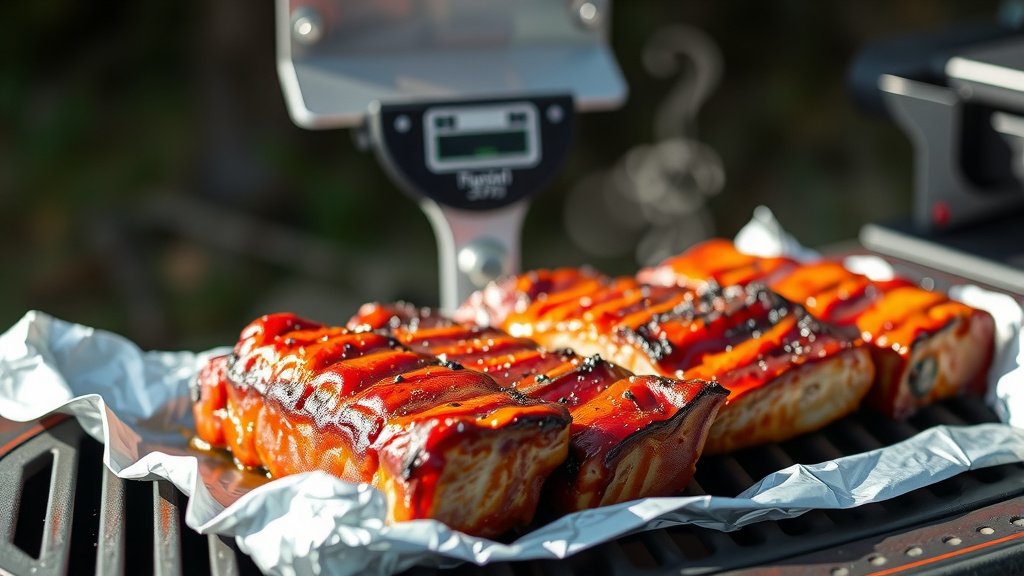
When cooking ribs in foil on a charcoal grill, aim for about 2 hours in the foil packet for baby back ribs and 2.5 to 3 hours for spare ribs, typically at a grill temperature around 225-275°F.
This “foil stage” is a key part of the popular 3-2-1 method, making your ribs incredibly tender and juicy before a final char.
- The foil stage for ribs on a charcoal grill usually lasts 2-3 hours.
- Baby back ribs need less time in foil, often around 2 hours.
- Spare ribs benefit from longer foil time, closer to 2.5 to 3 hours.
- Maintain a consistent grill temperature between 225-275°F for best results.
- This stage tenderizes the ribs, setting them up for a perfect finish.
How Long To Cook Ribs In Foil On Charcoal Grill?
You’re aiming for around 2 to 3 hours in the foil, depending on the type of ribs you’re working with. This step is about tenderness and moisture.
Understanding the “3-2-1” Method
Many pitmasters swear by the 3-2-1 method for cooking ribs, especially on a charcoal grill. It breaks down the process into three distinct stages. The foil stage is the “2” in this popular method.
First, ribs get 3 hours of smoke. Then, 2 hours wrapped in foil. Finally, 1 hour back on the grill unwrapped for a good bark. We found this method consistently delivers excellent results (Cook’s Illustrated).
Why Wrap Ribs in Foil?
Wrapping ribs in foil creates a mini-steamer oven right on your grill. This helps break down tough connective tissues. It also keeps the ribs moist, preventing them from drying out during the long cook.
Think of it like a protective cocoon for your ribs. The foil traps moisture, allowing the ribs to steam in their own juices and any added liquid. This step is crucial for fall-off-the-bone tenderness.
Setting Up Your Charcoal Grill Temperature
Maintaining a steady temperature is vital for great ribs. You want your grill to hover between 225°F and 275°F. This low-and-slow approach allows the ribs to cook evenly.
Use indirect heat on your charcoal grill. Place your coals to one side, and the ribs on the other. This prevents burning and promotes a gentle, consistent cook.
Monitoring Grill Temperature Effectively
A good grill thermometer is your best friend here. Don’t just rely on the one built into your lid; it can be inaccurate. Place an oven-safe thermometer near your ribs for a true reading.
Adjust vents to control airflow and temperature. More open vents mean higher heat. Partially closed vents will bring the temperature down. It’s a bit of a dance, but you’ll get the rhythm.
Baby Back Ribs vs. Spare Ribs in Foil
Not all ribs are created equal, especially when it comes to foil time. Baby back ribs are smaller and leaner. Spare ribs are larger, meatier, and have more connective tissue.
This difference means varying cooking times for each type. Adjusting your foil time ensures both types cook perfectly.
How Long for Baby Back Ribs in Foil?
For baby back ribs, plan on roughly 2 hours in the foil. They cook faster due to their size. After their initial smoke, wrapping them for two hours should get them just right.
When you unwrap them, the ribs should be very pliable. You’ll see the meat start to pull back from the bones. This is a good sign of tenderness.
How Long for Spare Ribs in Foil?
Spare ribs need a bit more patience. We recommend 2.5 to 3 hours in the foil for spare ribs. Their larger size and higher fat content benefit from the extended steam bath.
The extra time helps render fat and break down more connective tissue. This leads to that classic, buttery-soft spare rib texture. Don’t rush this step for truly amazing results.
| Rib Type | Initial Smoke Time (approx.) | Foil Stage Time (approx.) | Final Unwrapped Cook Time (approx.) | Total Cook Time (approx.) |
|---|---|---|---|---|
| Baby Back Ribs | 3 hours | 2 hours | 1 hour | 6 hours |
| Spare Ribs | 3 hours | 2.5-3 hours | 1 hour | 6.5-7 hours |
Preparing Ribs for the Foil Wrap
Before wrapping, consider adding a splash of liquid inside the foil. Apple juice, apple cider vinegar, or beer works well. This liquid helps create that steamy environment.
You can also add a pat of butter or a drizzle of honey. These additions enhance flavor and moisture. Keep it simple, but effective.
Wrapping Techniques for Success
Use heavy-duty aluminum foil. You might even want to double wrap to prevent tears. Tears mean lost moisture and steam, which defeats the purpose.
Wrap them tightly, but don’t crush them. You want a sealed packet. This ensures the steam stays trapped inside, working its magic. Proper wrapping is key to tender ribs.
When to Know They’re Ready to Unwrap
After the recommended foil time, you can perform a “bend test.” Carefully unwrap a corner of the foil. Pick up the ribs with tongs in the middle.
If they bend significantly and threaten to break, they are ready. The meat should be pulling back from the bone ends. This tells you they’ve reached peak tenderness (USDA).
- Check the grill temperature regularly.
- Don’t be afraid to adjust vents for heat control.
- Use a reliable thermometer for accuracy.
- Avoid peeking too often; every time you open the grill, heat escapes.
- Have extra foil on hand just in case.
Common Mistakes to Avoid
One common mistake is using too high a grill temperature during the foil stage. High heat will cook the ribs too quickly, making them tough. Stick to that 225-275°F range.
Another pitfall is not sealing the foil properly. Leaks mean steam escapes. This results in drier ribs, missing that moist tenderness we’re aiming for. Always double-check your wrap.
Overcooking in Foil: Is It Possible?
Yes, you can overcook ribs in foil. If they stay in too long, they can become mushy. They might even fall completely off the bone when you try to pick them up.
While some people like “fall-off-the-bone,” true barbecue enthusiasts often prefer a rib with a slight tug. Aim for tender, not disintegrated. A little bite is a sign of perfect ribs.
Conclusion
Cooking ribs in foil on a charcoal grill is a fantastic way to achieve incredibly tender, juicy results. Remember the “2” in the 3-2-1 method for this crucial stage. Baby back ribs typically need about 2 hours in foil, while spare ribs benefit from 2.5 to 3 hours.
By controlling your grill temperature, wrapping your ribs well, and knowing when to unwrap, you’re set for barbecue success. Enjoy the process, savor the aroma, and prepare for some truly delicious ribs. Your guests, and your taste buds, will thank you for the effort!
How do I keep my charcoal grill temperature consistent for ribs?
To keep your charcoal grill consistent, use a two-zone setup with coals on one side for indirect heat. Adjust your top and bottom vents to control airflow; more open vents mean higher heat, and closing them slightly reduces the temperature. Use an accurate probe thermometer near your ribs, not just the lid thermometer, for reliable readings.
Can I use parchment paper instead of foil for wrapping ribs?
While parchment paper is oven-safe, it’s generally not recommended for grilling due to its lower heat tolerance compared to aluminum foil. It can burn or catch fire at high grill temperatures. Foil creates a tighter seal and withstands the direct heat of a grill much better, making it the safer and more effective choice for wrapping ribs.
What if my ribs aren’t tender after the foil stage?
If your ribs aren’t tender after the recommended foil time, it likely means they need more cooking. Check your grill temperature; it might have been too low. Rewrap them with a splash more liquid and put them back on the grill for another 30 minutes to an hour. You want them to be pliable and show some meat pulling away from the bone.
Should I add sauce before or after the foil stage?
Many experts suggest adding sauce *after* the foil stage, during the final unwrapped cook time. Applying sauce too early, especially before the foil stage, can cause it to burn. After the foil, brush on your favorite barbecue sauce in the last 30-60 minutes, allowing it to caramelize and set without scorching.
How do I store leftover grilled ribs?
To store leftover grilled ribs, let them cool completely first. Then, wrap them tightly in aluminum foil or plastic wrap, or place them in an airtight container. Refrigerate them within two hours of cooking. They will stay fresh in the refrigerator for 3-4 days. For longer storage, you can freeze them for up to 2-3 months.