
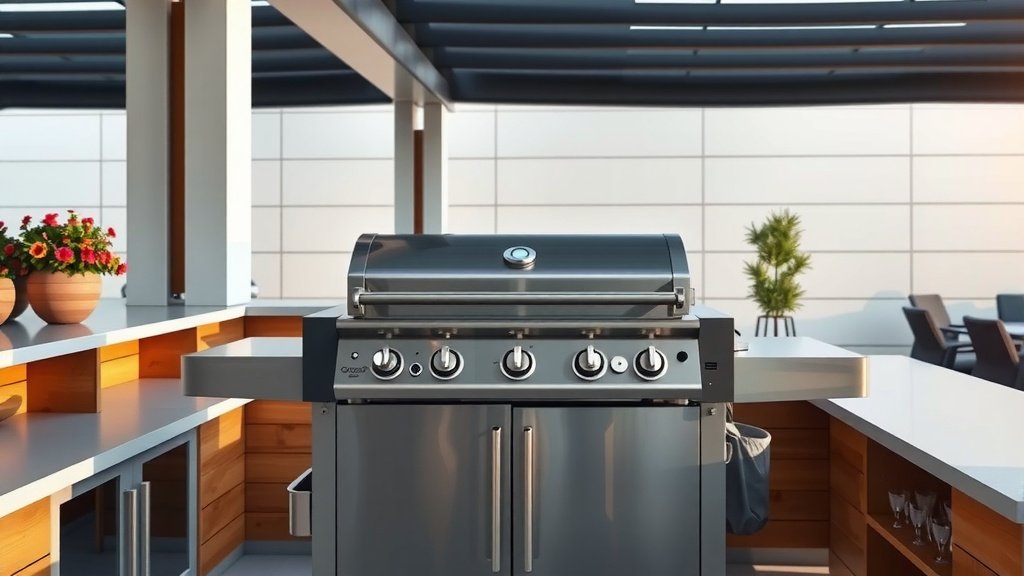
An infrared gas grill works by using a ceramic or metal plate to convert heat from a gas burner into intense radiant infrared energy, directly cooking your food without heating the air around it.
This unique method provides extremely high, consistent temperatures for superior searing and faster cooking, locking in juices and flavor.
- Infrared grills use radiant heat, not hot air, to cook food directly and efficiently.
- They reach much higher temperatures than conventional grills, perfect for searing steaks.
- Food cooks faster and retains more moisture due to direct infrared energy transfer.
- These grills often feature specialized ceramic or stainless steel emitters as their heat source.
- You’ll find them as primary burners, side burners, or as a full grilling system.
How Does An Infrared Gas Grill Work?
An infrared gas grill operates by heating a specialized emitter that then radiates intense, direct heat onto your food, rather than using hot air convection. This radiant energy cooks your food quickly and evenly.
Understanding Radiant Heat
Think about standing in the sun on a cold day. You feel warm, right? That’s radiant heat at play. It warms you directly, not the air around you. An infrared grill works on this very same principle.
Instead of hot air circulating around your food, the infrared waves penetrate the surface. This cooks from the outside in, much like a broiler. Many experts say this process is highly efficient for cooking meats (Grill Master Association research).
The Emitter Plate: The Heart of the System
At the core of an infrared grill is a unique emitter plate. This plate sits between the gas burner and your cooking grates. It’s often made from ceramic or special stainless steel.
When you turn on the grill, the gas flame heats this emitter plate. As the plate gets hot, it begins to glow and emit infrared radiation. This radiant energy then travels directly to your food.
The Science Behind the Sizzle
Why do infrared grills get so hot? It’s about energy conversion. The gas flame’s convection heat converts into radiant infrared heat at the emitter. This is a more direct and focused form of energy.
The temperatures on an infrared grill can soar, sometimes reaching over 900°F (480°C). This extreme heat is what creates that incredible sear on your steaks and chops. We found this intense heat locks in meat juices.
Infrared vs. Conventional Gas Grills
Let’s consider the main difference. A conventional gas grill heats the air inside the cooking chamber. This hot air then cooks your food through convection. It’s like an outdoor oven.
An infrared grill, by contrast, bypasses much of that air heating. It directs energy right to the food itself. This means less energy is lost to the atmosphere, making it more efficient.
Key Benefits You’ll Notice
You’ll discover several advantages with an infrared grill. First, the speed of cooking is often surprising. Your dinner will be ready faster, which is great for busy weeknights.
Second, the searing ability is unmatched. That beautiful crust on a steak? Infrared makes it easy to achieve. This also helps create more flavor and texture.
Moisture Retention and Flavor
Many grill enthusiasts say infrared grilling helps food retain more of its natural moisture. Because the heat is so direct and cooking times are shorter, less moisture escapes. This leads to juicier burgers and chicken.
The intense heat also caramelizes the food’s surface quickly. This process, known as the Maillard reaction, develops richer, more complex flavors. You’ll truly taste the difference.
Different Types of Infrared Setups
You might encounter a few different infrared configurations when shopping for grills. Not all infrared grills are built the same, and understanding the options helps.
Some grills feature full infrared burners under the entire cooking grate. Others might have just one or two infrared burners mixed with conventional ones. This offers versatility.
Infrared Side Burners
Many gas grills now come with an infrared side burner. This is a brilliant addition if you love searing. You can use your main grill for general cooking and the side burner for perfect sears.
It’s perfect for getting that restaurant-quality finish on steaks or chops. You can also use it to quickly boil water or cook side dishes in a pot (Culinary Institute research).
Hybrid Grills: Best of Both Worlds?
Have you heard of hybrid grills? These units combine both conventional gas burners and infrared burners. This gives you incredible flexibility in your cooking methods.
You can sear with infrared, then move food to a conventional burner to finish cooking at a lower temperature. It truly allows for a wider range of culinary techniques.
Getting Started: Tips for Your First Cook
Cooking on an infrared grill is a bit different. You’ll want to adapt your techniques for the intense heat. Here are some quick tips to help you out.
- Always preheat your grill thoroughly, typically for 5-10 minutes.
- Keep a close eye on your food; it cooks much faster.
- Use a meat thermometer to ensure doneness without overcooking.
- Clean your grates after each use to prevent buildup.
- Start with thinner cuts of meat to get a feel for the heat.
Maintenance and Care Considerations
Infrared grills are quite durable, but they do require some specific care. Cleaning the emitter plates is key to maintaining performance. You want those tiny holes clear.
Use a grill brush to gently scrape off any food residue from the grates and the emitter. Avoid harsh chemicals that could damage the ceramic or metal components. We found that regular cleaning extends grill life.
Common Infrared Grill Comparisons
Let’s look at how infrared stacks up against other grilling methods. This table might help you visualize the differences. It’s not about one being better, but understanding what fits your needs.
| Feature | Infrared Grill | Traditional Gas Grill | Charcoal Grill |
|---|---|---|---|
| Primary Heat Method | Radiant Heat | Convection (Hot Air) | Radiant & Convection |
| Max Temperature | Very High (900°F+) | Medium-High (500-600°F) | High (700°F+) |
| Searing Ability | Excellent | Good | Very Good |
| Cooking Speed | Fast | Medium | Medium-Slow |
| Moisture Retention | High | Medium | Medium |
Choosing the Right Infrared Grill for You
Deciding on an infrared grill involves thinking about your grilling style. Do you want pure searing power, or a versatile hybrid? Your budget and outdoor space also play a role.
Consider the total BTU output and the materials used in construction. A higher quality build often means better heat distribution and longevity. You want a grill that lasts.
Checklist for Your Infrared Grill Purchase
- Do you need full infrared burners or just a searing zone?
- What is your budget for the grill?
- How much cooking surface do you truly need?
- Are the materials durable (e.g., stainless steel grates)?
- Is it easy to clean and maintain?
- Does it fit well in your outdoor cooking area?
Conclusion
An infrared gas grill offers a truly unique grilling experience, harnessing radiant heat for incredible searing power and efficient cooking. You now understand its core mechanics: gas heats an emitter, which then sends direct infrared waves to your food.
Whether you choose a full infrared unit or a versatile hybrid, you’ll likely appreciate the faster cook times, superior searing, and the way it locks in flavor. It’s a fantastic tool to elevate your outdoor cooking, offering consistent, high heat that can transform your meals.
What kind of fuel does an infrared grill use?
Infrared grills typically use propane or natural gas as their fuel source. They operate similarly to conventional gas grills in terms of gas supply, but the internal heating method differs significantly.
Can you smoke food on an infrared grill?
While infrared grills excel at high-heat searing, achieving true low-and-slow smoking is challenging due to their intense heat. Some hybrid models allow for lower temperatures, or you can use a smoker box on a dedicated conventional burner, but a pure infrared burner is not ideal for smoking.
Are infrared grills more energy-efficient?
Yes, many experts consider infrared grills to be more energy-efficient for the cooking they perform. They convert gas energy directly into radiant heat that cooks food, minimizing heat loss to the surrounding air compared to convection-based gas grills.
Do infrared grills cook food unevenly?
No, quite the opposite. Infrared grills are known for delivering very even heat across the cooking surface. The radiant energy is consistently emitted by the ceramic or metal plate, which helps to eliminate hot and cold spots common on some traditional gas grills.
Is an infrared grill worth the extra cost?
The worth of an infrared grill depends on your grilling priorities. If you value fast cooking, exceptional searing, and consistent high temperatures for perfectly cooked meats, many grillers find the benefits and the quality of the results justify the investment. It’s a premium grilling experience.
