
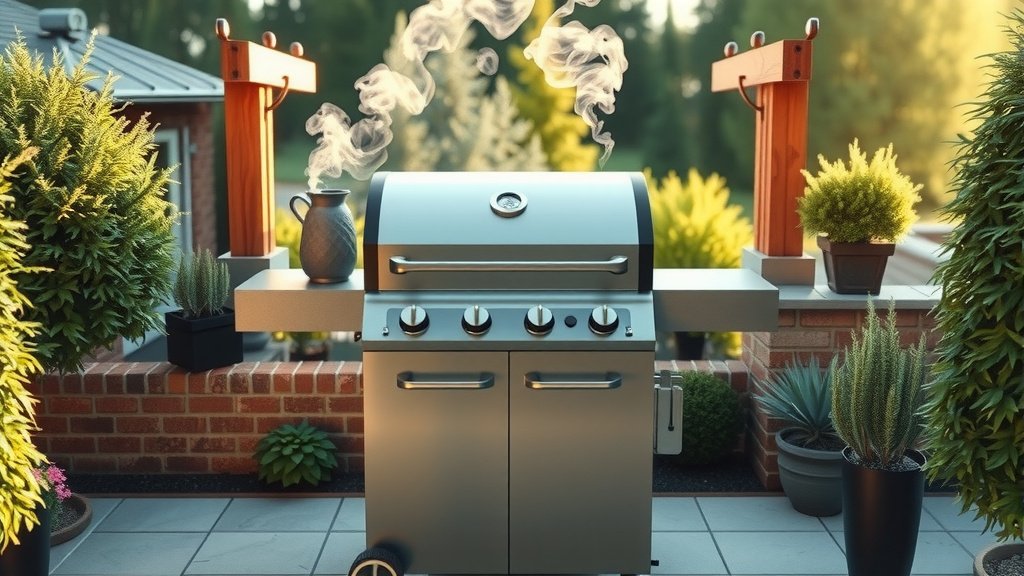
No, Traeger does not make gas grills. Traeger is famous for its innovative wood pellet grills, which operate on electricity and specially designed wood pellets.
Their entire brand identity and product line focus on delivering distinct wood-fired flavor through their unique pellet grilling technology, not gas.
TL;DR: Here’s what you need to know about Traeger and gas grills:
- Traeger only makes wood pellet grills, not gas grills.
- Their focus is on authentic wood-fired flavor and automated cooking.
- Pellet grills use electricity to feed wood pellets into a burn pot.
- Gas grills offer convenience and high heat, but a different flavor profile.
- If you want a gas grill, you’ll need to look at other brands.
Does Traeger Make A Gas Grill?
You might be wondering if Traeger, a household name in grilling, offers a gas grill option. The straightforward answer is no, Traeger specializes exclusively in wood pellet grills and smokers.
Their entire lineup is built around the idea of infusing food with rich, smoky flavor using real hardwood pellets. It’s their signature style!
Understanding Traeger’s Niche
Traeger pioneered the wood pellet grill market. They built their reputation on providing a convenient way to get authentic wood-fired taste without needing to babysit a firebox like traditional smokers. Think of them as the champions of “set it and forget it” smoking and grilling.
Every grill they produce runs on electricity and uses compressed hardwood pellets as its fuel source. This system allows for precise temperature control and consistent smoke production.
Why Wood Pellets, Not Gas?
When you choose a Traeger, you’re choosing flavor. Many grill masters will tell you that the distinct smoky taste from wood pellets is unmatched by gas grills. We found that cooking with wood pellets adds a depth of flavor that propane or natural gas simply cannot provide.
This commitment to flavor is why they’ve stuck to their pellet-powered guns. They aim to replicate the experience of an old-school wood fire, but with modern convenience.
The Traeger Experience: What to Expect
If you’re considering a Traeger, you’re looking at a grill that offers amazing versatility. You can smoke, grill, bake, roast, braise, and even BBQ on one machine. Imagine smoking a brisket all day, then searing steaks, or even baking a pizza!
The digital controls let you set your desired temperature, and the grill does the rest. It’s a smart way to cook outdoors, freeing you up to enjoy your company.
Pellet Grills vs. Gas Grills: A Quick Look
Let’s talk about the big differences between these two popular choices. It helps you understand why Traeger made their choice. Do you value ease and quick heat, or do you crave that smoky flavor?
| Feature | Wood Pellet Grills (e.g., Traeger) | Gas Grills |
|---|---|---|
| Fuel Type | Hardwood Pellets (electricity needed for auger/fan) | Propane or Natural Gas |
| Flavor Profile | Rich, authentic wood-fired smoke flavor | Clean, no added smoke flavor |
| Temperature Control | Very precise, digital control (PID controller) | Good, but can have hot spots; manual adjustment |
| Versatility | Smoke, grill, bake, roast, braise, BBQ | Grill, sear, some models offer rotisserie |
| Startup Time | 10-15 minutes to reach temp | 5-10 minutes to reach temp |
| Cleanup | Ash disposal, grease management | Grease tray, grates cleaning |
Why Do People Confuse Traeger with Gas Grills?
It’s an easy mistake to make! Many people consider a grill for its general outdoor cooking capabilities. Gas grills are incredibly common, often the first type that comes to mind for quick, convenient cooking. Brand recognition plays a big part.
When you hear “grill,” your brain might automatically jump to propane tanks and flame burners. It’s natural to associate a leading grill brand like Traeger with the most common type of grill.
The Allure of Gas Grills
Gas grills are popular for a reason. They offer instant on/off convenience and reach high temperatures quickly. If you’re looking for a fast weeknight meal, a gas grill is often the go-to. They are generally very user-friendly and require less setup than charcoal or pellet grills.
Many experts say that for pure speed and simplicity, gas grills are hard to beat (Consumer Reports).
Considering Your Grilling Needs
Before you commit to any grill, think about what you actually want to cook and how you want to cook it. Are you after that deep, smoky flavor for ribs and brisket, or do you need a quick sear for burgers and chicken breasts?
Understanding your priorities helps you narrow down your choices beyond just the brand name. It’s all about finding the perfect fit for your lifestyle.
What If You Still Want a Gas Grill?
If you’ve decided a gas grill is right for you, don’t worry! There are many fantastic brands out there that specialize in propane or natural gas grills. Weber, Napoleon, Char-Broil, and Blackstone are just a few names to consider. Each offers different features and price points.
Many households actually own both a gas grill for quick meals and a pellet smoker or charcoal grill for longer, flavor-intensive cooks.
Choosing the Right Grill for You: A Checklist
Picking a new grill can feel overwhelming, but a few key questions can guide you. Consider these points when making your decision:
- How important is smokey flavor to you?
- How quickly do you need your grill to heat up?
- What’s your budget for the grill itself and ongoing fuel costs?
- How much space do you have for your grilling setup?
- Are you looking for “set it and forget it” cooking, or do you enjoy tending the fire?
- Do you want to grill, smoke, bake, or a combination of methods?
The Evolution of Grilling Technology
The grilling world has come a long way from simple charcoal pits. Now you have options ranging from electric grills to elaborate outdoor kitchens. We found that modern grills offer amazing control and versatility that previous generations could only dream of.
Pellet grills, like Traeger’s, represent a fusion of traditional wood-fired cooking with smart technology. They bridge the gap between smokers and grills, offering the best of both worlds for many home cooks.
Maintenance and Care for Your Grill
No matter what type of grill you choose, proper maintenance is key to its longevity and performance. Regular cleaning of grates, managing grease, and protecting your grill from the elements will ensure it serves you well for many seasons.
Always refer to your grill’s manual for specific care instructions. A well-maintained grill cooks better and lasts longer, saving you money in the long run.
Conclusion
To wrap things up, Traeger proudly stands as a dedicated manufacturer of wood pellet grills. They don’t make gas grills because their mission is to bring wood-fired flavor and convenience to your backyard. If you’re seeking that distinct smoky taste and easy temperature control, a Traeger pellet grill is a fantastic choice.
However, if the speed and straightforwardness of a gas grill are what you need, plenty of other reputable brands will certainly meet your demands. Your grilling journey depends on what flavors and cooking styles you cherish most.
Frequently Asked Questions About Traeger and Grills
What is the main advantage of a Traeger grill?
The main advantage of a Traeger grill is its ability to provide authentic wood-fired flavor with the convenience of set-it-and-forget-it temperature control. You get the smoky taste of a traditional smoker combined with the ease of an oven.
Can you sear on a Traeger grill?
Yes, you can sear on a Traeger grill, but it generally requires hotter temperatures than traditional gas grills. Some Traeger models offer a “super smoke” mode for low-temperature smoking and higher temperature settings for grilling and searing, though dedicated searing stations are more common on gas grills.
Do Traeger grills use propane?
No, Traeger grills do not use propane. They use food-grade hardwood pellets as their fuel source and require electricity to power the auger, fan, and control panel. Propane is fuel for gas grills, which Traeger does not manufacture.
What fuel does a Traeger grill use?
A Traeger grill uses specially designed, all-natural hardwood pellets as fuel. These pellets are compressed sawdust from various wood types like hickory, apple, cherry, and mesquite, each imparting a unique flavor profile to your food.
Are Traeger grills hard to clean?
Traeger grills are generally not hard to clean, but they do require regular ash removal and grease management. Cleaning involves emptying the ash pot, cleaning the grill grates, and managing the grease drip tray, similar to other types of outdoor grills and smokers.
