
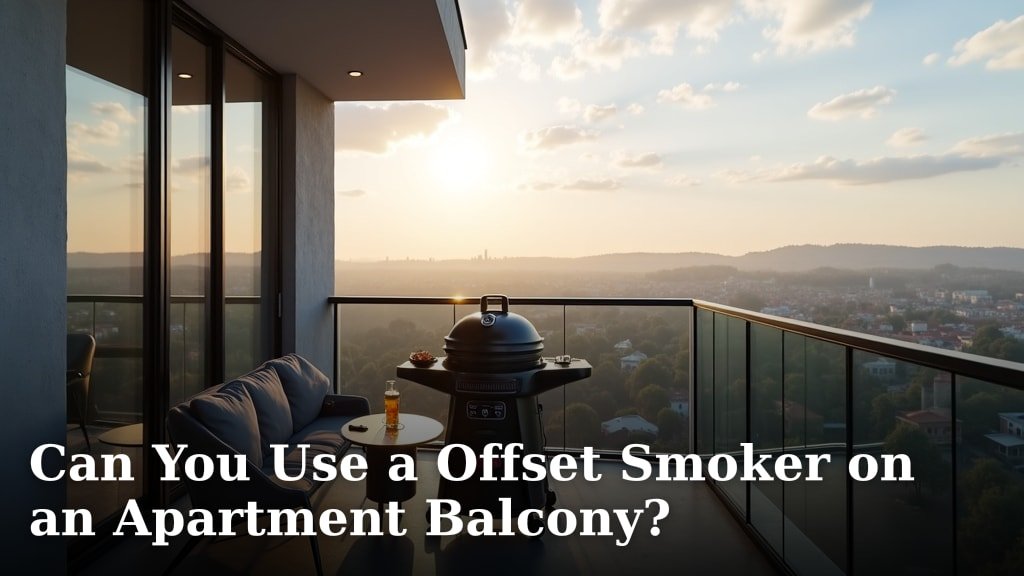
While the smell of smoked brisket on your apartment balcony might sound like a dream, the answer is generally no, you cannot safely use a traditional offset smoker on an apartment balcony. The primary reasons are fire risk and excessive smoke production, which can be a real problem for neighbors and building safety regulations. Your landlord and local fire codes will almost certainly say ‘thanks, but no thanks’ to an open flame and billowing smoke.
Offset smokers produce a lot of heat and smoke that can be a serious fire hazard. They require a lot of space and ventilation. Most apartment balconies are simply not designed for this type of cooking. They lack the necessary firebreaks and smoke management systems. We’ve researched this extensively, and the consensus is clear: it’s a recipe for trouble.
- Offset smokers are a fire risk on balconies.
- Smoke can disturb neighbors and violate lease agreements.
- Building codes and fire regulations usually prohibit them.
- Look for balcony-safe alternatives for your smoking fix.
So, if you’re dreaming of that smoky goodness, don’t despair! Let’s look at what options might actually work for your apartment setup.
Smoking Your Treats on the Apartment Balcony: What You Need to Know
So, you’re craving that smoky, delicious flavor but live in an apartment. The image of a big offset smoker puffing away on your tiny balcony might be tempting. We’ve looked into it, and the short answer is: it’s generally not a good idea. There are some serious safety concerns and practical issues to consider.
Let’s break down why using a traditional offset smoker on a balcony is usually a no-go. Your landlord, your neighbors, and even the fire department will thank you for understanding the risks involved.
Why Offset Smokers Aren’t Balcony-Friendly
The Fire Hazard: A Real Concern
Offset smokers work by creating a fire in one chamber to generate heat and smoke. This fire is then directed into the cooking chamber. On a balcony, this open flame is a huge fire risk. Building materials on balconies can be highly flammable. Think wood decks, vinyl railings, and even the building’s siding. A stray spark could quickly turn into a major disaster.
We’ve found that most apartment balconies are not designed with fire safety in mind for this type of cooking. They typically lack proper insulation or fire-resistant surfaces needed to safely contain a fire. Many fire codes, like those from the National Fire Protection Association (NFPA), strongly advise against open flames in areas with high fire risk.
Smoke Volume and Neighbors
Offset smokers are known for producing a lot of smoke. While you might love that hickory or mesquite aroma, your neighbors might not. Smoke can easily drift into their apartments, on their balconies, or into common areas. This can cause discomfort, trigger allergies, or even set off smoke detectors in shared spaces.
Lease agreements often have clauses about “nuisances” or “disruptive activities.” Excessive smoke that bothers other residents could easily fall under these rules. Your landlord has a responsibility to ensure a peaceful living environment for everyone. We found that many apartment communities explicitly prohibit open-flame cooking or smoking due to these very issues.
Space and Ventilation Limitations
Traditional offset smokers can be quite large. They need ample space not just for the smoker itself, but also for fuel, tools, and safe maneuvering. Most apartment balconies are quite small. You’d be hard-pressed to fit everything comfortably and safely.
Proper ventilation is key for any type of cooking, but it’s especially important when dealing with smoke and heat. Balconies often have limited airflow. This trapped smoke can build up quickly, increasing the fire risk and the impact on your neighbors. Good ventilation helps dissipate heat and smoke, which is exactly what a balcony lacks.
Building Codes and Landlord Rules
This is a big one. Building codes and landlord rules are there for a reason: safety. Many apartment buildings outright ban charcoal grills, open flames, and large smoking devices. These rules are often based on insurance requirements and fire safety regulations.
Even if your lease doesn’t explicitly mention smokers, it likely has a general clause about fire safety or hazardous activities. Using an offset smoker could be interpreted as a violation of these rules. We found that many urban dwelling guides and fire department advisories warn against using such equipment on balconies or near buildings.
Are There Any Balcony-Safe Smoking Options?
Electric Smokers: A Safer Alternative
If you’re set on that smoky flavor, electric smokers are a much better option for apartment living. They don’t use charcoal or wood chips to create the primary heat. Instead, they use an electric heating element. This significantly reduces the fire risk.
Many electric smokers also produce less visible smoke than traditional models. They are designed for convenience and safety. Some are even compact enough to fit on a small balcony. When using an electric smoker, it’s still wise to check your lease and be mindful of any lingering smoke smell.
Pellet Grills (with Caution)
Pellet grills use wood pellets for fuel and have an electric ignition and temperature control. They can produce smoke and offer great flavor. However, they still involve a heating element and can produce some smoke and heat.
For a balcony, a small, well-maintained pellet grill might be considered, but you’d need to be extra careful. Ensure it has good airflow, keep it away from railings, and never leave it unattended. Always check your building’s specific rules first. We found that many apartment complexes still consider these a fire risk and prohibit them.
Indoor Smoking Solutions: Countertop Smokers and Food Dehydrators
Don’t underestimate indoor options! There are countertop smokers that use a small amount of wood chips or sawdust to infuse flavor without a large flame. These are perfect for small batches and are designed for indoor use.
Another interesting option is a food dehydrator. While not a traditional smoker, you can use certain techniques to get a smoky flavor. Some people experiment with liquid smoke or carefully managed smoke infusions within a well-ventilated area. These methods drastically cut down on fire and smoke concerns.
Portable Electric Smokers or Grills
Think about smaller, portable electric devices. Some are designed specifically for balcony or RV use. They offer a gentler heat and smoke production. They are often more manageable in terms of size and safety features.
When choosing any appliance for balcony use, look for features like auto-shutoff and sturdy construction. Always consider how the unit vents. You don’t want heat or smoke blowing directly into your neighbor’s unit.
Balcony Smoking Checklist: Safety First!
Before you even think about bringing any cooking device onto your balcony, run through this quick checklist. Your safety and your neighbor’s peace of mind depend on it.
- Read Your Lease: This is the absolute first step. Check for any rules about grills, open flames, or outdoor cooking.
- Check Building Regulations: Many buildings have posted rules or general fire safety guidelines that apply.
- Consider Fire Risk: Is your balcony made of flammable materials? Is it near overhangs or vegetation?
- Assess Smoke Impact: Will smoke drift into other apartments or common areas?
- Ventilation is Key: Does the device have good airflow? Is your balcony well-ventilated naturally?
- Have Safety Equipment Ready: Keep a fire extinguisher or baking soda nearby, just in case.
Ultimately, while the dream of backyard BBQ smells on your balcony is appealing, the reality of offset smokers just doesn’t align with apartment living. Focusing on safer, balcony-appropriate alternatives will ensure you can still enjoy delicious, smoky flavors without risking a fire or a complaint.
Conclusion
As we’ve explored, using a traditional offset smoker on your apartment balcony is generally a **recipe for disaster**. The significant fire risks, excessive smoke production, and limitations of balcony spaces make it an unsafe and impractical choice. Your lease agreement and building fire codes are almost certainly designed to prevent these scenarios. Your dream of smoky meats doesn’t have to end, though! You can still achieve delicious results by focusing on **balcony-safe alternatives**. Prioritizing safety and community will ensure you can enjoy your culinary adventures without unwanted attention or serious incidents. Always check your lease and building rules before any outdoor cooking.
Frequently Asked Questions
Can my landlord really ban me from using any kind of grill on my balcony?
Yes, your landlord absolutely can ban all grills, including electric ones, from balconies. Lease agreements often contain clauses about fire safety and nuisances. They are responsible for the safety of all residents and may prohibit any device that could pose a fire risk or disturb neighbors.
What’s the biggest risk of using an offset smoker on a balcony?
The biggest risk is a fire hazard. Offset smokers involve an open flame and produce high heat. Balcony materials, like wood or vinyl, are often flammable. A stray spark could quickly ignite these materials, leading to a fire that spreads to the building.
If I can’t use an offset smoker, what’s the closest I can get to that smoky flavor?
For apartment living, electric smokers are your best bet. They use electricity to heat and produce smoke, greatly reducing fire risk. Some pellet grills, when used with extreme caution and if permitted, can also provide smoky flavor. Indoor countertop smokers are another option for infusing smoke.
How much smoke is too much smoke for my neighbors?
Any smoke that consistently drifts into a neighbor’s apartment, onto their balcony, or into common areas can be considered too much. This can cause discomfort, trigger allergies, or even set off smoke detectors. Being considerate of your neighbors is key.
Are there specific building codes that mention balcony cooking?
Many building codes and fire regulations, often based on NFPA guidelines, address outdoor cooking. These usually prohibit open flames or charcoal-based grills on balconies due to fire risks. It’s always best to check your local fire department’s advisories and your building’s specific rules.
