
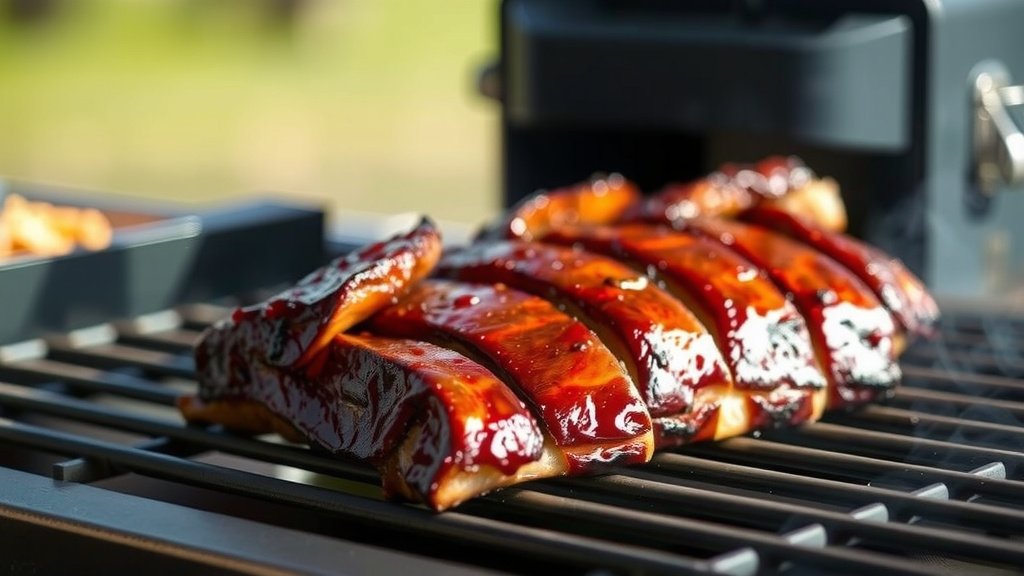
Cooking ribs at 225°F on a pellet grill typically takes about 5 to 7 hours for baby back ribs and 6 to 8 hours for St. Louis-style ribs.
This timeframe allows the connective tissues to slowly break down, resulting in tender, fall-off-the-bone meat, but always check for proper doneness.
TL;DR
- For tender ribs, aim for a cooking window of 5-8 hours at 225°F on your pellet grill.
- Baby back ribs usually finish quicker than larger St. Louis cuts.
- The 3-2-1 method is a popular guide: 3 hours smoking, 2 hours wrapped, 1 hour unwrapped.
- Always check for doneness using the bend test or internal temperature (around 203°F).
- Don’t forget to let your ribs rest before slicing for the best juiciness.
How Long To Cook Ribs At 225 On Pellet Grill?
Cooking ribs at 225°F on a pellet grill needs patience, but the results are truly worth it. You’re looking at an average of 5 to 8 hours total, depending on the type and size of your ribs. This low and slow method helps render fat and break down tough fibers, giving you incredibly tender meat.
Understanding Rib Types and Their Impact
Not all ribs are created equal, and their differences affect cooking time. Knowing your cut is the first step to perfectly smoked ribs. Are you preparing baby backs or St. Louis style?
Baby Back Ribs: The Quick Smoker
Baby back ribs, often called loin ribs, are leaner and smaller. They come from the top of the rib cage, near the backbone. You’ll find them with a bit more meat on top. Due to their size, they cook faster. Expect to spend around 5-7 hours for these succulent ribs at 225°F.
St. Louis Style Ribs: The Hearty Choice
St. Louis style ribs are spareribs that have been trimmed. They’re flatter, meatier, and have more fat and connective tissue. This extra bulk means they need more time in the smoker. Plan for 6-8 hours or even a bit longer at 225°F to get them just right. Many experts say the additional time is well spent for their rich flavor (USDA).
The 3-2-1 Method: A Tried-and-True Guide
The 3-2-1 method is a widely accepted approach for cooking spareribs, including St. Louis style, on a pellet grill. It’s a fantastic guideline to achieve that perfect tenderness. But remember, it’s a guide, not a strict rule. You might adjust it slightly for baby back ribs.
Phase 1: Smoking for Flavor (3 Hours)
In this first phase, you’ll place your seasoned ribs directly on the grill grates. Keep the temperature at a steady 225°F. This is where your ribs soak up all that wonderful smoky flavor from the pellets. You’re building the foundational smoky crust here.
Phase 2: Wrapping for Tenderness (2 Hours)
After three hours, it’s time to wrap your ribs tightly in foil. Some grill masters add a splash of apple juice, cider vinegar, or even butter to the packet. This step creates a braising effect, helping to tenderize the meat significantly. The moisture helps the connective tissues melt away.
Phase 3: Unwrapping for Bark (1 Hour)
Finally, unwrap the ribs and place them back on the grill. This last hour allows the bark to firm up again and any sauce you apply to caramelize. Many people brush on their favorite barbecue sauce during this phase. This creates a beautiful, slightly sticky exterior.
Adjusting the 3-2-1 for Baby Back Ribs
For baby back ribs, the 3-2-1 method might be a bit too long. A common adjustment is the 2-2-1 method. This means 2 hours smoking, 2 hours wrapped, and 1 hour unwrapped. This shorter overall time better suits their smaller size and leaner profile.
Preparing Your Ribs for the Grill
Proper preparation ensures your ribs cook evenly and taste their best. Don’t skip these simple but crucial steps.
- Remove the membrane: Flip the ribs over and peel off the thin, silverskin membrane from the bone side. This prevents a chewy texture.
- Trim excess fat: Trim any large, loose pieces of fat from the meat side. A little fat adds flavor, but too much can lead to grease.
- Apply your rub: Generously coat both sides of the ribs with your preferred dry rub. Let them sit for at least 30 minutes, or even overnight in the fridge.
Monitoring Doneness: The Bend Test and Temperature
Knowing when your ribs are done is more art than science, but there are clear indicators. You want them tender, but not falling off the bone completely, which means they can be overcooked. Many experts agree on these methods (Cook’s Illustrated).
The Bend Test: Your Best Friend
Gently pick up one end of a rack of ribs with tongs. If the rack bends significantly in the middle and the meat starts to crack, it’s a good sign they are done. The meat should pull away easily from the bone, but still cling a little.
Internal Temperature: A Reliable Indicator
While often debated for ribs, an internal temperature can be a helpful guide. We found that most pitmasters aim for a temperature between 195°F and 205°F for perfectly tender ribs. Use an instant-read thermometer inserted into the thickest part of the meat, avoiding the bone. Around 203°F is a sweet spot for many.
The Importance of Resting Your Ribs
After all that cooking, resting your ribs is non-negotiable. Tent them loosely with foil and let them sit for 15-20 minutes. This allows the juices to redistribute throughout the meat, resulting in a much more moist and flavorful bite. Slicing too soon lets all those delicious juices run out.
Common Rib Smoking Issues and Solutions
Even seasoned grillers face challenges. Here are a couple of common issues you might encounter.
| Issue | Description | Solution |
|---|---|---|
| The Stall | Ribs’ internal temperature stops rising for hours. | This is normal. Push through, or wrap the ribs tightly in foil to speed it up. |
| Dry Ribs | Meat feels tough, lacking moisture. | Ensure proper wrapping phase; consider spritzing with apple cider vinegar or water during smoking. |
Adding That Final Touch: Saucing Your Ribs
When should you add barbecue sauce? If you want a thick, caramelized glaze, apply your sauce in the last 30-60 minutes of cooking. Sugary sauces can burn if applied too early. For a lighter touch, you can always serve sauce on the side.
Checklist for Perfect 225°F Ribs
To keep things simple, here’s a quick rundown to help you succeed with your next rib cook:
- Choose your rib type and plan your time accordingly.
- Remove the membrane for a better texture.
- Apply a generous dry rub.
- Maintain a steady 225°F on your pellet grill.
- Follow the 3-2-1 (or 2-2-1 for baby backs) method as a guide.
- Use the bend test for true doneness.
- Rest your ribs for 15-20 minutes before slicing.
- Apply sauce towards the end or serve it on the side.
Conclusion
Mastering how long to cook ribs at 225 on a pellet grill is truly about understanding the process and trusting your instincts. It’s a journey of patience, but the reward is incredibly tender, flavorful ribs that everyone will love. Remember to adjust the cook time based on the rib type and always prioritize doneness over a strict clock. Happy grilling!
How do I know my ribs are done without a thermometer?
You can check for doneness using the bend test. Pick up the ribs with tongs in the middle; if they bend easily and the surface meat starts to crack, they are likely done. The meat should also pull back slightly from the bone ends.
Can I cook ribs at a higher temperature on a pellet grill?
Yes, you can cook ribs at higher temperatures, like 250°F or 275°F, but this will shorten the cooking time. For example, at 275°F, ribs might finish in 4-6 hours. Be aware that higher temperatures can sometimes lead to less tender results if not managed carefully.
What if my ribs get dry during the cook?
To prevent dry ribs, ensure you don’t overcook them. Also, during the first smoking phase, you can spritz the ribs every hour or so with apple juice, water, or apple cider vinegar to maintain moisture. The wrapping phase (Phase 2) is also crucial for keeping them moist.
Should I flip my ribs while cooking on a pellet grill?
While not strictly necessary on a pellet grill due to even heat distribution, some pitmasters like to flip their ribs once or twice during the first smoking phase to ensure an even cook and smoke penetration on both sides. It’s generally a matter of personal preference.
What kind of pellets are best for ribs?
For ribs, popular pellet choices include hickory, apple, cherry, or a competition blend. Hickory offers a strong, traditional smoke flavor, while fruitwoods like apple and cherry provide a milder, sweeter smoke that complements pork well. Experiment to find your favorite!
