
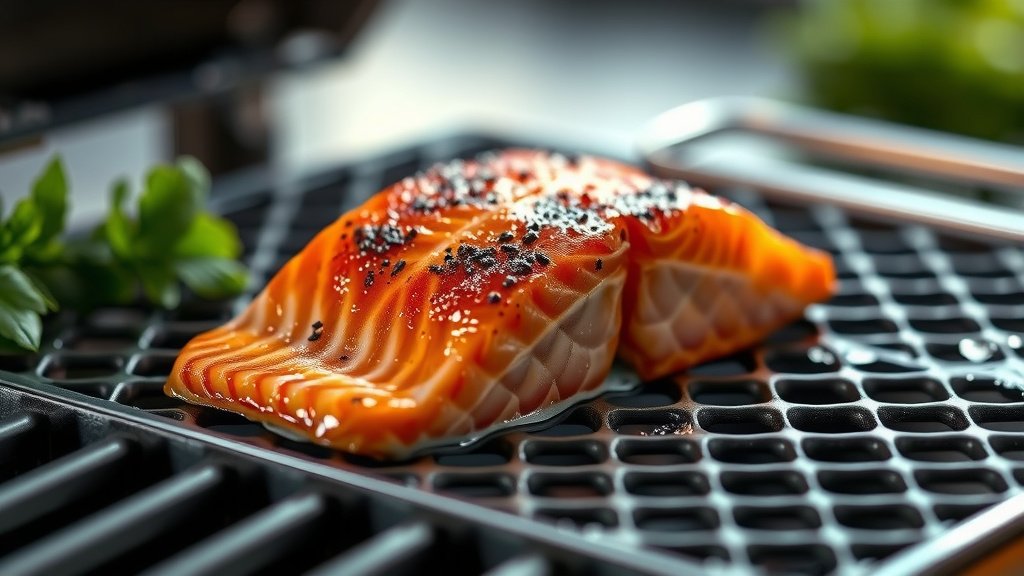
To smoke salmon on a smoker grill, begin by brining the fish for several hours, then pat it dry to form a sticky pellicle, which helps absorb smoke and flavor.
Maintain a low and consistent temperature, usually between 150-175°F (65-79°C), using a mild wood like alder or apple, until the internal temperature reaches 140°F (60°C).
- Get started by selecting a good quality salmon fillet, ideally skin-on.
- Always brine your salmon; this adds flavor and helps retain moisture during smoking.
- Ensure your smoker grill maintains a low, stable temperature, around 150-175°F.
- Use a meat thermometer to track the salmon’s internal temperature for perfect results.
- Allow your smoked salmon to rest before slicing and serving.
How To Smoke Salmon On A Smoker Grill?
Smoking salmon on your grill transforms a simple fillet into a flavor powerhouse. You’re aiming for a moist, flaky texture with a delightful smoky aroma that’s hard to beat.
Getting Started: What You Need
Preparing to smoke salmon doesn’t require a commercial kitchen. You simply need a few key items to make the process smooth and enjoyable.
The Right Salmon Cut
Choosing your salmon is the first step. Many experts say a skin-on fillet from the belly or tail end is great. These cuts often have good fat content, which helps keep the fish moist. You can use whole sides or smaller portions.
Essential Smoker Grill Tools
Do you have the right gear? You’ll definitely need your smoker grill, of course. A good meat thermometer is non-negotiable for food safety. Also, have a sturdy tray or rack ready for the fish.
Brining Your Salmon: A Crucial Step
Why do we brine salmon? This step is a game-changer. It’s not just about adding flavor; it’s about preparing the fish for a successful smoke.
Why Brine Salmon?
Brining helps to draw out some moisture, firm up the flesh, and, most importantly, infuse it with flavor. Research often connects proper brining with improved texture and longer shelf life (USDA).
Simple Dry Brine Recipe
A dry brine is super easy. Just mix up your ingredients and coat the salmon. Let it sit in the fridge for a few hours, then rinse and pat dry.
| Ingredient | Quantity (per 2lb salmon) |
|---|---|
| Kosher Salt | 1/4 cup |
| Brown Sugar | 1/4 cup |
| Black Pepper | 1 tablespoon |
| Garlic Powder | 1 teaspoon |
Wet Brine Alternative
Some people prefer a wet brine for a different texture. This involves soaking the salmon in a saltwater solution. We found that both methods yield delicious results, so pick your preference!
Prepping for the Smoke
After brining, there are a couple of small but mighty steps. These help ensure you get that beautiful, even smoke and a perfect texture.
The Pellicle Formation
Ever heard of a pellicle? It’s that slightly tacky, shiny surface you get after brining and drying. This sticky layer is what smoke molecules cling to, giving your salmon fantastic flavor and color. Pat your salmon completely dry and let it air-dry on a rack in the fridge for 2-4 hours, or until it feels tacky.
Choosing Your Wood Chips
What kind of smoke flavor are you after? We found that milder woods work best with salmon. Alder, apple, cherry, or even pecan wood chips are excellent choices. Avoid strong woods like hickory or mesquite, as they can overpower the delicate salmon flavor.
Smoking Process on Your Grill
Now for the main event! The actual smoking process is straightforward once you’ve done the prep. Patience is a virtue here.
Temperature Control is Key
For hot-smoked salmon, aim for a low and consistent temperature. Many experts say a range of 150-175°F (65-79°C) is ideal. This allows the smoke to penetrate without cooking the fish too quickly. Your smoker grill should hold this temp steadily.
Adding the Smoke
Place your salmon fillets on the grill grates, ensuring there’s space between them for airflow. Add your pre-soaked wood chips to your smoker box or charcoal, following your grill’s instructions. You want a thin, blue smoke, not thick white clouds.
Monitoring Internal Temperature
This is where your meat thermometer shines. Insert it into the thickest part of the fillet, avoiding the bone. Food safety experts recommend cooking salmon to an internal temperature of 140°F (60°C) (FDA). The cooking time usually runs from 2-4 hours, depending on thickness.
Troubleshooting Common Smoking Issues
Sometimes things don’t go perfectly, and that’s okay. Here are a couple of common hiccups you might encounter.
Salmon Too Dry?
If your salmon turns out dry, you might have cooked it at too high a temperature or for too long. Next time, lower the heat or pull it off earlier. Also, ensuring a good pellicle helps retain moisture.
Flavor Not Right?
Is the smoke flavor too weak or too strong? This often comes down to your wood choice. Remember, go milder for salmon. If it’s too weak, try adding more chips initially, but don’t overdo it. Balance is key!
Serving Your Smoked Salmon
You’ve put in the effort, now enjoy the reward! How you finish and store your salmon can make a big difference.
Resting After the Smoke
Just like a good steak, salmon benefits from resting. Once it hits 140°F, take it off the grill. Let it rest for 10-15 minutes, tented loosely with foil. This allows the juices to redistribute for a moister result.
Storage Tips
Freshly smoked salmon is amazing. Any leftovers should be stored in an airtight container in the fridge. We found that it usually stays good for 3-4 days. You can also freeze it for longer storage (USDA).
Your Smoked Salmon Checklist
- Choose quality salmon fillet.
- Apply a dry or wet brine.
- Form a proper pellicle layer.
- Select mild wood chips.
- Maintain consistent low temperature (150-175°F).
- Monitor internal temperature (to 140°F).
- Allow salmon to rest after smoking.
Conclusion
Smoking salmon on your grill is an incredibly rewarding experience. With careful brining, the right wood choice, and precise temperature control, you can create a culinary masterpiece. It takes a little patience, but the rich, smoky, and flaky results are absolutely worth the effort. Go ahead, give it a try and impress yourself and your guests!
What kind of salmon is best for smoking?
Many people find that fattier salmon cuts, like Atlantic salmon or King salmon, are ideal for smoking. Their higher fat content helps them stay moist and absorb the smoky flavors wonderfully during the slow cooking process.
Do I need to soak wood chips before smoking salmon?
Soaking wood chips before adding them to your smoker helps them smolder longer and produce a more consistent smoke. While some debate its necessity, a 30-minute soak generally provides a steady, flavorful smoke for your salmon.
How long does it take to smoke a salmon fillet?
The time varies based on thickness and smoker temperature, but a typical salmon fillet (around 1 inch thick) will take between 2 to 4 hours to smoke at 150-175°F (65-79°C). Always rely on the internal temperature, aiming for 140°F (60°C).
Can I smoke salmon without a traditional smoker?
Absolutely! You can use a standard charcoal or gas grill to smoke salmon. Just set up a two-zone fire, placing soaked wood chips over low heat on one side and the salmon on the cooler side. Keep your grill lid closed to trap the smoke.
What can I do with leftover smoked salmon?
Leftover smoked salmon is versatile. You can flake it over salads, mix it into cream cheese for a bagel spread, create a delicious smoked salmon dip, or even add it to scrambled eggs for a gourmet breakfast. Store it in an airtight container in the refrigerator.
