
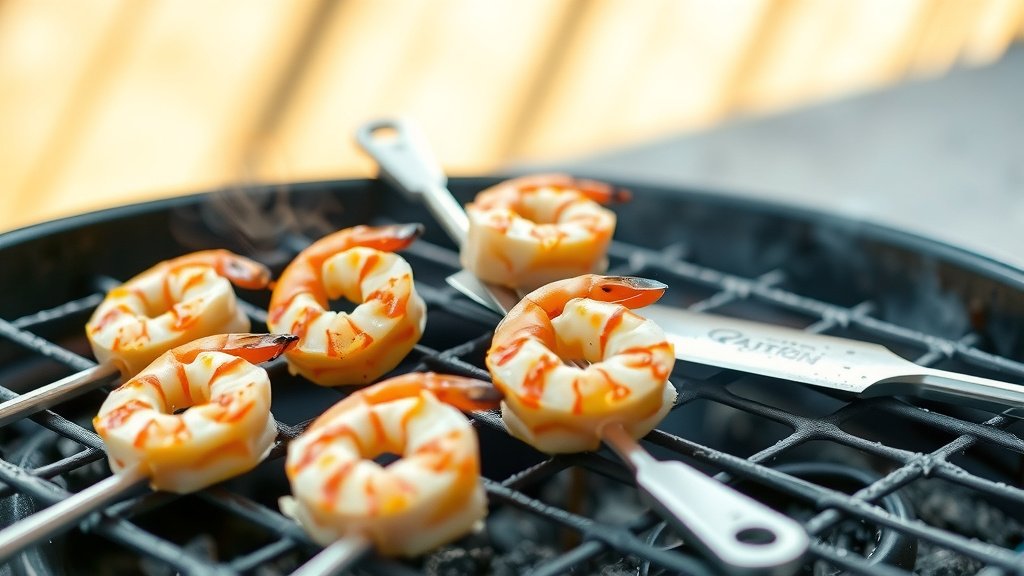
To grill shrimp on a charcoal grill, arrange them on skewers to prevent falling through grates and cook over direct medium-high heat for only 2-3 minutes per side.
You want to achieve a vibrant pink color and opaque texture, indicating they are perfectly cooked and juicy, not rubbery, every time you grill shrimp on charcoal.
- Grilling shrimp on charcoal gives an amazing, deep smoky flavor.
- Using skewers helps with easy flipping and ensures even cooking.
- High heat and quick cooking are your best friends for tender, juicy shrimp.
- Marinate briefly for extra taste, but be careful not to overdo it.
- Always watch for the color change – a vibrant pink means they are ready.
How To Grill Shrimp On Charcoal Grill?
To grill shrimp on a charcoal grill, prepare a two-zone fire, thread your shrimp onto skewers, and cook them quickly over direct medium-high heat until they turn opaque pink.
This method ensures a delicious smoky flavor and a perfectly tender bite without overcooking, which is often the biggest challenge.
Why Choose Charcoal for Your Shrimp?
Charcoal provides a unique smoky depth that many gas grills sometimes miss. It imparts a truly natural, authentic flavor to your shrimp, making them taste incredible.
Many grill masters agree that the high heat from charcoal also creates a fantastic sear quickly, locking in juices and preventing them from drying out (Cook’s Illustrated).
Setting Up Your Charcoal Grill for Shrimp Perfection
The right setup is essential for grilling shrimp successfully. You need a two-zone fire: one side hot for searing, and one side medium for any flare-ups or indirect cooking.
This allows you to manage the heat effectively and cook delicate shrimp evenly, stopping them from burning or becoming tough.
Choosing the Best Shrimp for Grilling
When picking shrimp, look for raw, shell-on, larger sizes (like 16/20 count). The shell helps protect the meat from drying out during the intense heat of the grill.
Fresh or flash-frozen both work well; just make sure to thaw any frozen shrimp properly beforehand in a bowl of cold water.
To Peel or Not to Peel: The Shell Debate
Many experts suggest leaving the shell on for grilling. It acts as a protective layer, helping to keep the shrimp moist and adding a depth of flavor as it cooks.
However, if you prefer easier eating, you can peel them before grilling. Just be extra careful not to overcook them since they will be more exposed to the direct heat.
Marinating Your Shrimp: Flavor Boosts
A good marinade adds a burst of flavor, but remember to keep it simple and quick for shrimp. Think bright flavors like citrus, garlic, fresh herbs, and a touch of olive oil.
Marinade for no more than 30 minutes; longer can make shrimp turn mushy or break down too much due to acids (USDA food safety guidelines).
- Quick Marinade Idea:
- 1/4 cup olive oil
- 2 cloves minced garlic
- Juice of 1 lemon
- 1 teaspoon dried oregano
- Salt and black pepper to taste
Skewering Shrimp Like a Pro
Skewers are your secret weapon when grilling shrimp. They prevent individual shrimp from falling into the hot coals and make flipping a whole batch a breeze.
Use metal skewers or soak wooden ones in water for at least 30 minutes. This soaking stops the wooden skewers from burning up on the grill.
Arranging Shrimp on Skewers
Thread shrimp individually through both the head and tail ends, making sure to keep them relatively flat on the skewer. Try not to pack them too tightly together.
This arrangement helps ensure even cooking, meaning no part will be undercooked or, worse, become rubbery from overcooking.
Preheating Your Charcoal Grill: Getting it Hot!
Heat is incredibly vital for perfectly grilled shrimp. Aim for a medium-high direct heat, which is typically around 400-450°F (200-230°C) at the grate level.
You should be able to hold your hand comfortably above the grate for only 3-4 seconds. A hot grill prevents sticking and gives you that lovely char without overcooking the inside.
Grill Grate Prep: Non-Stick Secrets
Once your grill is hot, clean your grill grates thoroughly with a sturdy wire brush. Then, lightly oil them using a paper towel dipped in a high-smoke-point oil, like canola or grapeseed.
This critical step is for preventing delicate shrimp from sticking and tearing apart when you go to flip them.
The Grilling Process: Quick and Easy
Place the skewered shrimp directly over the medium-high heat. Shrimp cook incredibly fast, so you will want to stay nearby and watch them very closely.
Many home cooks find this quick, high-heat method yields the best texture and maximizes the delicious charcoal flavor.
How Long Does Shrimp Take to Grill?
Shrimp grill amazingly fast. Cook for about 2-3 minutes per side, depending on their size and the exact heat of your grill.
They are completely done when they turn opaque pink and curl into a C-shape. An O-shape often means they are overcooked, while a straight shape means they are still undercooked.
| Shrimp Size (Count per pound) | Approx. Grill Time (per side) | Visual Cue |
|---|---|---|
| 16/20 (Jumbo) | 2.5 – 3 minutes | Vibrant pink, C-shape |
| 21/25 (Large) | 2 – 2.5 minutes | Opaque pink, C-shape |
| 26/30 (Medium) | 1.5 – 2 minutes | Light pink, C-shape |
Removing Shrimp from the Grill
As soon as they reach that perfect opaque pink and form a C-shape, remove them from the grill immediately. Keep in mind that carry-over cooking can make them rubbery even after they are off the heat.
A good pair of tongs works perfectly for this; transfer them swiftly to a clean platter or serving dish.
Resting Your Grilled Shrimp?
Unlike a thick steak, shrimp does not actually need to rest after grilling. Serve them hot off the grill for the very best taste and most tender texture.
You can garnish them simply with fresh herbs, like parsley or cilantro, or a final squeeze of fresh lemon juice for brightness.
Troubleshooting Common Grilling Mistakes
Overcooking is by far the biggest sin when grilling shrimp. They go from perfectly tender to tough and rubbery in literally seconds. Always stay focused and watch them!
Not cleaning your grates thoroughly or not oiling them enough can lead to sticking, which ruins your beautiful shrimp and makes them fall apart.
Checklist for Perfect Charcoal Grilled Shrimp:
- Choose large, shell-on shrimp for the best results.
- Prepare a two-zone charcoal fire for heat control.
- Marinate for no more than 30 minutes to add flavor.
- Soak wooden skewers or use reusable metal ones.
- Preheat grill to medium-high heat for a good sear.
- Clean and oil your grates well to stop sticking.
- Grill 2-3 minutes per side until they turn pink.
- Remove immediately once cooked through and opaque.
Conclusion
Grilling shrimp on a charcoal grill offers a wonderfully simple yet incredibly rewarding culinary experience. You get that irresistible smoky flavor and a beautiful sear that’s hard to beat.
With just a few straightforward steps—proper prep, understanding your heat, and careful timing—you can create perfectly tender, flavorful shrimp every single time. So light up those coals and enjoy the amazing taste!
FAQs
Can I grill frozen shrimp directly on charcoal?
No, it’s always best to thaw frozen shrimp completely before grilling. Grilling them while frozen will lead to uneven cooking, where the outside burns before the inside cooks, resulting in a rubbery texture and less enjoyable meal.
What’s the ideal internal temperature for grilled shrimp?
While often judged by color and texture, the FDA recommends cooking shrimp to an internal temperature of 145°F (63°C). However, they cook so quickly that checking the temperature with a thermometer is not usually practical for home cooks.
Should I use a lid when grilling shrimp on charcoal?
For most shrimp grilling, you generally won’t need to use the lid. Shrimp cooks very quickly over direct heat, and leaving the lid open allows you to watch them closely and prevent any accidental overcooking.
What kind of charcoal is best for shrimp?
Lump charcoal is often preferred for grilling delicate shrimp because it burns hotter and cleaner, imparting a pure smoky flavor without any off-notes. Briquettes work too, but lump charcoal can offer a slightly better taste experience.
My grilled shrimp are rubbery. What went wrong?
Rubbery shrimp is almost always a clear sign of overcooking. Shrimp cooks incredibly fast, so just a minute or two too long on the grill can change its delicate texture drastically. Make sure your grill is hot and cook them quickly until they just turn opaque pink and form a C-shape.
