
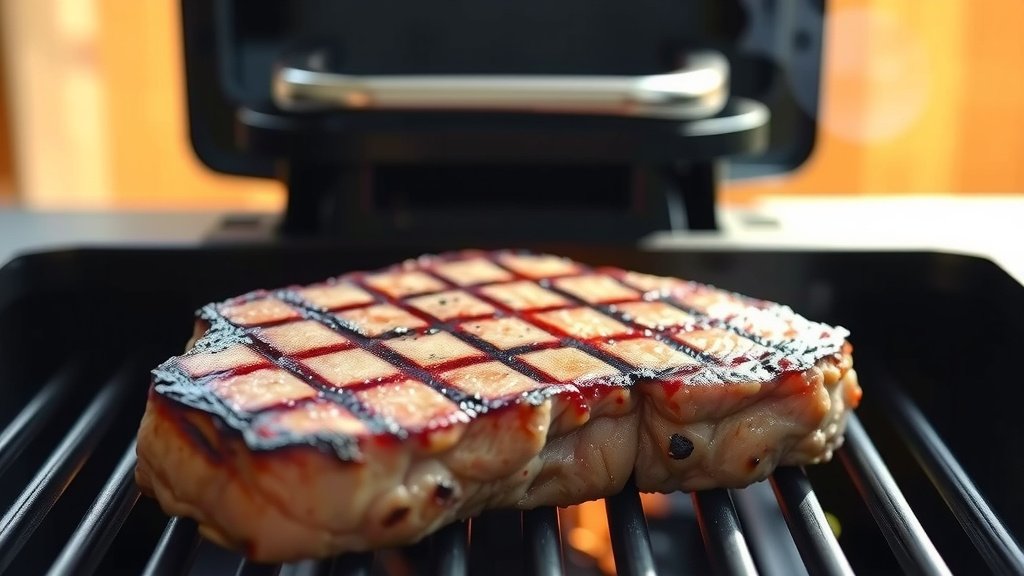
To grill a ribeye steak on a gas grill, preheat your grill to high, sear for 2-3 minutes per side, then move to indirect heat to finish cooking to your desired doneness. Always let your ribeye steak rest before slicing.
You can achieve a perfectly cooked, juicy ribeye on your gas grill by understanding heat zones, proper searing techniques, and the importance of resting the meat. These steps help lock in flavor and tenderness.
- Get your ribeye steak ready by bringing it to room temperature and seasoning it well.
- Preheat your gas grill to a high temperature for searing, creating a beautiful crust.
- Sear the steak over direct heat for a few minutes on each side to develop flavor.
- Move the ribeye to indirect heat to finish cooking gently to your preferred doneness.
- Always let the steak rest for 5-10 minutes after grilling to retain its juices.
How To Grill Ribeye Steak On Gas Grill?
Grilling a perfect ribeye steak on a gas grill involves high-heat searing followed by indirect cooking to achieve a juicy, flavorful result. The secret lies in temperature control and resting the meat properly.
Getting Your Ribeye Ready
Before any flame touches your steak, a little prep work goes a long way. Think of it as setting the stage for a culinary masterpiece. You want to give your ribeye the best possible start on the grill.
Choosing the Best Ribeye
Start with a good cut. Look for a ribeye steak that is at least one inch thick, ideally 1.5 inches. This thickness allows for a beautiful sear without overcooking the inside too quickly. We found that prime or choice grades often offer the best marbling for flavor and tenderness.
Marbling, those small streaks of fat within the meat, melts during cooking. This process keeps your steak moist and full of flavor. It’s like nature’s own basting mechanism, making every bite delicious.
Bringing Steak to Room Temperature
Take your ribeye out of the refrigerator at least 30 minutes, but up to an hour, before grilling. A room-temperature steak cooks more evenly. Cold spots can make parts of your steak undercooked, which we want to avoid for the best grilling experience.
Seasoning for Success
Simple seasoning often works best for a quality ribeye. A generous sprinkle of coarse salt and freshly ground black pepper is usually all you need. Some people like to add a touch of garlic powder or onion powder too. We found that keeping it simple truly lets the steak’s natural flavor shine.
Don’t be shy with the salt; it helps to create that wonderful crust. Pat the steak dry with paper towels before seasoning. A dry surface is critical for achieving a good, crispy sear.
Mastering Your Gas Grill
Your gas grill is a versatile tool. Understanding how to use its heat zones is like having a superpower. You can cook with precision, ensuring your ribeye is done just right. Let’s make that grill work for you, like a well-oiled machine.
Preheat Like a Pro
Always preheat your gas grill thoroughly. Turn all burners to high, close the lid, and let it heat up for 10-15 minutes. You want the grates screaming hot for that initial sear. Many experts say a hot grill prevents sticking and helps create a rich, flavorful crust.
A good rule of thumb is to aim for a grill temperature around 450-500°F (230-260°C). This high heat is your friend for achieving that restaurant-quality sear. Don’t rush this step; patience here brings great rewards.
Direct vs. Indirect Heat
Your gas grill has different heat zones. Direct heat is right over the flame, great for searing. Indirect heat is away from the flame, perfect for gentle, even cooking. This two-zone setup is key for grilling thicker cuts like ribeye. Think of it as a two-stage cooking process.
For a two-zone setup, turn one or two burners on high (direct heat) and leave the other burner(s) off (indirect heat). This allows you to sear your steak and then move it to a gentler zone to finish cooking without burning the outside while waiting for the inside to reach doneness. It’s a smart way to grill.
The Grilling Process
Now, for the main event! Grilling a ribeye is an art, but it’s an art anyone can master with a few straightforward steps. You’re aiming for that beautiful char on the outside and a juicy, tender inside. Let’s make some magic happen on those grates, giving you a fantastic steak experience.
Searing for Flavor
Place your seasoned ribeye directly over the high-heat burners. Sear for 2-3 minutes per side, creating a dark, caramelized crust. This is where the magic of the Maillard reaction happens, giving your steak incredible flavor. Don’t move the steak around too much during this initial sear. Let it build that crust.
Finishing on Indirect Heat
After searing both sides, move the ribeye to the indirect heat zone of your grill. Close the lid and let it continue to cook. This allows the steak to cook through gently without burning the exterior. You’re aiming for an even cook, from edge to edge, ensuring every bite is tender.
Use a meat thermometer to check the internal temperature. This is the most accurate way to ensure your steak reaches your desired doneness. Many experts emphasize relying on temperature, not just time, for perfect results every time.
Checking for Doneness
Knowing when your steak is perfectly cooked is crucial. An instant-read thermometer is your best friend here. Insert it into the thickest part of the steak, avoiding any bones. Here’s a general guide:
| Doneness | Internal Temperature |
|---|---|
| Rare | 120-125°F (49-52°C) |
| Medium-Rare | 130-135°F (54-57°C) |
| Medium | 135-140°F (57-60°C) |
| Medium-Well | 140-145°F (60-63°C) |
| Well-Done | 150-155°F (66-68°C) |
Remember, your steak will continue to cook slightly after removal from the grill due to carryover cooking. So, pull it off a few degrees below your target temperature. This little trick helps you avoid an overcooked steak disaster.
Resting Your Steak
This step is non-negotiable! Resting your steak is as important as the grilling itself. It allows the juices, which have been driven to the center by the heat, to redistribute throughout the meat. Skipping this step means all those delicious juices will run out onto your cutting board, leaving you with a drier steak. You worked hard for that perfect ribeye; let’s not waste it!
- Transfer your grilled ribeye to a clean cutting board.
- Tent it loosely with aluminum foil.
- Let it rest for at least 5-10 minutes.
- For thicker steaks, rest a bit longer.
- Slice against the grain for maximum tenderness.
Troubleshooting Common Issues
Even seasoned grillers face challenges. Maybe your steak is sticking, or it’s not getting that perfect crust. Don’t worry, we’ve all been there. Learning from these minor hiccups makes you a better griller. Let’s solve some common problems so you can grill with confidence, like a true grill master.
If your steak is sticking to the grates, make sure your grill is hot enough and the grates are clean. Brushing grates with a wire brush before grilling and lightly oiling them can help. If your steak isn’t searing well, check your grill’s temperature. It might not be hot enough. A good sear needs intense, direct heat.
Conclusion
Grilling a delicious ribeye steak on your gas grill is a rewarding experience. By following these straightforward steps—from choosing and preparing your steak to mastering your grill’s heat and the all-important resting period—you can consistently achieve a juicy, flavorful result. Enjoy the process and savor every bite of your perfectly grilled ribeye!
What is the ideal thickness for a ribeye steak on a gas grill?
The ideal thickness for grilling a ribeye steak on a gas grill is at least 1.5 inches. This thickness allows for a great sear on the outside without overcooking the interior too quickly.
Should I oil the steak or the grill grates before cooking?
It’s generally better to oil the steak lightly rather than the grates. This helps prevent sticking and promotes an even sear. Make sure your grill grates are clean before applying any oil.
How do I know if my gas grill is hot enough for searing?
You know your gas grill is hot enough for searing when it reaches 450-500°F (230-260°C) and you can hold your hand about an inch above the grates for only 1-2 seconds. Preheating for 10-15 minutes on high usually does the trick.
What does “slicing against the grain” mean?
Slicing against the grain means cutting perpendicular to the direction the muscle fibers run in the meat. This shortens the fibers, making the steak much more tender and easier to chew. You can usually see the grain by looking closely at the cooked steak.
Can I add wood chips to my gas grill for extra smoky flavor?
Yes, you can add wood chips to your gas grill for extra smoky flavor. Soak a handful of wood chips (like hickory or oak) in water, then place them in a foil packet with a few holes, or in a smoker box, directly over a burner on low heat. Place your steak on the indirect heat side to absorb the smoke.
