
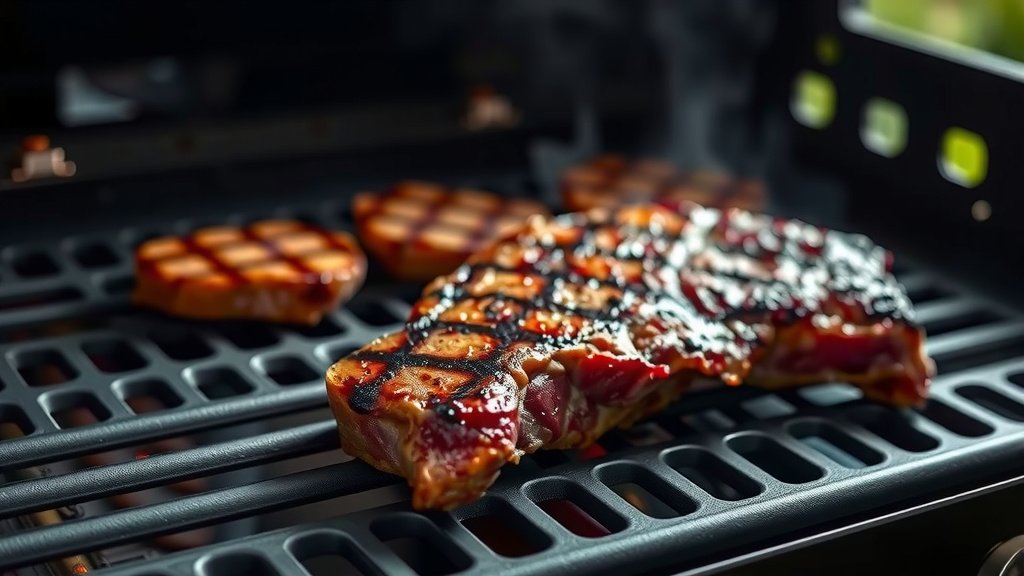
To grill a bone-in ribeye on a gas grill, preheat your grill to high, sear for 2-3 minutes per side, then reduce heat to medium-low for indirect cooking until it reaches your desired internal temperature.
For the best results with your bone-in ribeye, remember to let it rest after grilling to redistribute juices, ensuring a tender and flavorful steak.
Here’s a quick rundown of what you’ll learn to grill that perfect bone-in ribeye:
- Choose a thick, quality steak and season it well.
- Set up your gas grill for both high-heat searing and lower indirect cooking.
- Sear your steak quickly to develop a delicious crust.
- Finish cooking over indirect heat to your exact preferred doneness.
- Always, always let your steak rest before slicing for maximum juiciness.
How To Grill Bone In Ribeye On Gas Grill?
Grilling a bone-in ribeye on a gas grill comes down to mastering two heat zones. You will sear it quickly over high heat, then let it finish cooking gently over lower, indirect heat.
Getting Your Ribeye Ready for the Grill
Before any heat touches your steak, some prep work makes a big difference. Think of it as setting the stage for a culinary masterpiece. You want to give your steak the best start possible.
Choosing the Right Steak
Start with a good foundation. We find that a ribeye about 1.5 to 2 inches thick works best for grilling. This thickness allows for a great sear without overcooking the inside too quickly.
Look for steaks with good marbling. Those little flecks of fat melt during cooking, adding amazing flavor and tenderness to your bone-in ribeye.
Seasoning Your Bone-In Ribeye
Keep it simple and classic. A generous amount of kosher salt and freshly cracked black pepper is often all you need. You can always add more flavor later.
Some grill experts suggest a light coat of olive oil first. This helps the seasoning stick and can promote a better crust when you start grilling. Pat your steak dry before seasoning for the best results.
Let your steak sit at room temperature for about 30-60 minutes before grilling. This step helps the steak cook more evenly. Cold meat on a hot grill can lead to uneven cooking, nobody wants that.
Gas Grill Setup for Success
Your grill is your main tool, so know how to use it. Setting up your gas grill correctly is half the battle for a perfectly cooked ribeye.
Clean Grates Are Key
Always start with clean grill grates. Food tends to stick to dirty grates. Use a good wire brush to scrape off any old food bits from previous cooks.
Many experts say to oil your clean grates lightly. A paper towel dipped in high-smoke-point oil, held with tongs, works well. This helps prevent sticking and makes cleanup easier later.
Two-Zone Grilling Explained
This technique is a game-changer for bone-in ribeye. You need one very hot zone and one cooler zone. This lets you control the cooking process more precisely.
For a typical gas grill, turn one or two burners to high. These will be your direct heat zone. Turn the remaining burners to low or off for your indirect heat zone. Preheat your grill to about 450-500°F (232-260°C) for the direct zone.
Always preheat your grill with the lid closed for 10-15 minutes. This ensures the grates are screaming hot for that initial sear. A hot grill means better grill marks and a better crust.
The Grilling Process: Step-by-Step
Now for the main event! With your steak prepped and grill hot, you are ready to cook. This process balances intense heat with gentle cooking.
Searing for Flavor
Place your bone-in ribeye directly over the high heat burners. You should hear a satisfying sizzle right away. This is the sound of flavor developing.
Sear the steak for 2-3 minutes per side. You are looking for a beautiful, deep brown crust. Avoid moving the steak too much during this initial searing phase. Let that crust form.
Moving to Indirect Heat
After searing both sides, move your ribeye to the cooler, indirect heat zone of your grill. Close the lid to allow the ambient heat to finish cooking the steak gently.
This is where your grill acts like an oven. The indirect heat will cook the steak through without burning the outside. It is a gentler approach to cooking a thick steak.
Temperature Takes Center Stage
The best way to know when your bone-in ribeye is done is by using an instant-read meat thermometer. Insert the thermometer into the thickest part of the steak, avoiding the bone.
Many guidelines point to different temperatures for doneness (USDA). Here is a general guide we find useful:
| Doneness | Internal Temperature |
|---|---|
| Rare | 120-125°F (49-52°C) |
| Medium-Rare | 130-135°F (54-57°C) |
| Medium | 135-140°F (57-60°C) |
| Medium-Well | 140-145°F (60-63°C) |
Remember that the temperature will rise a few degrees after you remove the steak from the grill. This is called carryover cooking. So, pull your steak off a few degrees below your target.
The All-Important Resting Phase
This step is non-negotiable for a juicy steak. Skipping it means losing precious juices onto your cutting board.
Why Resting Matters
When you cook meat, the muscle fibers contract and push the juices to the center. If you cut into it right away, those juices will flow out. Giving it time to rest lets the juices redistribute throughout the steak.
Transfer your cooked bone-in ribeye to a cutting board. Tent it loosely with foil. Let it rest for at least 10-15 minutes. This patience is truly rewarded.
Slicing and Serving Your Steak
Once rested, it is time to enjoy your hard work. Slicing it correctly makes a difference in tenderness.
Slice the ribeye against the grain. You will see lines in the meat; cut across them. This shortens the muscle fibers, making each bite more tender and enjoyable.
Your Pre-Grill Checklist:
- Steak at room temperature?
- Seasoned generously?
- Grill grates clean?
- Gas grill preheated with two zones?
- Meat thermometer ready?
Conclusion
Grilling a bone-in ribeye on a gas grill is very rewarding. It is all about a good sear, careful temperature management, and the crucial resting period. You now have the practical steps to achieve a perfectly cooked, juicy, and flavorful steak every time. Enjoy the process and the delicious results.
Frequently Asked Questions About Grilling Ribeye
How long does it take to grill a 1.5-inch bone-in ribeye?
A 1.5-inch bone-in ribeye typically takes about 12-18 minutes total cooking time for medium-rare to medium doneness, including searing time. This can vary based on grill temperature and steak thickness, so always use a meat thermometer.
Should I flip my ribeye more than once on the grill?
For a beautiful crust and even cooking, many grill masters recommend flipping your ribeye only once during the initial high-heat sear. After moving to indirect heat, you generally do not need to flip it again, just monitor its internal temperature.
Can I use a cast iron skillet on my gas grill for searing?
Yes, you absolutely can use a cast iron skillet on your gas grill. Place the skillet over high heat on your grill and let it get smoking hot before adding the steak. This method can help achieve an exceptional crust and even heat distribution.
What is the best way to prevent my ribeye from sticking to the grill?
To prevent sticking, ensure your grill grates are very clean and hot before placing the steak down. You can also lightly oil the grates with a high-smoke-point oil, applied with a paper towel held by tongs, right before you start grilling.
Why is my grilled ribeye tough even after resting?
If your ribeye is tough, it might be overcooked or sliced incorrectly. Overcooking can dry out the meat and make it chewy. Also, slicing against the grain is vital; cutting with the grain leaves muscle fibers long, making the steak feel tough.
