
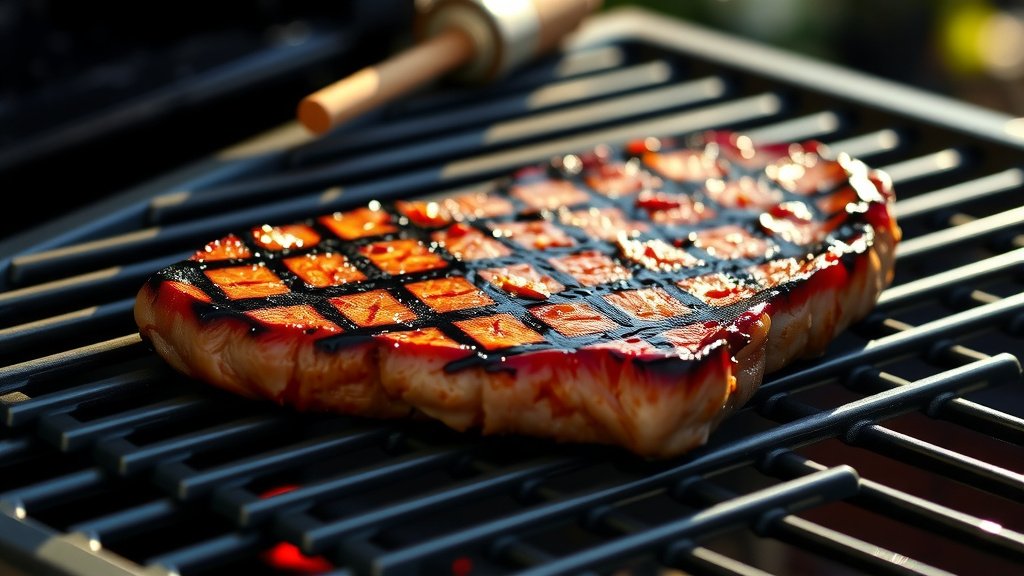
To grill a thick steak on a gas grill, use the reverse searing method for best results. First, cook the steak over indirect, lower heat until it’s nearly your desired internal temperature.
Then, move the steak to direct, high heat for a quick sear, creating a fantastic crust without overcooking the inside.
- Master thick steak grilling by using the two-zone reverse searing technique.
- Always rely on an instant-read meat thermometer for perfect doneness.
- Set your grill for indirect cooking first, then switch to high, direct heat.
- Give your grilled steak proper rest time to keep all those delicious juices.
- Prepare your gas grill by creating distinct hot and cooler zones.
How To Grill A Thick Steak On A Gas Grill?
Grilling a thick steak on a gas grill might seem tricky at first, but it is very manageable. The key is using the reverse sear method for a tender inside and a crispy crust.
This technique helps you achieve restaurant-quality results right in your backyard. You’ll be a pro in no time.
Why Reverse Searing is Your Best Friend
Have you ever cut into a steak to find it gray on the outside and perfectly rare in the middle? Or perhaps it was charred on the outside and still cold inside?
That is where reverse searing changes everything. We found that cooking gently first ensures an even cook from edge to edge (Food Network Kitchen).
Then, a quick blast of high heat gives you that craveable, flavorful crust. It is like having two different cooking methods in one seamless process.
Picking Your Perfect Thick Steak
Choosing the right steak is the first step to grilling success. Look for cuts at least 1.5 inches thick, ideally 2 inches or more.
Ribeye, New York strip, and porterhouse are all fantastic choices for grilling. Many experts say that thicker cuts handle the heat better without drying out.
Thickness Matters
A steak’s thickness directly impacts how it cooks. Thinner steaks cook too fast over direct heat, often burning before the inside reaches doneness.
Thick steaks, however, need that extra time over indirect heat to warm through gently. This process prevents the dreaded overcooked gray band.
Seasoning for Flavor
Before any heat touches your steak, season it generously. Use coarse salt and freshly cracked black pepper. Don’t be shy here; remember, it’s a thick piece of meat.
Some people like to add garlic powder or a touch of onion powder. We found that a simple seasoning lets the natural beef flavor shine through.
Setting Up Your Gas Grill for Two Zones
This step is absolutely critical for reverse searing. You need both a hot, direct heat zone and a cooler, indirect heat zone.
Turn one or two burners on high, depending on your grill size. Leave the other burners off to create your cool zone.
Close the lid and let your grill preheat for about 10-15 minutes. Aim for around 450-500°F in the direct zone.
The Gentle Cook: Indirect Heat
Place your seasoned thick steak on the cooler, indirect side of the grill. Close the lid and let the ambient heat work its magic.
This is where the steak slowly comes up to temperature. Think of it like a low oven, but with that fantastic grill flavor.
Temperature Checks are Crucial
This is not a guessing game; use an instant-read meat thermometer. Insert it into the thickest part of the steak, avoiding any bone.
For medium-rare, you will pull the steak off the indirect heat when it reaches about 115-120°F. For medium, aim for 125-130°F.
Checking the temperature regularly is key to avoiding overcooking. Many guidelines point to accurate temperature reading as a good first step (USDA).
The Grand Finale: Direct Searing
Once your steak hits its target indirect temperature, it is time for the sear. Move it directly over the hot burners you had on high.
Sear for about 2-3 minutes per side. You are looking for a beautiful, deep brown crust. This part happens quickly, so pay attention.
What About Flare-Ups?
Thick steaks can be fatty, leading to flare-ups over direct heat. Keep a spray bottle of water nearby to spritz any sudden flames.
Or, you can briefly move the steak back to the indirect zone if flare-ups get out of control. Safety first when grilling!
The Importance of Resting Your Steak
Do not cut into that steak right away, no matter how tempting. Transfer it to a cutting board and let it rest for 10-15 minutes.
This resting period allows the juices to redistribute throughout the meat. Cutting too early means all those delicious juices will run out onto your board.
Your Thick Steak Grilling Checklist
- Choose a thick steak (1.5-2+ inches).
- Season generously with salt and pepper.
- Set up two heat zones on your gas grill.
- Grill indirectly until 115-120°F (medium-rare).
- Sear directly for 2-3 minutes per side for crust.
- Rest your steak for 10-15 minutes before slicing.
Comparing Thick Steak Grilling Approaches
While reverse searing is fantastic, it helps to understand how it stacks up against other methods. Here is a quick comparison for common steak cuts and their best practices.
| Method | Steak Cut Best Suited | Temperature Approach | Benefit |
|---|---|---|---|
| Reverse Sear | Ribeye, Porterhouse, Strip (1.5″+ thick) | Indirect then Direct | Even cook, perfect crust |
| Traditional Direct Grill | Flank, Skirt, Sirloin (1″ or less) | High, Direct Heat Only | Fast cook for thinner cuts |
| Sous Vide then Sear | Any thick steak | Water bath then Searing | Precision internal temp |
Essential Tools for Grilling Thick Steaks
Having the right tools makes a huge difference in your grilling experience. You don’t need a fancy setup, just a few key items.
- Instant-Read Meat Thermometer: Absolutely essential for accuracy.
- Grill Tongs: Long-handled tongs are safer and more practical.
- Grill Brush: Keep your grates clean for better searing.
- Cutting Board with Juice Grooves: Captures those precious steak juices.
- Heat-Resistant Gloves: For handling hot grates or moving coals if using charcoal.
Conclusion
Grilling a thick steak on a gas grill really becomes an art once you master the reverse searing technique. You will consistently achieve a steak that is perfectly cooked throughout, with that coveted crispy, flavorful crust.
Remember to prepare your grill with two heat zones, use a reliable thermometer, and always allow your steak to rest. With these steps, you are well on your way to becoming a thick steak grilling master. Enjoy the delicious results!
What is the best thickness for a steak on a gas grill?
The best thickness for a steak on a gas grill, especially for the reverse sear method, is typically 1.5 to 2 inches or more. Thicker cuts allow for a more gradual, even cook and prevent the steak from drying out during the process.
Should I oil my steak or the grill grates?
It is generally better to oil your steak lightly rather than the grill grates directly. A thin layer of oil on the steak helps prevent sticking and promotes a good crust. Oiling the grates can lead to flare-ups, especially on a gas grill.
How do I know when my gas grill is hot enough for searing?
For searing, your gas grill needs to be very hot, typically around 450-500°F. You can test the heat by holding your hand about an inch above the grate; if you can only hold it there for 1-2 seconds, it is hot enough for a good sear.
Can I use a cast iron pan on my gas grill for searing?
Yes, you can absolutely use a cast iron pan on your gas grill for searing. Place the cast iron pan directly over the high heat burners to get it screaming hot. Then, transfer your indirectly cooked steak to the pan for an intense, even sear.
How does resting a steak improve its taste and texture?
Resting a steak allows the muscle fibers to relax after cooking. This process lets the internal juices, which are pushed to the center during grilling, redistribute throughout the entire cut. The result is a more tender, flavorful, and juicy steak when you finally slice into it.
