
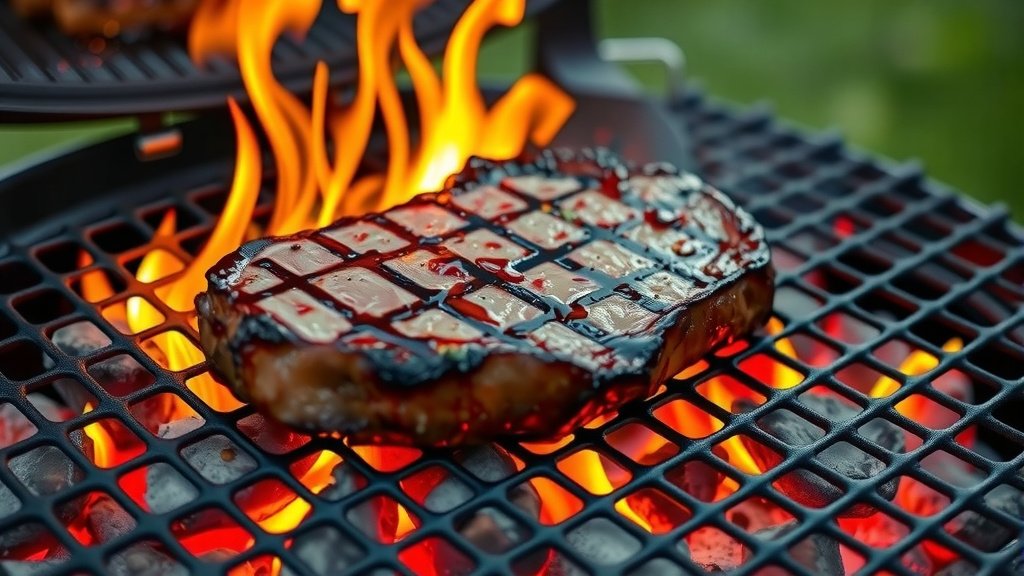
To grill a ribeye steak on a charcoal grill, aim for a beautiful sear on direct high heat, then finish cooking it to your desired doneness over indirect heat. This two-zone method ensures a perfect crust and a juicy interior.
You can achieve a fantastic flavor and texture by allowing the steak to come to room temperature, seasoning it well, and using a reliable meat thermometer for precision.
Here’s a quick look at what we’ll cover to help you grill that perfect ribeye:
- Choose a thick ribeye steak for better control.
- Season generously with salt and pepper for a great crust.
- Set up your charcoal grill for two-zone cooking.
- Sear the steak over high, direct heat first.
- Move to indirect heat to finish cooking until done.
- Always rest your steak after grilling for juicy results.
How To Grill A Ribeye Steak On A Charcoal Grill?
Grilling a ribeye steak on a charcoal grill means balancing fiery heat with gentle cooking to unlock amazing flavors. You’re aiming for a beautiful, flavorful crust and a tender, juicy middle, which is totally achievable with the right steps.
Choosing Your Perfect Ribeye
Starting with the right steak makes all the difference. Look for a ribeye steak that is at least 1.5 inches thick. Thicker cuts are more forgiving and less likely to overcook quickly.
Also, pay attention to the marbling. Those little flecks of fat within the meat, known as marbling, will melt during cooking. This process keeps your steak moist and adds incredible flavor (USDA).
Prepping Your Steak for the Grill
Bring it to Room Temperature
Before any cooking begins, let your ribeye sit out on the counter for about 30 to 60 minutes. This allows the steak to warm up evenly. We found that a room-temperature steak cooks more consistently from edge to center.
Seasoning Simply and Effectively
For a cut as flavorful as ribeye, simple seasoning is often the best. A generous coating of coarse salt and freshly ground black pepper is usually all you need. You can also add a touch of garlic powder or onion powder if you like. The key is to season it well just before grilling.
Don’t be shy with the salt; a good amount helps form that tasty crust. Some experts say salt applied too far in advance can draw moisture out. So, season right before it hits the heat.
Setting Up Your Charcoal Grill: The Two-Zone Method
The two-zone cooking method is your secret weapon for perfect grilled steaks. It gives you control, allowing you to sear and then gently cook.
Creating Direct and Indirect Heat Zones
Arrange your lit charcoal briquettes or lump charcoal on one side of the grill grate. This creates your direct, high-heat zone. The other side, with no charcoal underneath, is your indirect, lower-heat zone. This setup lets you move the steak as needed.
Lighting Your Charcoal Safely
A chimney starter is the safest and most efficient way to light charcoal. Fill it with charcoal, place some newspaper under it, and light it. Once the coals are mostly ash-gray and glowing, carefully pour them into your grill. This usually takes about 15-20 minutes.
Achieving the Ideal Grill Temperature
For searing a ribeye, you want a very hot grill. Aim for a direct heat zone temperature of around 450-500°F (232-260°C). Use a reliable grill thermometer to confirm your temperatures. Your indirect zone will be much cooler, around 250-300°F (121-149°C).
The Grilling Process: Sear, Move, Finish
This is where the magic happens. Don’t rush these steps.
Searing for That Irresistible Crust
Place your seasoned ribeye directly over the hot charcoal. Listen for that satisfying sizzle! Sear it for 2-3 minutes per side. You’re looking for a deep, rich brown crust. This step builds tremendous flavor.
Moving to Indirect Heat to Cook Through
After searing both sides, move the steak to the indirect heat zone. Close the grill lid. This allows the steak to cook through gently without burning the exterior. You’re now letting the heat circulate around the steak, much like an oven.
Monitoring Internal Temperature with a Thermometer
This is the most critical step for doneness. Insert a meat thermometer into the thickest part of the steak, avoiding any bones. Cook until it reaches a few degrees below your desired final temperature, as it will continue to cook while resting (carryover cooking).
Here’s a handy guide for internal temperatures:
| Doneness | Remove from Grill Temp | Final Temp (After Rest) |
|---|---|---|
| Rare | 120-125°F (49-52°C) | 125-130°F (52-54°C) |
| Medium-Rare | 125-130°F (52-54°C) | 130-135°F (54-57°C) |
| Medium | 130-135°F (54-57°C) | 135-140°F (57-60°C) |
| Medium-Well | 140-145°F (60-63°C) | 145-150°F (63-66°C) |
| Well Done | 150-155°F (66-68°C) | 155-160°F (68-71°C) |
The Crucial Resting Period
Once your ribeye reaches the target temperature, remove it from the grill immediately. Place it on a cutting board and tent it loosely with aluminum foil. Let it rest for at least 5-10 minutes. This rest allows the juices to redistribute throughout the steak, resulting in a much juicier bite.
Cutting into it too soon will cause all those delicious juices to run out onto the board. We found that patience truly pays off here for maximum juiciness.
Slicing and Serving Your Masterpiece
After resting, slice your ribeye against the grain into desired portions. This helps to break up the muscle fibers, making each bite more tender. Serve it hot and enjoy your perfectly grilled charcoal ribeye!
Quick Checklist Before You Grill
Ready to fire up? Make sure you have these covered:
- Ribeye at room temperature?
- Seasoned generously?
- Charcoal chimney starter ready?
- Two-zone fire established?
- Grill grate clean?
- Meat thermometer handy?
Conclusion
Grilling a ribeye steak on a charcoal grill might seem like a complex art, but it’s really a straightforward process of managing heat and timing. By following the two-zone cooking method, carefully monitoring temperatures, and allowing your steak to rest, you’re well on your way to a consistently delicious meal. Remember, practice makes perfect, and every grilled steak is a step towards becoming a charcoal master. Enjoy the rich, smoky flavor you’ve created!
FAQs About Grilling Ribeye on Charcoal
What kind of charcoal is best for grilling ribeye?
Many grill enthusiasts prefer lump charcoal for its natural wood flavor and ability to burn hotter. However, high-quality charcoal briquettes also work well. Lump charcoal lights faster and generally gets hotter, giving you a better sear.
How do I prevent flare-ups when grilling a ribeye?
Flare-ups happen when fat drips onto the hot coals. To manage them, keep a spray bottle of water nearby to spritz flames down. Moving the steak to the indirect heat zone temporarily is also a very effective strategy to control excessive flames.
Should I oil the steak or the grill grates?
It’s generally better to oil the grill grates rather than the steak itself. Lightly oiling hot grates with a high smoke point oil (like grapeseed or avocado oil) helps prevent sticking. Oiling the steak can sometimes lead to more flare-ups.
How do I know when my charcoal grill is hot enough?
You can gauge charcoal heat visually and with a thermometer. The coals should be mostly covered in gray ash and glowing orange. For precise temperature, always use a lid-mounted or handheld grill thermometer to confirm your target heat zones.
Can I use wood chips for added smoke flavor with ribeye?
Absolutely! For a richer smoky flavor, you can add a handful of pre-soaked wood chips (like hickory or oak) directly onto the hot coals during the indirect cooking phase. This infuses your ribeye with a wonderful aroma, but don’t overdo it; a little smoke goes a long way.
