
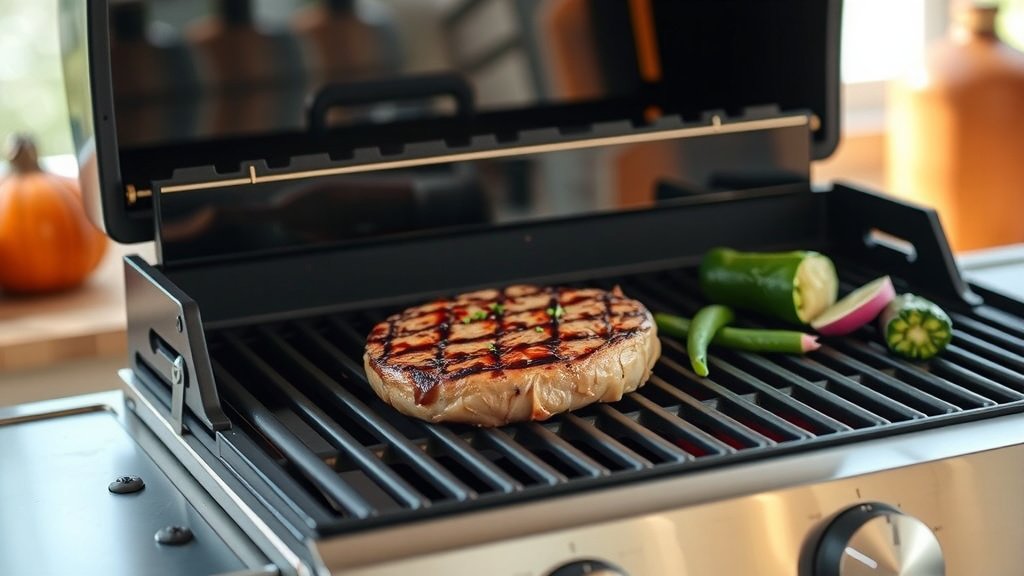
To gas grill filet mignon, start by searing it over high heat (450-500°F) for 2-3 minutes per side to build a beautiful crust, then move it to a cooler, indirect heat zone (350-375°F) until it reaches your desired internal temperature.
Always use a reliable meat thermometer to ensure perfect doneness, targeting 125-130°F for medium-rare before a crucial resting period that locks in juices.
Here’s a quick rundown of what you’ll find:
- Discover the best way to prepare your filet before it hits the grates.
- Learn the secrets of two-zone grilling for a perfect sear and even cook.
- Understand exactly how to use a meat thermometer for flawless doneness.
- Uncover why resting your steak is non-negotiable for juicy results.
- Get tips on avoiding common grilling errors and serving your masterpiece.
How To Gas Grill Filet Mignon?
Grilling filet mignon on a gas grill means you get a delicious, tender steak with those signature grill marks. It’s all about balancing high heat for a crust with gentle cooking for a juicy center.
Let’s make sure your next filet is the best you’ve ever cooked, with simple steps and clear guidance.
Mastering the Perfect Steak
Cooking filet mignon might seem fancy, but with a gas grill, it’s totally achievable. We’ll guide you through each step, from choosing your steak to enjoying that first mouth-watering bite.
Why Choose Filet Mignon?
Filet mignon, often called the tenderloin, is famous for its butter-like tenderness. It has less fat than other cuts, giving it a delicate flavor that truly shines on the grill.
It’s a fantastic choice when you want a truly luxurious meal that feels special. This cut is worth the effort to cook just right.
Gathering Your Supplies
Before you even think about lighting the grill, make sure you have everything ready. This prevents last-minute scrambling and keeps your focus on the steak.
- High-quality filet mignon (1.5-2 inches thick is ideal)
- A good meat thermometer (instant-read is best)
- Olive oil or another high-smoke point oil
- Your favorite steak seasoning (salt, pepper, garlic powder are classic)
- Tongs for flipping the steak
- A clean plate or cutting board for resting the meat
Picking the Best Filet
The success of your grilled filet starts long before it touches the grates. Choosing the right cut makes all the difference in flavor and texture.
Thickness Matters
For grilling, aim for a filet mignon that is 1.5 to 2 inches thick. Thinner cuts cook too fast, making it hard to get a good sear without overcooking the inside.
A thicker steak gives you that beautiful gradient of doneness, from seared exterior to a perfectly pink center.
Quality Is Key
Look for steaks that have a vibrant red color and feel firm to the touch. Many experts suggest choosing USDA Prime or Choice grades for the best results and flavor (USDA). These grades show the meat has a good amount of marbling.
Good marbling, even if slight in filet, adds juiciness and flavor to the finished steak.
Prepping Your Filet for the Grill
Proper preparation is crucial for a perfectly grilled filet. These simple steps ensure your steak cooks evenly and tastes amazing.
Bring it to Room Temperature
Take your filet out of the refrigerator about 30-60 minutes before grilling. This step is a game-changer.
A room-temperature steak cooks more evenly, preventing a cold center or overcooked edges (America’s Test Kitchen). It ensures a more consistent outcome.
Seasoning Your Steak
Keep your seasoning simple to let the filet’s natural flavors shine. A generous sprinkle of kosher salt and freshly cracked black pepper is often all you need.
Some grill masters also like a touch of garlic powder or a sprinkle of a favorite steak rub. Apply your chosen seasoning right before grilling for maximum impact.
A Touch of Oil
Lightly brush your filet mignon with a high-smoke point oil, like olive oil or avocado oil. This helps prevent sticking and promotes a beautiful crust.
The oil also acts as a binder for your seasoning, ensuring it sticks to the meat. This step is small but important.
Grilling Your Filet Mignon Like a Pro
Now, let’s fire up that grill! The technique involves a two-zone setup for the best results: searing then slow cooking.
Setting Up Your Gas Grill
Preheat your gas grill to a high temperature, around 450-500°F, with one section turned off or on low. This creates a two-zone cooking area – one hot, one cooler.
You’ll use the hot zone for searing and the cooler zone for finishing. This setup is key for precise temperature control.
The Searing Stage
Place your seasoned filet mignon directly over the high heat. Sear for 2-3 minutes per side, turning only once to create a deep, caramelized crust.
Don’t be tempted to move it around; let that crust form. This initial blast of heat is what gives your steak amazing flavor and texture.
Moving to Indirect Heat
After searing both sides, move the filet to the cooler, indirect heat zone of your grill. Close the lid and let it continue to cook.
This allows the inside to reach your desired doneness without burning the outside. It’s like an outdoor oven for your steak.
Achieving Perfect Doneness
Knowing when your steak is perfectly cooked is an art, but a meat thermometer makes it a science. Guessing can lead to disappointment.
Using a Meat Thermometer
Always use an instant-read meat thermometer inserted into the thickest part of the steak. Aim for these internal temperatures, remembering the steak will rise a few degrees while resting:
| Doneness | Target Grill Temp | Resting Temp |
|---|---|---|
| Rare | 120-125°F | 125-130°F |
| Medium-Rare | 125-130°F | 130-135°F |
| Medium | 130-135°F | 135-140°F |
| Medium-Well | 140-145°F | 145-150°F |
For safety, many food guidelines suggest a minimum of 145°F for beef (USDA). For filet, many cooks prefer medium-rare for maximum tenderness.
Always take your steak off the grill when it’s about 5 degrees below your target final temperature.
What Does “Resting” Mean?
Once your filet reaches its target temperature, remove it from the grill and place it on a clean plate or cutting board. Tent it loosely with foil.
Let it rest for at least 5-10 minutes. This allows the juices to redistribute throughout the steak, making it incredibly tender and moist. Don’t skip this crucial step!
Common Mistakes to Avoid
Even seasoned grillers can make simple errors. A little awareness goes a long way in ensuring your filet mignon turns out perfectly every time.
Flipping Too Often
Resist the urge to constantly flip your steak. Flipping it too much prevents that beautiful, dark crust from forming.
A good rule is to flip only once per side during searing. Let the grill do its work for a better outer texture.
Cutting Too Soon
Cutting into your steak immediately after taking it off the grill is a common mistake. All those delicious juices will run out onto your plate.
Patience during the resting period means a juicier, more flavorful steak every time. Trust the process.
Serving Suggestions
Now that you’ve cooked a masterpiece, what should you serve with it? Keep it simple to complement the delicate flavor of the filet.
Classic pairings include grilled asparagus, roasted potatoes, or a light green salad. A red wine sauce or a pat of compound butter can also elevate the experience.
Conclusion
Grilling filet mignon on a gas grill is a rewarding experience that produces a truly special meal. By following these steps – from proper prep and a two-zone cooking method to precise temperature checks and essential resting – you’re set for success.
With a little care and attention, you can consistently achieve a perfectly seared, juicy, and tender filet mignon. Enjoy your culinary creation!
What’s the best thickness for grilling filet mignon?
The ideal thickness for grilling filet mignon is typically 1.5 to 2 inches. This thickness allows for a great sear on the outside while ensuring the inside cooks to your desired doneness without drying out.
Should I bring my filet mignon to room temperature before grilling?
Yes, it’s highly recommended to let your filet mignon come to room temperature for 30-60 minutes before grilling. This helps the steak cook more evenly, preventing a cold center and promoting a consistent doneness throughout.
How do I know when my gas grill is hot enough for searing filet mignon?
Your gas grill is hot enough for searing when it reaches a temperature of 450-500°F. You can check this with a grill thermometer. High heat is essential for quickly forming a caramelized crust on the steak.
Why is it important to rest filet mignon after grilling?
Resting filet mignon for 5-10 minutes after grilling allows the internal juices, which have migrated to the center during cooking, to redistribute throughout the meat. This results in a much juicier, more tender, and flavorful steak.
Can I use butter to cook my filet mignon on a gas grill?
While butter adds flavor, its low smoke point means it can burn easily on a hot gas grill, leading to a bitter taste. It’s better to use a high-smoke point oil like olive oil or avocado oil for grilling, and then add a pat of butter or compound butter to the steak after it’s rested.
